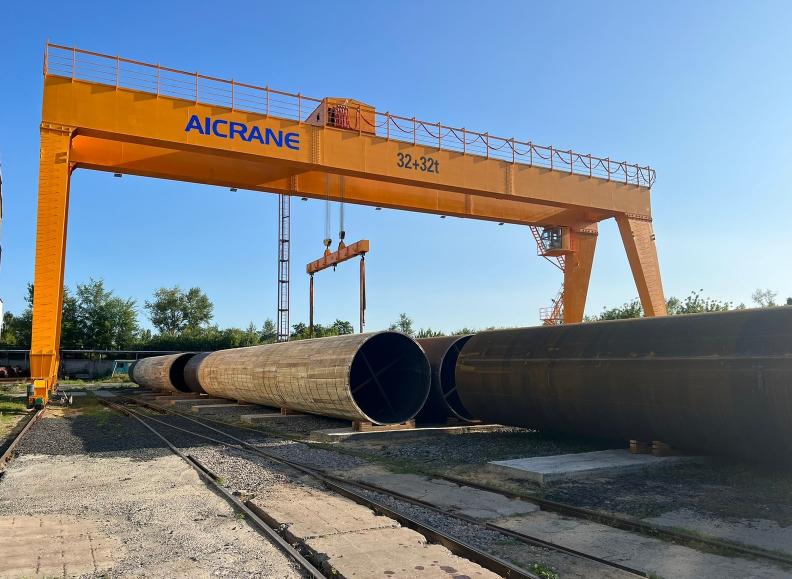
Outdoor gantry cranes are critical infrastructure in ports, construction sites, shipyards, steel yards, and large-scale industrial operations. Their primary function is to lift, move, and place heavy materials with precision and efficiency. However, unlike indoor cranes, outdoor gantry cranes are exposed to environmental forces – most notably wind loads. Wind can exert significant lateral and uplift forces on the crane structure, potentially leading to instability, tipping, derailment, or structural failure if not properly accounted for in the design phase.
This article explores the essential wind load considerations in outdoor gantry crane design, covering design parameters, standards, analysis methods, safety measures, and real-world best practices.
1. Understanding Wind Load and Its Impact
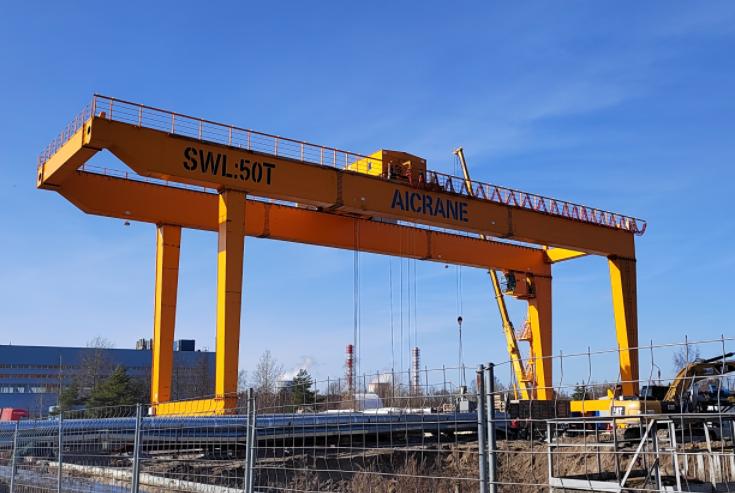
Wind load refers to the force exerted by wind pressure on structures. In the context of gantry cranes, wind loads act primarily on:
-
Crane girders and legs
-
Trolley and hoisting mechanism
-
Cabins or operator houses
-
Any lifted load (especially when suspended)
-
Wind screens or enclosed sections on the crane
These forces can cause horizontal displacement, structural deformation, uplift, or even crane derailment. The larger the exposed surface area and height of the crane, the greater the wind pressure it experiences.
2. Key Design Parameters Affected by Wind Load
Designing gantry cranes to resist wind loads requires a deep understanding of several key parameters:
a. Basic Wind Speed (V)
The basic wind speed is determined based on geographical location, typically referenced from national codes such as ASCE 7, EN 1991-1-4 (Eurocode), or local meteorological data. It is usually measured at 10 meters above ground in open terrain.
b. Exposure Category
This refers to the surrounding terrain. An open area with no windbreaks (like ports or shipyards) will have higher wind pressures compared to urban environments.
c. Crane Geometry and Surface Area
Wider spans and taller gantries offer more surface area to the wind, increasing lateral and uplift forces.
d. Operational vs. Out-of-Service Conditions
Design wind speeds vary depending on whether the crane is in use (operating) or parked (out of service). The crane must withstand higher wind speeds when idle, often in a secured position.
3. Design Standards and Guidelines
Several international standards provide methodologies for calculating wind loads:
-
EN 1991-1-4 (Eurocode 1): Provides detailed procedures for wind load calculation in structural engineering across Europe.
-
ASCE 7 (USA): Widely used in North America for general structural design, including wind considerations.
-
ISO 8686 & ISO 9374: Guidelines specific to cranes, including dynamic effects and environmental loads.
-
FEM 1.001: Outlines design principles for crane structures in European applications.
-
CMAA Specification 70/74: Offers wind load guidelines for overhead and gantry cranes in the U.S.
These standards typically factor in wind gust duration, directionality, dynamic amplification, and load combinations in structural analysis.
4. Wind Load Calculations: Static and Dynamic Effects
a. Static Wind Load
The static wind force on a component is calculated using the equation:
F = qz × GCf × A
Where:
-
F = Wind force (N)
-
qz = Velocity pressure at height z
-
GCf = Gust and shape factor
-
A = Projected area exposed to wind
b. Dynamic Effects
Due to the moving nature of cranes and the presence of wind gusts and turbulence, dynamic analysis may be required, especially for tall or flexible crane structures.
Resonance and vortex shedding may also need evaluation in long-span cranes, which can induce oscillations in high wind conditions.
5. Design Measures to Resist Wind Loads
To mitigate wind-related risks, several design strategies are commonly employed:
a. Robust Structural Design
Using higher-strength materials, larger cross-sections, and properly braced frames can improve resistance to lateral and uplift forces.
b. Rail Clamps and Storm Brakes
These systems secure the crane to the tracks during high wind events, preventing unintentional movement or tipping. Storm brakes typically engage automatically when wind speeds exceed a preset threshold.
c. Wheel Load Distribution
Ensuring even and calculated load distribution across all crane wheels helps reduce the risk of derailment due to unbalanced wind forces.
d. Lowering the Boom/Girder
Some mobile gantry cranes allow the main girder or boom to be lowered to reduce exposed surface area during storms.
e. Parking Lock Positions
Designating specific crane parking zones with anchoring systems can help stabilize the crane during out-of-service periods.
6. Operational Considerations Under Wind Load
Design is only half the battle. Operators must understand how to react to wind conditions:
-
Wind speed limits are usually specified for safe crane operation (e.g., 20–25 m/s for operation, 40–50 m/s for structural integrity).
-
Load lifting should cease under high wind warnings.
-
Suspended loads in windy conditions can act like pendulums, increasing risks of collisions or mechanical failure.
Modern gantry cranes may include wind speed sensors (anemometers) that alert operators or trigger automatic shutdowns.
7. Case Example: Port Gantry Crane in Coastal Environment
A port in Southeast Asia installed a 50 ton rail mounted gantry crane (RMG) with a 30-meter span and 15-meter lifting height. The area is frequently hit by typhoons with wind speeds exceeding 150 km/h.
Design adaptations included:
-
A reinforced box-girder structure for greater stiffness.
-
Anchoring storm brakes with a capacity of 400 kN per leg.
-
Real-time wind monitoring systems linked to an automated brake and locking mechanism.
-
Emergency procedures instructing operators to park and secure the crane at wind speeds over 18 m/s.
This example demonstrates how combining good design and operational awareness mitigates risks in wind-prone regions.
8. Future Trends and Innovations
As technology advances, wind resistance in gantry cranes is being enhanced through:
-
CFD simulation (Computational Fluid Dynamics) for wind pressure analysis on complex crane geometries.
-
Smart monitoring systems that continuously track wind forces, structural stress, and crane position.
-
AI-powered weather prediction tools that alert operators of potential high-wind events in advance.
Sustainable design principles are also being integrated, such as using perforated materials or aerodynamic shaping to reduce wind resistance.
Conclusion
Wind load is one of the most critical environmental considerations in the design and operation of outdoor gantry cranes. Failure to properly address it can lead to catastrophic accidents, costly downtime, and compromised structural integrity. By integrating robust structural design, applying relevant international standards, installing appropriate safety systems, and enforcing operational protocols, engineers and facility operators can ensure the safe and efficient functioning of gantry cranes under varying wind conditions.
Investing in wind-resistant design is not only a regulatory necessity – it’s a proactive step toward long-term operational stability and safety.
Leave a Reply