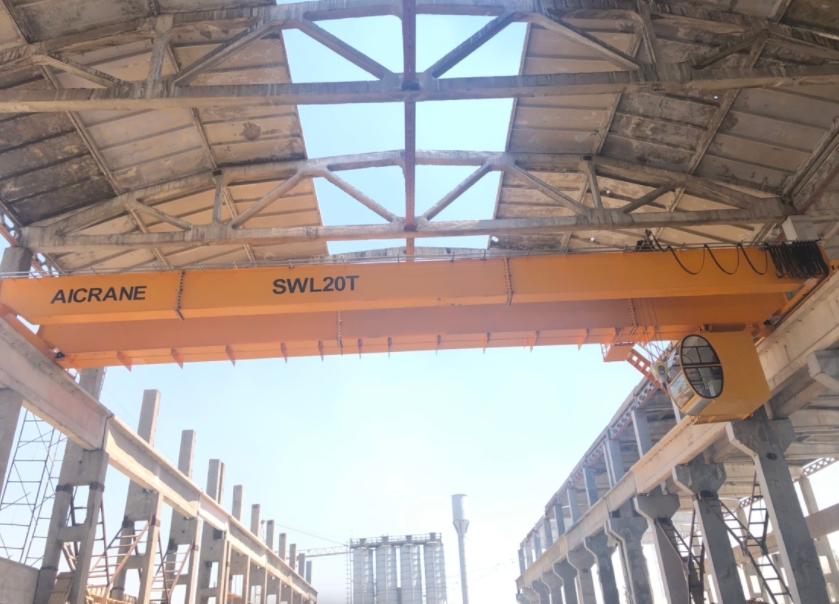
Overhead cranes play a vital role in heavy-duty industrial environments by handling and transporting loads efficiently and safely. Among them, 20-ton overhead cranes are a common configuration for medium to heavy lifting across various sectors such as manufacturing, steel plants, shipyards, and logistics. One of the most critical elements in ensuring reliable crane operation lies in the correct selection of motors and gearboxes. These components directly impact the crane’s lifting capacity, speed, energy efficiency, durability, and operational precision.
This article explores the key considerations, technical specifications, and decision-making criteria involved in selecting the right motors and gearboxes for 20 ton overhead cranes.
Understanding the Role of Motors and Gearboxes
1. Motors: Power Source for Movement
Electric motors serve as the primary power source for crane operations, driving the hoisting, trolley, and bridge traveling motions. Depending on the motion, different types and power ratings of motors may be used within the same crane system.
2. Gearboxes: Torque and Speed Conversion
Gearboxes are critical for translating the high-speed output of the motor into a torque-optimized, low-speed motion suited for lifting and positioning heavy loads. They also help reduce mechanical strain and improve control over crane operations.
Types of Motors Used in 20 Ton Overhead Cranes
1. Squirrel Cage Induction Motors
These are the most commonly used motors due to their ruggedness, low maintenance, and good efficiency. They are widely applied in bridge and trolley traveling mechanisms.
2. Wound Rotor Motors
These are preferred in applications requiring adjustable speed and high starting torque, such as in hoisting mechanisms of 20-ton cranes. They can be connected with resistors or used with frequency converters for better performance control.
3. Servo Motors (Optional in Advanced Cranes)
High-performance cranes equipped with automation systems may use servo motors in specific motions to achieve superior precision, especially in positioning tasks.
Motor Selection Criteria
When choosing motors for a 20-ton overhead crane, consider the following:
1. Power Rating (kW)
Motor power should be selected based on load requirements, duty cycle, and desired lifting speed. For a 20-ton hoist with moderate speed and duty class A5 or A6, the motor power typically ranges from 15 to 45 kW.
2. Duty Class
Cranes are classified by working duty (A1–A8). For example, A5–A6 indicates moderate to heavy usage, which affects motor sizing and thermal protection. Motors in higher-duty cranes must withstand frequent starts/stops and continuous operation.
3. Starting Torque
A high starting torque is essential for hoisting motors to lift 20 tons from rest. Gear motor assemblies must be optimized to avoid lag or slippage under full load.
4. Efficiency and Energy Use
Energy-efficient motors (IE2 or IE3 class) are preferable in modern systems to reduce operational costs and comply with energy regulations.
5. Integration with VFDs
Motors compatible with Variable Frequency Drives (VFDs) allow smooth start, stop, and speed variation – critical for reducing mechanical wear and improving load handling precision.
Gearbox Types for Overhead Cranes
1. Helical Gearboxes
Known for high efficiency and smooth operation, helical gearboxes are widely used in hoisting and trolley mechanisms. They offer excellent load capacity and compact design.
2. Planetary Gearboxes
Used in high-torque applications where compactness is key. They are ideal for the hoisting mechanism of 20-ton cranes, especially in confined installations.
3. Bevel-Helical Gearboxes
These combine the benefits of bevel and helical gears, suitable for bridge and trolley travel with right-angle orientation.
Gearbox Selection Criteria
1. Torque Capacity
Gearboxes must deliver sufficient torque to lift 20-ton loads, accounting for inertia, acceleration, and load variations.
2. Gear Ratio
The required gear ratio depends on lifting/traveling speed and motor RPM. Typical lifting speeds range from 3–8 m/min for 20-ton cranes. A properly calculated ratio ensures smooth and safe operations.
3. Gearbox Mounting Type
Depending on the crane design (open winch or compact hoist), the gearbox may be foot-mounted, flange-mounted, or integrated with the motor in a gear motor assembly.
4. Thermal Capacity
Gears generate heat during operation. Adequate cooling (fan-cooled or oil-cooled) is essential to maintain performance in continuous operation.
5. Shock Load Tolerance
Since overhead cranes encounter dynamic load changes, the gearbox must be designed to absorb shock loads without premature wear.
Integration of Motors and Gearboxes
For optimal performance, motors and gearboxes must be matched precisely in terms of:
-
Shaft alignment and couplings
-
Torque and speed compatibility
-
Load profile and acceleration requirements
-
Duty cycle synchronization
-
Environmental protection (IP rating and thermal class)
Using pre-engineered gear motor units simplifies installation and ensures factory-tested integration for reliability.
Environmental and Safety Considerations
-
IP Protection: Motors and gearboxes must be protected against dust, moisture, and oil ingress, with IP54 or higher recommended in industrial settings.
-
Brake Systems: Motor brakes (electromagnetic or spring-loaded) are vital for safe stopping of heavy loads.
-
Overload Protection: Motors must include thermal sensors and gearboxes should have overload protection mechanisms.
-
Temperature Range: In harsh environments, motor and gearbox components should be rated for high or low temperatures (e.g., -20°C to +60°C).
Example Configuration for a 20 Ton Overhead Crane
-
Hoisting Motor: 30 kW wound rotor motor with VFD, duty class A6
-
Hoisting Gearbox: Planetary gearbox with 25:1 ratio, torque rating 5000 Nm
-
Traveling Motors: 2×5.5 kW squirrel cage motors with brake and encoder
-
Traveling Gearboxes: Helical gearboxes, right-angle, 12:1 gear ratio
-
Control System: Integrated PLC with VFD control and load monitoring
Maintenance and Lifecycle Considerations
Proper motor and gearbox selection also reduces long-term maintenance. Key practices include:
-
Regular lubrication of gears
-
Monitoring bearing temperatures
-
Checking motor windings and insulation
-
Scheduled replacement of oil seals and brake linings
-
Vibration analysis to detect early faults
High-quality gearboxes and motors with service-friendly designs minimize downtime and enhance crane longevity.
Conclusion
Choosing the right motors and gearboxes for a 20-ton overhead crane is essential for achieving operational efficiency, safety, and reliability. Factors such as power requirements, duty class, torque capacity, gear ratios, and environmental conditions must be carefully analyzed. Integrating motors and gearboxes with smart control systems and ensuring proper maintenance further enhances the overall performance of the overhead crane.
By investing in high-performance, properly matched components, businesses can ensure that their 20-ton overhead cranes deliver long-term value and dependable service across demanding industrial applications.
Leave a Reply