Overhead cranes are indispensable in modern industrial operations, particularly in manufacturing, warehousing, and heavy-duty material handling environments. Among the critical parameters influencing the performance and safety of an overhead crane, lifting height is one of the most significant. For a 25-ton overhead crane, determining the correct lifting height is not merely a matter of operational convenience; it has profound implications on the crane’s structural design, mechanical components, and overall efficiency. This article delves into how lifting height impacts the structural design of a 25-ton overhead crane, exploring key factors such as bridge girder design, hoist and trolley selection, crane runway considerations, and safety requirements.
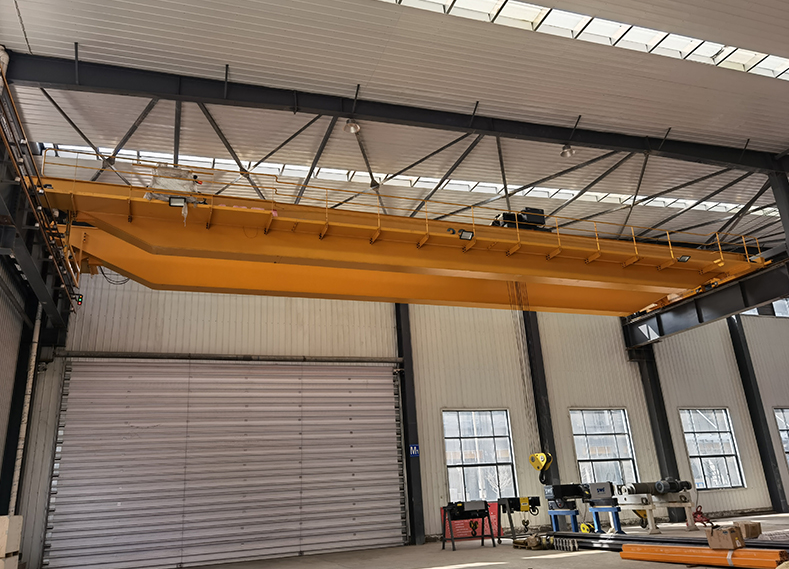
Understanding Lifting Height in Overhead Cranes
Lifting height, often referred to as the headroom or hook height, is defined as the vertical distance from the top of the crane’s hook at its lowest position to the runway or floor level. It essentially determines how high the crane can lift a load and directly affects the design of the crane’s bridge, hoist, trolley, and supporting structures.
For a 25 ton overhead crane, lifting height is particularly critical because such cranes are typically used for handling heavy components in manufacturing plants, warehouses, and steel mills. Unlike smaller cranes, even minor adjustments in lifting height can significantly affect structural requirements and operational efficiency.
Impact on Bridge Girder Design
The bridge girder is the primary structural element of an overhead crane, responsible for supporting the trolley, hoist, and the load itself. Lifting height directly influences the bridge girder height, thickness, and reinforcement requirements.
-
Increased Bridge Height: A higher lifting height typically necessitates a taller or deeper bridge girder to maintain structural stability. The girder must withstand higher bending moments caused by the load at extended heights, especially when the crane operates at full capacity.
-
Reinforcement Needs: For high lifting heights, additional stiffeners or flanges may be required along the girder to prevent deflection or twisting. For a 25-ton load, engineers must calculate the maximum bending moment, shear forces, and torsional effects to ensure the bridge remains within safe limits.
-
Material Selection: Lifting height considerations may also influence the choice of material. High-strength steel or specialized alloys are often used in bridge girders for taller lifting requirements to provide the necessary strength without excessively increasing weight.
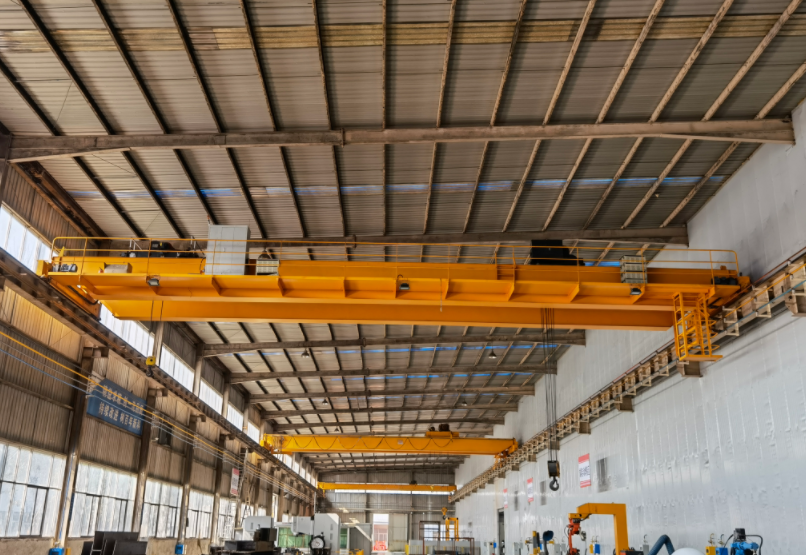
Hoist and Trolley Considerations
The lifting height directly impacts the selection and design of the hoist and trolley systems. For a 25-ton double girder bridge crane, hoist design must accommodate both the load weight and the vertical travel distance.
-
Hoist Travel Length: The lifting height determines the length of wire rope or chain required for the hoist. Longer travel distances demand more robust hoist mechanisms and careful consideration of rope tension, drum diameter, and spooling techniques.
-
Trolley Stability: As lifting height increases, the center of gravity of the lifted load rises, increasing the potential for crane sway or instability. Trolley design must incorporate anti-sway systems, guide rollers, or braking mechanisms to maintain safe and precise operations.
-
Motor Power and Gear Ratios: Higher lifting heights require motors capable of handling longer lifting times without overheating. Gear ratios may need adjustment to balance lifting speed and torque, ensuring smooth operation across the full height range.
Crane Runway and Supporting Structure
The crane’s lifting height has a direct effect on the design of the runway beams, columns, and end trucks.
-
Runway Elevation: High lifting heights require careful planning of the crane runway to maintain sufficient headroom while accommodating building height constraints. Structural engineers may need to adjust column spacing, beam size, and foundation strength to handle the increased vertical forces.
-
End Trucks and Wheels: With higher lifting heights, the distribution of weight and dynamic load effects on end trucks and wheels changes. These components must be designed to withstand higher impact loads during acceleration, deceleration, and emergency stops.
-
Building Integration: For existing facilities, lifting height considerations may necessitate structural modifications to the roof, columns, or support beams to allow safe crane operation. This is especially relevant in warehouses or production plants where ceiling clearance is limited.
Safety Implications
Lifting height is closely tied to the safety of crane operations. Higher lifting heights increase the risk of accidents due to load sway, pendulum effects, and operator errors. For a 25-ton crane, safety considerations include:
-
Overload Protection: High lifting heights magnify the consequences of overloading. Overload detection devices and limit switches must be carefully calibrated to prevent structural damage or catastrophic failure.
-
Deflection Monitoring: At maximum lifting height, the bridge girder and trolley may experience noticeable deflection. Sensors and monitoring systems are often used to ensure deflection remains within safe limits.
-
Emergency Stopping Distance: Lifting heavy loads to extreme heights increases stopping distance. Structural and mechanical components must be designed to absorb and withstand these dynamic forces.
Operational Efficiency Considerations
Beyond structural safety, lifting height affects crane operational efficiency:
-
Cycle Time: Higher lifting heights result in longer load cycles. Optimizing the hoist speed and trolley travel ensures that productivity is not compromised.
-
Energy Consumption: Lifting heavier loads over longer distances consumes more energy. Motor and drive system design must account for this increased demand to maintain energy efficiency.
-
Precision Handling: Tall lifts require precise control to minimize load swing. Advanced control systems, variable frequency drives (VFDs), and operator training are critical in mitigating operational risks.
Design Optimization Strategies
To address the challenges posed by high lifting heights in 25-ton overhead cranes, engineers employ several optimization strategies:
-
Finite Element Analysis (FEA): Structural modeling tools simulate bending, torsion, and vibration under maximum load and lifting height scenarios, helping engineers optimize girder dimensions and reinforcements.
-
Modular Bridge Designs: Modular girder sections allow for efficient transportation, assembly, and adjustment of bridge height while maintaining structural integrity.
-
Advanced Hoist Technology: Using high-capacity, long-travel hoists with anti-sway technology ensures smooth lifting even at maximum heights.
-
Dynamic Load Monitoring: Real-time monitoring of load, deflection, and motor performance enhances both safety and reliability during operations.
Conclusion
Lifting height is a crucial design factor that influences nearly every aspect of a 25-ton overhead crane’s structural and mechanical configuration. From bridge girder design, hoist selection, and trolley stability to crane runway integration and operational safety, each design decision must account for the implications of vertical travel distance. Properly addressing lifting height ensures not only structural safety and regulatory compliance but also operational efficiency and long-term reliability.
For industrial operators, understanding the relationship between lifting height and crane design is essential for selecting the right crane, optimizing its performance, and safeguarding personnel and equipment. As industries demand more precise and heavy-duty lifting capabilities, engineers must continue to innovate in structural design, hoist technology, and dynamic load management to meet these challenges effectively.
Leave a Reply