Rail Mounted Gantry (RMG) cranes are pivotal in modern material handling operations, particularly in container terminals, logistics hubs, and industrial yards. Their primary advantage lies in their ability to transport heavy loads across wide areas while ensuring precise positioning. However, the effectiveness of an RMG crane depends heavily on the mechanical coordination between its three core systems: the hoisting mechanism, the trolley mechanism, and the traveling system. Understanding how these systems interact is essential for optimizing performance, minimizing wear, and ensuring safety. This article delves into the intricacies of this mechanical coordination, exploring each system and their interdependencies.
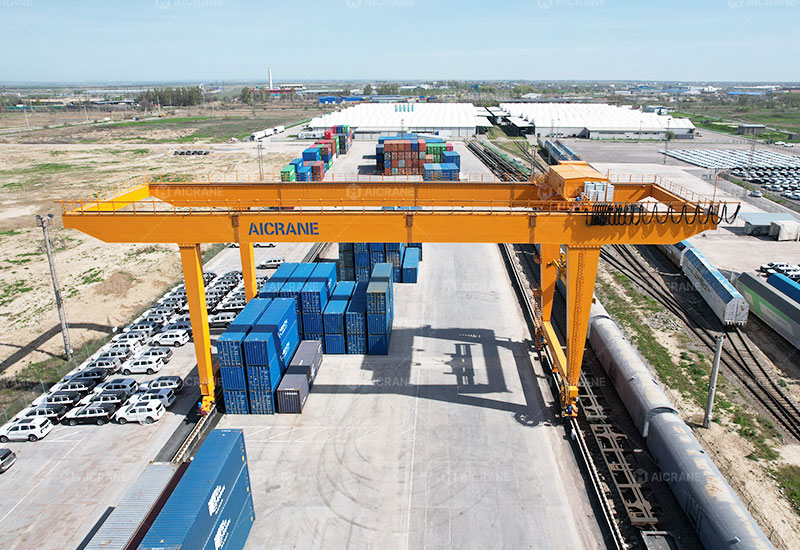
1. Overview of RMG Crane Mechanisms
A rail mounted gantry crane for sale essentially consists of a bridge supported by wheels that travel along rails, a trolley that moves along the bridge, and a hoist that lifts and lowers the load. Each mechanism operates independently yet must work harmoniously to achieve precise load handling. The three primary systems are:
-
Hoisting System – Responsible for lifting and lowering the load. It usually includes a hoist drum, wire rope, motor, gearbox, and braking system.
-
Trolley System – Moves the hoist along the bridge, providing lateral positioning of the load. The trolley is equipped with wheels, a drive system, and often a guiding system for smooth motion.
-
Traveling System – Moves the entire crane along the runway rails, covering the longitudinal direction of the working area. It involves wheel bogies, drive motors, and sometimes steering or guidance mechanisms.
While these systems are individually critical, the efficiency of an RMG crane hinges on how well they are coordinated.
2. Hoisting System Dynamics
The hoisting mechanism is the core lifting component of an RMG crane. It typically employs an electric or hydraulic motor to rotate a drum that winds or unwinds a wire rope, raising or lowering the hook or spreader. Key factors in the hoisting system include:
-
Load Capacity: The crane’s maximum lifting load dictates motor size, gearbox ratio, and rope specifications.
-
Speed Control: Smooth acceleration and deceleration prevent load sway and reduce mechanical stress. Variable frequency drives (VFDs) are commonly used for precise speed regulation.
-
Braking System: Mechanical, hydraulic, or electromagnetic brakes ensure the load remains stable when hoisting stops.
-
Wire Rope Coordination: For twin or multi-rope systems, synchronized rope movement is crucial to maintain balance and prevent torsion.
The hoist must coordinate with the trolley and traveling systems, particularly when handling dynamic loads. For instance, rapid trolley movement while hoisting can generate swing or impact forces, requiring synchronized control to maintain stability.
3. Trolley Mechanism Functionality
The trolley mechanism allows the hoist to move horizontally along the bridge girder, enabling precise positioning over containers or cargo. Its main components include:
-
Trolley Wheels and Rails: Wheels designed for smooth motion along the bridge rails, often with flanges for lateral guidance.
-
Drive System: Electric motors with reduction gears provide controlled acceleration and deceleration.
-
Guidance and Alignment: Sensors or mechanical guides help keep the trolley aligned to avoid derailment or uneven load distribution.
The trolley’s operation must be coordinated with hoisting because lateral motion of a lifted load can create oscillations. In modern RMG cranes, synchronization is often managed electronically through the crane control system, but mechanical design considerations remain critical:
-
Rigid Frame and Low Flexibility: The trolley frame must resist bending to avoid uneven load distribution across the hoist ropes.
-
Balanced Load Transfer: The trolley’s position affects how forces are transmitted to the bridge and traveling system. Incorrect alignment can lead to uneven rail loading and premature wear.
4. Traveling System Mechanics
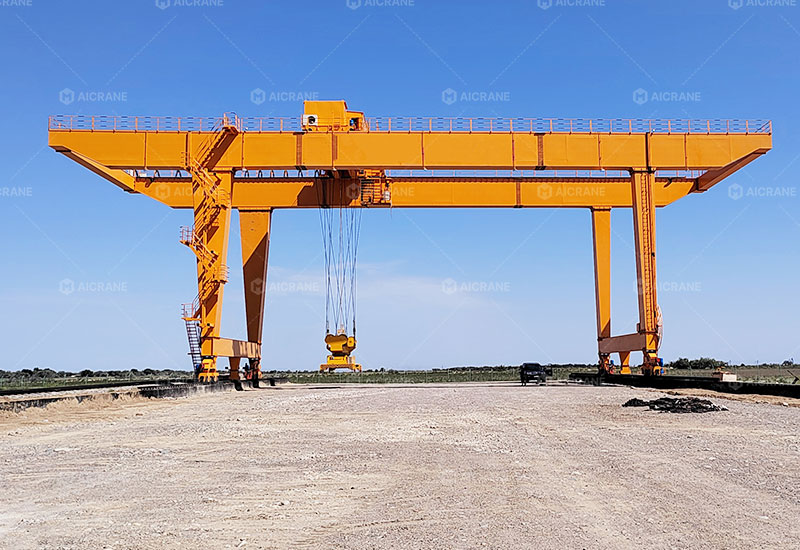
The traveling system moves the entire crane along the rails spanning the storage yard or terminal. It is composed of:
-
Bridge Wheels and Bogies: Wheels with appropriate flanges and bogies for weight distribution.
-
Drive Motors and Gearboxes: Ensure smooth acceleration, deceleration, and control at low speeds.
-
Braking Mechanism: Maintains stability during load handling or in emergencies.
Traveling a crane while the hoist is carrying a load requires careful coordination. High-speed longitudinal travel can induce sway in a lifted load, increasing stress on the hoist ropes and trolley bearings. Therefore, mechanical design often incorporates:
-
Shock Absorbers or Dampers: Minimize impact forces on structural components.
-
Load Distribution Optimization: Ensures bridge wheels carry weight evenly to prevent rail or wheel damage.
-
Rigid Frame Design: The crane structure must resist twisting from uneven load forces during travel.
5. Coordination Between Systems
The core challenge in rail mounted container gantry crane design is ensuring seamless mechanical coordination among hoisting, trolley, and traveling systems. Several principles govern this coordination:
5.1 Load Transfer Path
Every RMG crane must transfer load efficiently from the hoist to the trolley, then to the bridge, and finally to the traveling wheels. Any misalignment in this load path can lead to:
-
Excessive bending in the bridge girder
-
Premature wear on trolley wheels or hoist ropes
-
Load sway during travel, affecting operational safety
5.2 Motion Synchronization
When lifting and moving loads simultaneously, mechanical forces must be harmonized:
-
Hoisting and Trolley Coordination: As the hoist raises a container, the trolley’s acceleration should be gradual to prevent pendulum-like swinging.
-
Trolley and Traveling Coordination: Lateral movements combined with bridge travel must account for inertial forces. For heavy loads, traveling speed may need to be reduced to maintain load stability.
-
Hoist and Traveling Coordination: In some operations, hoisting while traveling can strain ropes and brakes. Advanced cranes use sensors to limit combined motion speeds.
5.3 Structural Flexibility vs. Rigidity
The crane’s frame and trolley must strike a balance between rigidity (to prevent deflection) and flexibility (to absorb dynamic forces). Excessive rigidity can transmit shocks directly to mechanical components, while too much flexibility can increase sway and reduce positional accuracy.
6. Role of Control Systems in Mechanical Coordination
While the focus here is mechanical, modern RMG cranes integrate sophisticated electronic control systems to complement mechanical design:
-
Interlocks: Prevent simultaneous motions that could destabilize the load.
-
Load Sensors: Detect uneven forces and adjust hoist or trolley speed.
-
Synchronization Algorithms: Ensure multiple motors and drives operate in harmony.
These systems reduce the dependency on operator skill alone, improving safety and efficiency, while also mitigating mechanical stress.
7. Maintenance Implications
Proper mechanical coordination affects maintenance cycles:
-
Misaligned trolley wheels or bridge rails accelerate wear.
-
Uncoordinated motions increase rope fatigue and hoist drum wear.
-
Excessive dynamic forces can compromise structural integrity over time.
Regular inspection of alignment, wheel bearings, hoist ropes, and brake systems is essential. Preventive maintenance ensures that mechanical coordination remains optimal, extending the crane’s operational lifespan.
8. Conclusion
The mechanical coordination between hoisting, trolley, and traveling systems defines the operational efficiency, safety, and reliability of RMG cranes. Each system must work not only independently but also in precise harmony with the others. The hoist provides vertical movement, the trolley facilitates lateral positioning, and the traveling system ensures longitudinal transport—all while transferring loads safely through the crane structure. Attention to load paths, motion synchronization, structural design, and maintenance practices ensures that the crane performs optimally under demanding industrial conditions. Advances in electronic controls further enhance coordination, but the fundamental principles of mechanical integration remain critical. For crane operators, engineers, and designers, understanding this intricate interplay is essential to maximize performance, minimize downtime, and maintain safety in high-demand operations.
Leave a Reply