Double girder gantry cranes are widely used in heavy-duty material handling environments such as precast concrete yards, steel fabrication plants, shipyards, railway logistics centers, and power equipment manufacturing facilities. These cranes are designed to handle large loads, long spans, and high working classifications, making operational safety, precision, and efficiency critical factors in daily use.
As gantry crane designs continue to evolve, traditional pendant control and cabin operation modes are increasingly being supplemented—or even replaced—by advanced remote control systems. The remote control system in a double girder gantry crane plays a vital role in improving operational flexibility, enhancing safety, and optimizing workflow efficiency, especially in complex or hazardous working environments.
This article provides an in-depth explanation of the function of the remote control system in double girder gantry cranes, including its working principles, key components, safety functions, operational advantages, and its impact on modern crane performance.
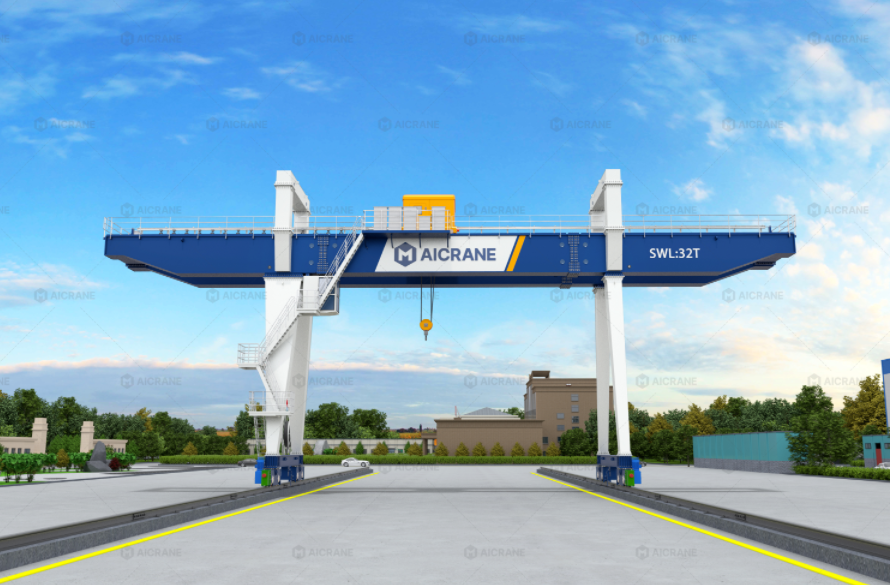
Overview of Remote Control Systems in Gantry Cranes
A remote control system allows the crane operator to control crane movements wirelessly from a distance using a handheld transmitter. In double girder gantry cranes, this system integrates seamlessly with the crane’s electrical control system, typically based on PLC (Programmable Logic Controller) architecture and variable frequency drives (VFDs).
The remote control system does not replace the crane’s primary control logic but acts as an alternative human–machine interface. Commands issued by the operator are transmitted to the crane’s receiver unit, decoded, and processed by the control system to execute corresponding motions such as hoisting, lowering, trolley travel, and long travel.
Core Functions of the Remote Control System
Wireless Command Transmission
The most fundamental function of the remote control system is wireless signal transmission between the operator and the crane. Using industrial-grade radio frequencies, the system transmits control signals with high reliability and minimal interference, even in environments filled with steel structures, machinery, and electromagnetic noise.
This wireless functionality eliminates physical cable connections, allowing operators to move freely within a defined operating range while maintaining full control over crane movements.
Control of Crane Motion Functions
The remote control system provides complete functional control over all primary movements of a double girder gantry crane, including:
-
Hoisting and lowering of loads
-
Trolley travel along the double girder bridge
-
Long travel of the gantry crane along rails
-
Auxiliary hoist operation (if equipped)
-
Start, stop, and speed regulation functions
These commands are translated into precise electrical signals processed by VFDs, enabling smooth acceleration and deceleration, reducing mechanical stress and load swing.
Enhanced Operator Positioning and Visibility
One of the most important functions of remote control systems is allowing operators to position themselves for optimal visibility. Unlike cabin operation, where the operator’s view may be restricted by structural elements or load size, remote control enables the operator to stand at a safe location with a clear line of sight to the load.
This improved visibility is especially valuable during:
-
Precision positioning of heavy or oversized loads
-
Tandem lifting operations
-
Work in congested yards or narrow workspaces
Better visibility directly contributes to higher positioning accuracy and reduced risk of collisions.
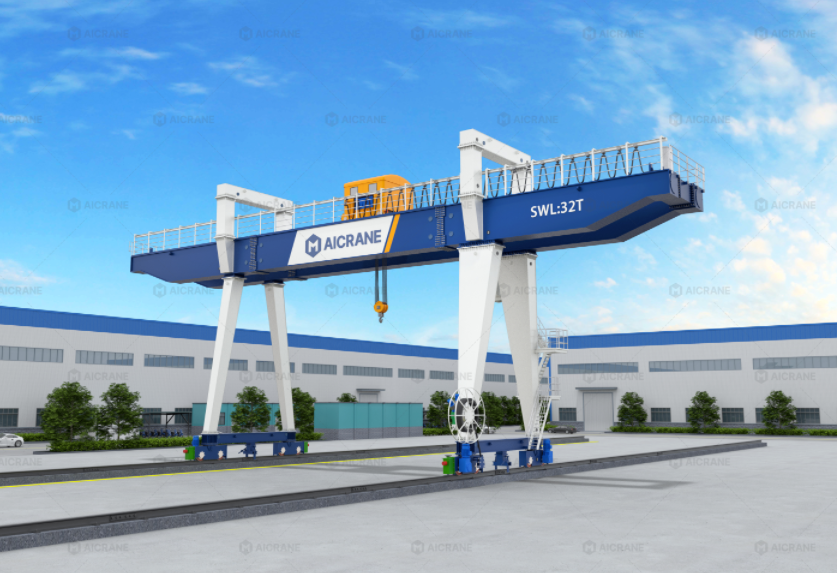
Safety Functions of Remote Control Systems
Emergency Stop and Safety Interlock Functions
Safety is a critical function of any gantry crane remote control system. Each transmitter is equipped with an emergency stop (E-stop) button that immediately cuts off crane motion when activated.
In addition, the remote control system is integrated with crane safety interlocks, ensuring that:
-
Conflicting motions cannot be executed simultaneously
-
Limit switch signals override remote commands
-
Overload protection systems remain fully functional
These safety functions ensure that wireless operation does not compromise crane operational integrity.
Signal Loss Protection and Fail-Safe Operation
A key safety function of remote control systems in double girder gantry cranes is automatic fail-safe behavior. If the crane receiver loses communication with the transmitter due to interference, low battery, or out-of-range conditions, the system immediately stops all crane movements.
This function prevents unintended or uncontrolled crane motion, which is particularly important in heavy lifting applications.
Access Control and Operator Authorization
Modern remote control systems often include access control functions such as:
-
Key switch activation
-
Password or pairing code protection
-
Multi-transmitter management
These functions ensure that only authorized personnel can operate the crane, reducing the risk of misuse or unauthorized operation.
Functional Integration with Crane Control Systems
PLC Integration Function
In double girder gantry cranes, remote control systems are fully integrated with PLC-based control architectures. The PLC serves as the central processing unit, interpreting remote control inputs and coordinating responses with motor drives, braking systems, and safety devices.
This integration ensures consistent logic execution regardless of whether the crane is operated via remote control, pendant, or cabin control.
Speed Control and Load Stability Function
Remote control systems work in conjunction with VFDs to provide multi-speed or stepless speed control. Operators can select slow-speed modes for precision lifting and positioning or higher speeds for efficient load transport.
This function improves load stability by minimizing sudden movements, reducing load sway, and enhancing overall lifting safety, especially when handling heavy or delicate components.
Operational Efficiency Functions
Improved Workflow Flexibility
The remote control system significantly enhances workflow efficiency by allowing operators to move alongside the load. This function reduces the need for additional signalmen or coordination personnel, streamlining operations and reducing labor costs.
In large gantry crane yards, this flexibility translates into faster cycle times and improved productivity.
Reduced Operator Fatigue
Operating a double girder gantry crane via remote control reduces physical strain and fatigue compared to traditional pendant control or long cabin shifts. Operators can maintain comfortable postures and reposition themselves as needed, leading to improved concentration and reduced human error.
Application-Specific Functional Benefits
Function in Outdoor and Harsh Environments
Double girder gantry cranes often operate outdoors, exposed to wind, dust, rain, and temperature extremes. Remote control systems allow operators to maintain safe distances from environmental hazards while continuing operations efficiently.
Some systems are designed with industrial-grade enclosures and environmental protection ratings, ensuring reliable performance in harsh conditions.
Function in Tandem and Multi-Crane Operations
In tandem lifting scenarios, remote control systems facilitate synchronized operations by allowing precise coordination between cranes. Operators can position themselves strategically to monitor load balance and alignment, improving overall lifting accuracy and safety.
Maintenance and Diagnostic Functions
Battery Monitoring and Status Feedback
Modern remote control transmitters include battery status indicators and diagnostic feedback functions. These features alert operators to low battery conditions and system faults, ensuring uninterrupted crane operation.
Reduced Wear on Mechanical Components
By enabling smoother acceleration, deceleration, and controlled movements, remote control systems indirectly reduce wear on mechanical components such as gears, brakes, wire ropes, and wheels, extending crane service life.
Conclusion
The remote control system plays a crucial functional role in modern double girder gantry cranes. Beyond basic wireless operation, it enhances safety through fail-safe mechanisms, improves precision through integrated speed control, and boosts operational efficiency by providing unmatched flexibility and visibility.
As industries continue to demand higher productivity, improved safety standards, and smarter crane solutions, remote control systems are becoming an essential component rather than an optional feature in double girder gantry crane design. Proper selection, integration, and maintenance of these systems can significantly improve crane performance, operator safety, and long-term operational value.
For heavy-duty gantry crane applications, the remote control system is no longer just a convenience—it is a strategic functional upgrade that aligns with modern industrial lifting requirements.
Leave a Reply