Electric Overhead Traveling (EOT) cranes are an essential part of modern industrial operations, offering the ability to lift, transport, and position heavy loads with precision and efficiency. These cranes are widely used in manufacturing plants, warehouses, steel mills, shipyards, and construction sites. While an EOT crane’s capacity—the maximum weight it can safely lift—is often the first specification considered during procurement, it has profound implications for the selection of critical components such as the hoist, motor, and gearbox. Understanding these relationships ensures that the crane operates safely, efficiently, and with minimal maintenance challenges over its service life.
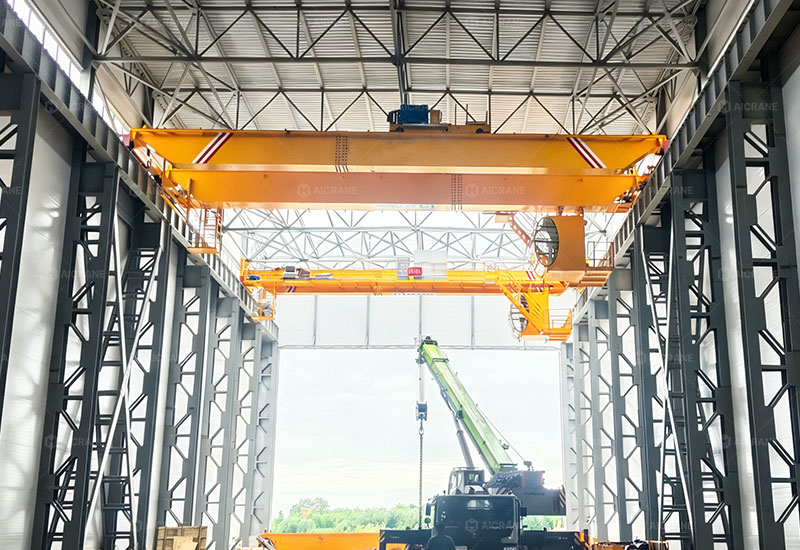
Understanding EOT Crane Capacity
Crane capacity refers to the maximum load a crane can lift under specified conditions. It is usually expressed in metric tons or kilograms. This rating is determined by structural design, hoist capabilities, trolley travel, span, and other operational parameters. However, capacity is not just a number for marketing; it drives the design and selection of almost every component in the crane system.
Higher-capacity cranes require components that can withstand greater mechanical stress, deliver more power, and maintain consistent performance over time. Underestimating the importance of capacity in component selection can lead to operational inefficiencies, premature wear, safety hazards, and unexpected downtime.
Influence on Hoist Selection
The hoist is arguably the most critical part of an EOT crane, responsible for lifting and lowering the load. The crane’s rated capacity directly determines the type, size, and configuration of the hoist.
1. Load Handling Requirements
The first consideration is the lifting capacity of the hoist itself. A crane rated for 50 tons cannot use a hoist designed for 10 tons; the lifting mechanism would be structurally inadequate. Manufacturers typically provide hoists in defined load increments, such as 5 tons, 10 tons, 20 tons, and beyond. Selecting a hoist with a capacity equal to or slightly higher than the crane’s rated load ensures safety and reliability.
2. Lifting Speed Considerations
EOT cranes must balance lifting capacity with lifting speed. Higher-capacity hoists generally have slower lifting speeds due to mechanical and power limitations. This affects cycle times and productivity, especially in high-throughput operations. For example, a 10-ton hoist may lift at 20 meters per minute, while a 100-ton hoist might only lift at 5–10 meters per minute. Engineers must account for operational requirements when choosing the hoist type and specifications.
3. Duty Cycle and Load Frequency
The duty cycle of a hoist—the proportion of time it operates versus rests—also scales with crane capacity. Heavier loads generate higher forces on hoist components, requiring robust mechanical systems and superior materials to endure repeated stress. High-capacity cranes often use hoists designed for heavy-duty applications (Class M4 or M5, according to FEM standards) to handle frequent lifting cycles without overheating or mechanical failure.
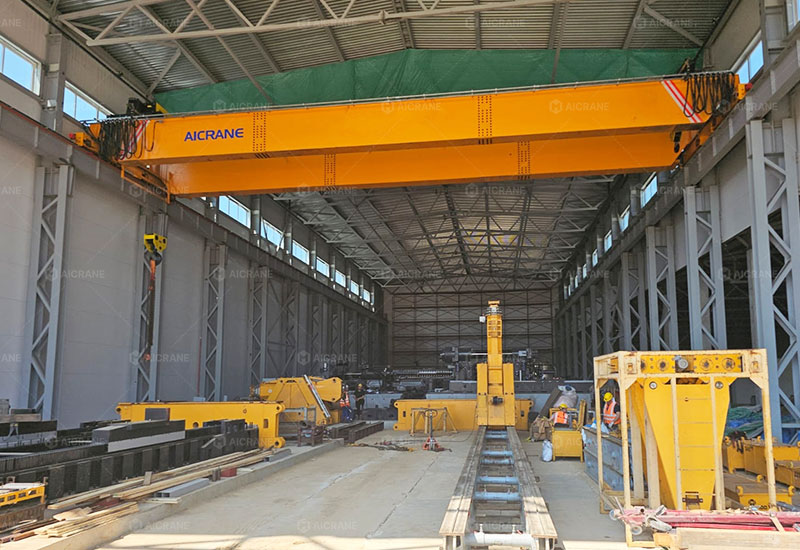
Influence on Motor Selection
The electric motors in an EOT crane power both the hoist and the trolley mechanisms. Motor selection is heavily influenced by the crane’s capacity, as higher loads demand more torque and power.
1. Power Rating
Motor power must be sufficient to lift the rated load at the desired speed while overcoming mechanical and frictional losses in the system. For a low-capacity crane, a small motor may suffice, but for high-capacity cranes lifting hundreds of tons, motors often need hundreds of kilowatts. An undersized motor risks overheating, reduced lifespan, and potential operational failure.
2. Torque Requirements
Heavy loads require high torque to initiate and sustain lifting. Torque demand depends not only on the load but also on hoist drum diameter, rope size, and lift height. Proper motor selection ensures smooth acceleration and deceleration, preventing jerking or uneven motion that could damage both the load and the crane.
3. Starting and Braking Control
For high-capacity cranes, motors must provide controlled starting and braking to prevent shock loads. Motors with variable frequency drives (VFDs) are often employed to provide smooth acceleration and deceleration, especially when handling delicate or oversized cargo. In contrast, low-capacity cranes may use simpler motor systems without VFDs.
4. Thermal and Duty Considerations
High-capacity cranes often operate in continuous or heavy-duty cycles. Motors must be thermally rated for prolonged operation under high load conditions. This often requires motors with advanced cooling systems or higher insulation classes (Class F or H) to prevent overheating.
Influence on Gearbox Selection
The gearbox in an EOT crane transmits motor power to the hoist drum and trolley wheels, adjusting torque and speed as necessary. Its selection is also closely tied to crane capacity.
1. Gear Ratio and Torque Multiplication
High-capacity cranes require gearboxes capable of handling enormous torque loads. The gear ratio must balance lifting speed with torque multiplication. A higher gear ratio reduces drum speed but increases torque, enabling safe lifting of heavy loads. Incorrect selection can result in insufficient torque, slippage, or catastrophic failure.
2. Gearbox Type
For low-capacity cranes, simple spur or helical gearboxes may suffice. For medium- to high-capacity cranes, planetary or double-helical gearboxes are often preferred due to higher efficiency, load capacity, and reduced wear. Heavy duty overhead cranes may also incorporate multi-stage gear systems to distribute the load more evenly.
3. Lubrication and Maintenance
Higher-capacity gearboxes generate more heat and mechanical stress, making proper lubrication and cooling critical. Engineers often choose sealed gearboxes with high-quality lubricants or integrated cooling systems to extend service life. Maintenance intervals are also adjusted based on load demands, with high-capacity cranes requiring more frequent inspections and servicing.
Integration Considerations
Selecting the hoist, motor, and gearbox independently is insufficient. Engineers must ensure that all components are harmonized to handle the crane’s rated capacity safely. This involves:
-
Matching motor torque to gearbox input: Over- or under-powered motors can cause gear slippage or failure.
-
Ensuring gearbox output matches hoist requirements: Drum speed and torque must align with lifting capacity and duty cycle.
-
Considering safety factors: High-capacity cranes include additional safety margins for overload protection, emergency braking, and redundancy in critical components.
Impact on Cost and Design Complexity
Increasing crane capacity significantly affects both cost and design complexity. Higher-capacity hoists, motors, and gearboxes are larger, more robust, and more expensive. Structural components such as girders, trolleys, and end trucks also need reinforcement, adding to overall weight and cost. In many cases, manufacturers provide modular solutions, allowing customization of motor and gearbox sizes based on operational needs, without over-engineering components for rarely used maximum loads.
Conclusion
The rated capacity of an EOT crane is far more than a simple specification—it dictates the selection and sizing of the hoist, motor, and gearbox. A carefully engineered match between capacity and component specifications ensures operational efficiency, safety, and longevity. Hoists must be rated for the load, with appropriate speed and duty cycles; motors must deliver sufficient power and torque while accommodating thermal and duty requirements; gearboxes must manage torque multiplication and ensure reliability under heavy load conditions.
For plant managers, engineers, and procurement teams, understanding the interplay between crane capacity and component selection is essential. Overestimating can lead to unnecessary costs, while underestimating can cause operational failures and safety hazards. Ultimately, optimal component selection based on accurate capacity assessment ensures that EOT cranes deliver reliable, efficient, and safe lifting performance across their operational life.
Leave a Reply