Overhead cranes are critical equipment in modern workshops, factories, and industrial plants. They facilitate the safe and efficient handling of heavy loads, from steel coils to large machinery components. As industries demand higher productivity, safety, and energy efficiency, the integration of Variable Frequency Drives (VFDs) into workshop overhead cranes has emerged as a game-changing technology. VFDs provide precise motor control, improved energy management, and enhanced operational safety, transforming the way overhead cranes operate.
Understanding Variable Frequency Drives
A Variable Frequency Drive (VFD) is an electronic device used to control the speed and torque of an electric motor by varying the frequency and voltage supplied to it. Unlike conventional motor control methods, such as direct-on-line (DOL) or star-delta starters, which operate motors at fixed speeds, VFDs enable dynamic adjustment of motor performance to match operational requirements. This flexibility is particularly valuable for workshop overhead cranes, which require variable speeds during lifting, lowering, and trolley travel operations.
VFDs consist of three main components:
-
Rectifier: Converts incoming AC power to DC.
-
DC Bus: Stores and filters the DC voltage.
-
Inverter: Converts the DC voltage back to AC at a variable frequency to control motor speed.
By controlling both voltage and frequency, a VFD can modulate motor torque, optimize acceleration and deceleration, and improve the overall efficiency of the crane system.
Advantages of VFDs in Workshop Overhead Cranes
1. Smooth and Precise Load Handling
One of the primary benefits of using VFDs in overhead cranes is the smooth control of crane movement. Traditional fixed-speed motors can cause jerky movements during startup, stopping, or load positioning, which increases the risk of load sway and potential damage to goods or machinery. With a VFD, operators can control lifting, lowering, and trolley movements with precision, reducing load oscillation and improving positioning accuracy. This precision is particularly important when handling fragile or high-value materials.
2. Energy Efficiency and Cost Savings
Overhead cranes often operate under variable load conditions, where full motor power is not always required. VFDs allow motors to run at optimal speeds based on the actual load, reducing energy consumption. Studies have shown that VFD-equipped cranes can save up to 30% of energy compared to conventional motor starters, depending on the frequency and duration of crane operations. These energy savings not only reduce operational costs but also contribute to environmental sustainability by lowering carbon emissions.
3. Reduced Mechanical Stress and Maintenance
Frequent starting and stopping of crane motors without VFD control can generate high inrush currents, causing mechanical stress on gears, brakes, hoists, and electrical components. Over time, this stress leads to increased wear and higher maintenance costs. VFDs provide soft start and soft stop functionality, gradually ramping motor speed up or down. This reduces mechanical shock on the crane components, extending the lifespan of the hoist, gearbox, motor, and braking system.
4. Enhanced Safety Features
Safety is paramount in workshop crane operations. VFDs improve safety by providing:
-
Controlled acceleration and deceleration: Reducing sudden load movements.
-
Torque control: Preventing overload conditions that can damage the motor or load.
-
Emergency stop support: Ensuring controlled stopping even during power interruptions.
-
Integration with anti-sway systems: Minimizing load swing during lifting and lowering.
By improving load control and reducing mechanical risks, VFDs contribute to safer working environments for crane operators and workshop personnel.
5. Flexibility and Customization
VFDs offer unmatched flexibility in crane operation. They allow operators to:
-
Adjust lifting and trolley speeds according to load weight.
-
Implement multi-speed operation modes for precision positioning.
-
Program acceleration and deceleration curves for specific applications.
-
Integrate with modern crane automation systems, including remote control, PLCs, and IoT-based monitoring.
This adaptability ensures that VFDs can meet the varying demands of different workshops, whether for light-duty material handling or heavy industrial lifting.
6. Improved Motor Life and Reliability
Electric motors used in cranes can suffer from overheating and voltage stress when subjected to frequent starts, stops, and load changes. By controlling the voltage and frequency, VFDs reduce thermal stress on the motor and maintain consistent torque levels. This not only improves motor efficiency but also significantly extends the motor’s operational life, reducing downtime and maintenance costs.
Applications of VFDs in Workshop Overhead Cranes
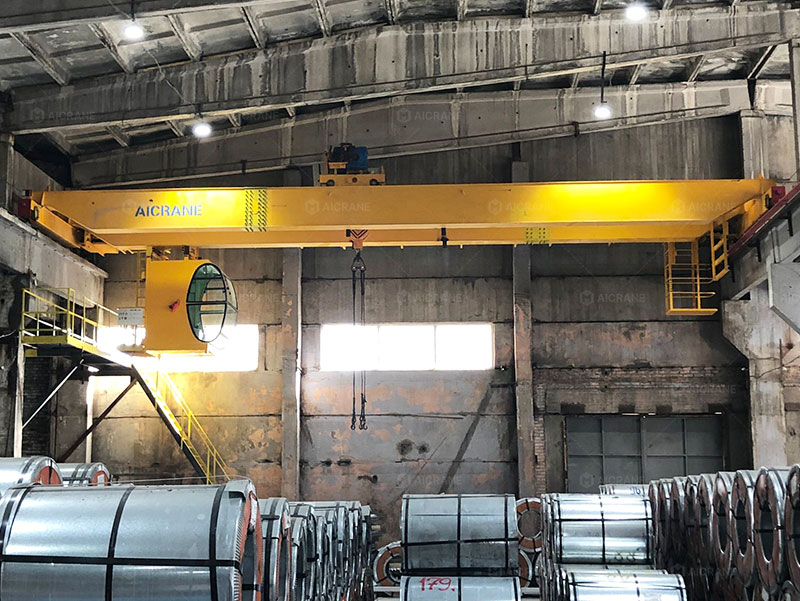
VFDs can be applied across various types of overhead cranes used in workshops, including:
-
Single Girder Overhead Cranes: VFDs provide smooth trolley travel and lifting control, ideal for handling small to medium loads.
-
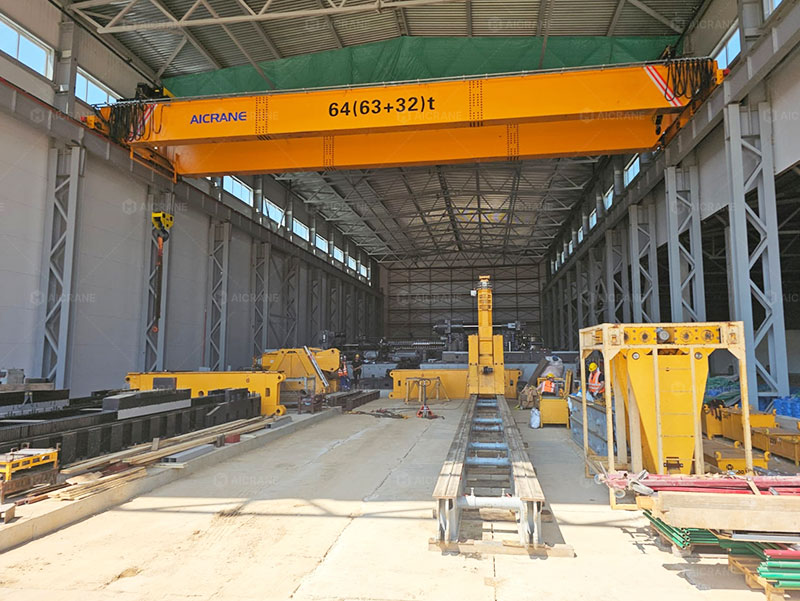
Double Girder Overhead Cranes: These heavy-duty cranes benefit from VFDs in both lifting and bridge travel operations, enhancing precision when transporting large machinery components.
-
Light-Duty Workshop Cranes: Even small light duty overhead cranes benefit from VFD integration, particularly in applications requiring delicate load positioning or frequent stop-start movements.
-
Customized Workshop Cranes: For specialized applications, such as handling hazardous materials or precision equipment, VFDs enable exact speed and torque control to meet stringent safety and operational requirements.
Considerations for VFD Integration in Workshop Cranes
While VFDs offer numerous benefits, careful planning is essential for successful integration:
1. Motor Compatibility
Not all motors are compatible with VFD operation. Workshop cranes typically use three-phase induction motors, which work efficiently with VFDs. However, motors must be rated for continuous VFD operation to prevent overheating and insulation degradation.
2. Proper Sizing and Rating
VFDs must be sized according to the crane motor’s rated voltage, current, and load capacity. Oversized or undersized drives can lead to inefficient operation, overheating, or premature failure.
3. Harmonics and Power Quality
VFDs generate harmonic currents that can affect power quality and other equipment connected to the same electrical network. Mitigation measures, such as line reactors, filters, or transformer isolation, may be necessary to prevent electrical disturbances.
4. Environmental Conditions
Workshop environments can vary widely, from clean assembly areas to heavy industrial zones with dust, moisture, or high temperatures. VFDs should be rated for the specific environmental conditions to ensure reliable performance and long service life.
5. Operator Training
VFD-equipped cranes require operators to understand variable speed controls, soft start/stop functions, and safety features. Adequate training ensures that the full benefits of VFD technology are realized without compromising safety.
Future Trends in VFD Technology for Overhead Cranes
The integration of digital controls, IoT, and AI algorithms with VFDs is transforming workshop crane operations. Future trends include:
-
Predictive maintenance: VFDs equipped with sensors can monitor motor health, detect abnormal vibrations, and predict potential failures before they occur.
-
Energy optimization algorithms: Smart VFDs can dynamically adjust speed and torque based on load, reducing energy consumption further.
-
Remote monitoring and control: IoT-enabled VFDs allow crane performance to be monitored and controlled from centralized control rooms or mobile devices.
-
Integration with advanced safety systems: VFDs can work in conjunction with load-sway suppression, collision avoidance, and automated load positioning systems for fully automated crane operation.
These advancements will further enhance the efficiency, safety, and reliability of workshop overhead cranes, making them more adaptable to the evolving needs of modern manufacturing and industrial facilities.
Conclusion
Variable Frequency Drives have revolutionized the performance of workshop overhead cranes, offering unparalleled control, energy efficiency, safety, and flexibility. By providing smooth acceleration, precise load handling, reduced mechanical stress, and energy savings, VFDs enhance both operational performance and cost-effectiveness.
For modern workshops seeking to improve crane safety, extend equipment life, and optimize energy usage, integrating VFDs into overhead cranes is no longer just an option – it is a necessity. As technology continues to evolve, VFDs will play an increasingly important role in making workshop crane operations smarter, safer, and more efficient.
Leave a Reply