Overhead cranes are essential pieces of equipment in industries ranging from steel manufacturing to logistics and heavy machinery handling. Their primary role is to lift, transport, and precisely place heavy loads with efficiency and safety. While these cranes are engineered to handle significant static weights, dynamic forces—particularly shock loads—pose unique challenges that can impact crane performance, safety, and lifespan. Understanding shock loads, how they arise, and their influence on crane components is critical for engineers, operators, and maintenance personnel.
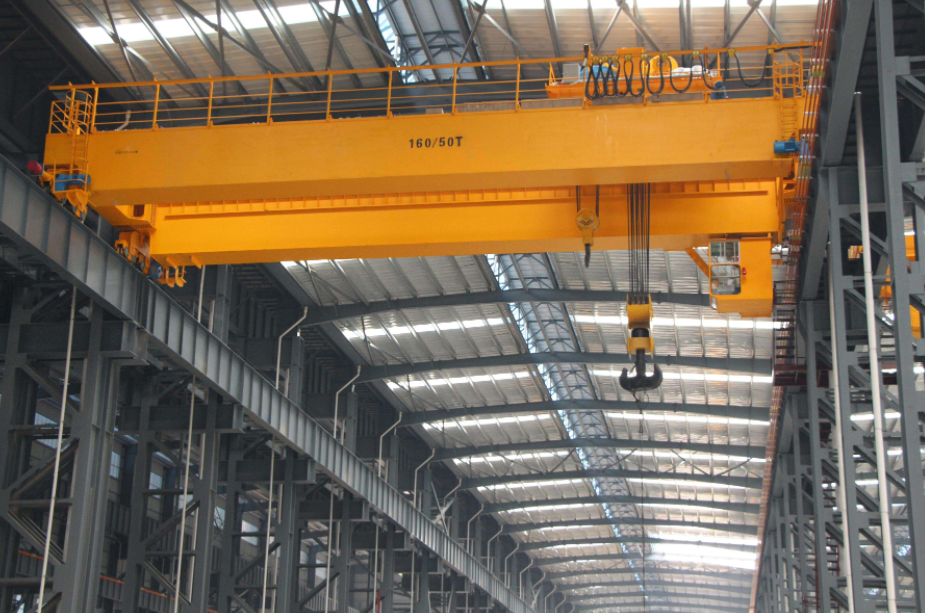
What Are Shock Loads?
A shock load is a sudden, extreme force applied to an industrial overhead crane and its components, typically occurring over a very short duration. Unlike static loads, which are constant and predictable, shock loads are dynamic and can exceed the nominal weight of the lifted object. These forces often occur during sudden starts, stops, collisions, or abrupt lifting of heavy loads.
Shock loads can originate from several sources:
-
Load Impact: Dropping a load or inadvertently letting it strike a surface can create a significant instantaneous force on the hoist, trolley, and bridge.
-
Sudden Crane Movements: Quick acceleration or deceleration of the hoist or bridge can generate shock forces.
-
Material Handling Irregularities: Lifting uneven, unbalanced, or swinging loads increases the risk of shock loading.
-
Environmental Factors: Wind gusts, seismic activity, or external vibrations may induce transient forces on the crane structure.
Understanding these sources is essential because even cranes designed for heavy-duty applications can be damaged if shock loads are not properly accounted for.
How Shock Loads Affect Crane Components
Shock loads do not impact all crane components equally. Certain parts are particularly vulnerable due to their role in load transfer and motion control.
1. Hoist Mechanism
The hoist is the most directly affected component during shock loading. Hoists are designed for steady lifting and lowering operations. When a sudden impact occurs:
-
Gear and Motor Stress: Shock forces can overload the gearbox and electric motor, causing premature wear or failure. Spur and helical gears are particularly sensitive to sudden torque spikes.
-
Brake Overload: Overhead crane hoists use brakes to hold the load stationary. Shock loads can cause brake slippage or even failure if the brakes are not rated for dynamic overload conditions.
-
Wire Rope or Chain Damage: The lifting medium, whether a wire rope or chain, can experience instant tension spikes, leading to accelerated fatigue, deformation, or breakage.
2. Trolley and Bridge Structure
The trolley and bridge distribute the load across the crane span and rails. Shock loads can significantly impact these structural elements:
-
Bending and Deflection: Sudden forces can induce bending moments that exceed the design limits of beams or girders. Repeated exposure to shock loads accelerates fatigue damage, potentially leading to cracks or permanent deformation.
-
Joint and Weld Stress: Welded connections, gussets, and bolts may be subjected to forces beyond their intended capacity. Fatigue at joints is a common failure mode in cranes experiencing frequent shock loading.
-
Rail Impact: Shock loads can also transfer to the rails, potentially leading to rail misalignment, uneven wear on wheels, and vibration issues.
3. End Trucks and Wheels
End trucks carry the bridge along the runway rails. Shock loads affect them through:
-
Wheel Bearing Stress: Sudden impact forces can overload wheel bearings, causing wear or seizure.
-
Wheel Deformation: Extreme shock loads may deform wheels, leading to misalignment, increased rolling resistance, and uneven crane movement.
-
Rail Wear: Concentrated dynamic loads accelerate rail wear and may require more frequent maintenance or replacement.
4. Control Systems
While not mechanical, control systems are indirectly affected:
-
Electrical Overloads: Rapid acceleration or deceleration can trigger motor overloads or cause abrupt current spikes in the electrical system.
-
Sensor Malfunction: Shock vibrations may interfere with limit switches, load cells, or anti-collision sensors, potentially compromising safety.
Recognizing Shock Loads in Operation
Operators and engineers must identify when shock loads are likely occurring to mitigate their effects. Key indicators include:
-
Unusual Noise or Vibration: Sudden jerks or thuds during lifting operations are clear signs.
-
Load Swinging: Excessive load movement often precedes impact-induced shocks.
-
Frequent Mechanical Failures: Premature wear on hoist components, wire ropes, or rails may indicate repeated shock loading.
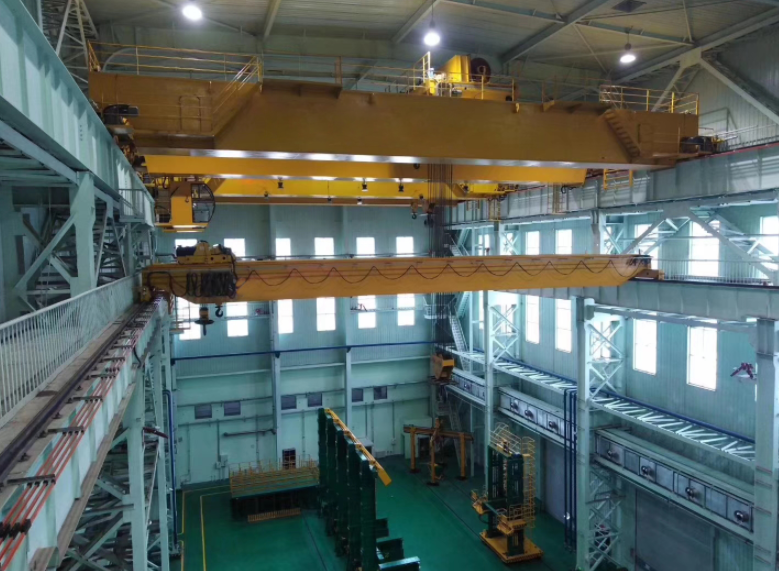
Designing Cranes to Handle Shock Loads
Modern overhead cranes are often designed with factors of safety that account for occasional shock loads. However, understanding how to enhance resistance to these forces is crucial:
-
Over-Sizing Components: Using hoists, gears, and structural members rated for higher-than-nominal loads can help accommodate occasional shocks.
-
Shock-Absorbing Elements: Some cranes incorporate buffer systems, spring-loaded hooks, or tension dampers to reduce the impact of sudden forces.
-
Dynamic Load Monitoring: Installing load sensors and monitoring systems can detect excessive shock forces in real time, allowing for corrective action.
-
Proper Maintenance: Regular inspection of hoists, wire ropes, wheels, and structural components ensures early detection of fatigue damage caused by shock loads.
-
Operator Training: Skilled operators can minimize sudden starts, stops, and improper load handling that contribute to shock loads.
Case Studies of Shock Load Effects
Example 1: Wire Rope Fatigue
A factory overhead crane used to lift steel billets experienced frequent wire rope replacement. Investigation revealed that operators were rapidly lifting uneven loads, causing repeated shock loading. Switching to a more flexible wire rope with higher dynamic load capacity and training operators in smooth handling reduced failures by over 50%.
Example 2: Bridge Beam Cracks
In another instance, an overhead crane in a manufacturing plant developed cracks in its main girder. Analysis showed that frequent sudden stops during high-speed lifting created shock loads beyond the fatigue limit of the steel. Reinforcing the bridge, installing shock-absorbing buffers, and revising operational procedures mitigated further damage.
Mitigation Strategies
Preventing damage from shock loads involves a combination of design, operational, and maintenance strategies:
-
Smooth Acceleration and Deceleration: Ensuring crane movements are gradual reduces dynamic impact. Modern VFD (variable frequency drive) motors are particularly effective.
-
Load Distribution Management: Balancing loads and avoiding eccentric lifting reduces stress concentrations.
-
Environmental Considerations: Minimizing external vibrations, securing work areas, and controlling wind effects can reduce unexpected shock loads.
-
Preventive Inspections: Establishing inspection schedules focusing on high-stress components (hoist, wire ropes, beams, wheels) ensures early detection of shock-induced damage.
Conclusion
Shock loads are an inevitable aspect of overhead crane operation, particularly in environments handling heavy, irregular, or dynamic loads. While cranes are engineered with safety factors, repeated or severe shock forces can compromise hoists, trolleys, bridge structures, wheels, and control systems. Understanding the sources, impacts, and mitigation strategies for shock loads is essential to maintain safe, reliable, and efficient crane operations.
By designing for higher dynamic loads, incorporating shock-absorbing features, training operators, and adhering to robust maintenance schedules, industries can extend the life of their overhead cranes while minimizing downtime and repair costs. Ultimately, awareness and proactive management of shock loads protect both equipment and personnel, ensuring that overhead cranes continue to deliver the performance and reliability that modern industrial operations demand.
Leave a Reply