When evaluating gantry crane capacity, many buyers focus almost exclusively on the headline number: 20 tons, 50 tons, or even 200 tons. However, experienced crane engineers know that the true lifting capability of a gantry crane is fundamentally governed by the hoist type installed on the structure. The hoist is not merely a lifting accessory—it is the core load-bearing and load-controlling mechanism that defines how much weight a gantry crane can safely, reliably, and efficiently handle.
This article explores how different hoist types directly determine gantry crane capacity limits, why hoist selection must align with application demands, and how overlooking hoist design can lead to operational bottlenecks, safety risks, or costly upgrades.
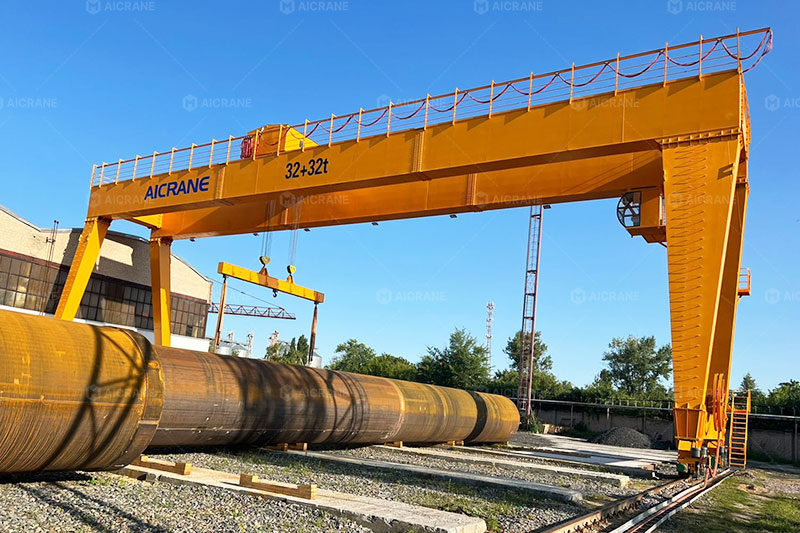
Understanding the Relationship Between Hoist and Gantry Crane Capacity
A gantry crane for sale is an integrated system composed of the steel structure, traveling mechanisms, electrical controls, and lifting equipment. Among these components, the hoist is the only element that physically carries the load during lifting.
Even if the gantry structure is designed for a higher tonnage, the crane’s rated capacity is capped by the hoist’s safe working load (SWL). In practice:
-
The crane capacity cannot exceed the hoist’s rated capacity
-
The hoist dictates lifting speed, duty cycle, and load stability
-
Hoist mechanical design affects dynamic loads transferred to the gantry
Thus, hoist type is not a secondary choice—it is a primary determinant of the crane’s real-world capacity limit.
Wire Rope Hoists and Their Capacity Constraints
Single-Reeving vs. Multi-Reeving Configurations
Wire rope hoists are the most commonly used lifting devices in gantry cranes. Their capacity depends heavily on the reeving system:
-
Single-reeving hoists are typically limited to light and medium loads
-
Multi-reeving hoists distribute load across multiple rope falls, significantly increasing lifting capacity
As capacity increases, additional rope falls are required, which directly impacts:
-
Drum size
-
Motor power
-
Hoist weight
-
Lifting speed
At higher tonnages, hoist size and weight increase rapidly, which in turn imposes higher loads on the gantry structure itself.
Drum and Rope Design Limits
Wire rope hoist capacity is constrained by:
-
Rope diameter and construction
-
Drum shell thickness and diameter
-
Groove pressure and rope fatigue limits
Once these mechanical thresholds are reached, increasing capacity further requires a fundamentally different hoist design, not just stronger steel.
Electric Chain Hoists: Practical Capacity Boundaries
Electric chain hoists are widely used on light-duty and portable gantry cranes, but their capacity ceiling is inherently lower than wire rope hoists.
Why Chain Hoists Have Lower Capacity Limits
Chain hoists rely on:
-
Load chains rather than wire rope
-
Compact gearboxes
-
Smaller motors
While this makes them ideal for:
-
Maintenance workshops
-
Confined spaces
They are not suitable for high-capacity gantry cranes due to:
-
Chain wear under high loads
-
Reduced lifting height efficiency
-
Lower duty cycle ratings
In most industrial applications, chain hoists rarely exceed 20 tons, making them unsuitable for heavy-duty gantry crane systems.
Winch Hoists and Ultra-Heavy Gantry Crane Applications
For very high capacity gantry cranes – often exceeding 100 tons – standard hoists may no longer be viable. This is where winch-type hoists come into play.
Characteristics of Winch Hoists
Winch hoists differ from conventional hoists by:
-
Separating the drum, motor, and braking system
-
Using open or semi-open drum designs
-
Allowing extreme rope diameters and multiple layers
These features enable:
-
Extremely high lifting capacities
-
Custom reeving arrangements
-
Long lifting heights
However, winch hoists introduce new challenges:
-
Slower lifting speeds
-
Complex installation
-
Higher demands on gantry structural rigidity
As a result, winch hoists are typically reserved for heavy engineering, shipbuilding, and precast concrete applications.
Hoist Duty Class and Its Impact on Capacity Limits
Capacity is not only about maximum load—it is also about how often and how intensively that load is lifted.
Duty Classification Matters
Hoists are designed according to duty classes (such as FEM, ISO, or CMAA), which define:
-
Load spectrum
-
Number of starts per hour
-
Expected service life
A hoist rated for 50 tons at a light duty class may not be suitable for continuous production lifting, whereas a heavy-duty hoist of the same nominal capacity will be physically larger and more robust.
In real-world gantry crane design:
-
Higher duty class = lower stress per lift
-
Lower duty class = reduced effective capacity over time
Selecting the wrong hoist duty rating can artificially limit crane capacity due to accelerated wear and maintenance restrictions.
Dynamic Load Effects Introduced by Hoist Type
Hoist design also determines how dynamic forces affect the gantry crane capacity.
Acceleration, Braking, and Sway
Different hoist types produce different dynamic load factors due to:
-
Lifting acceleration
-
Braking torque
-
Rope elasticity
High-speed hoists can introduce:
-
Increased impact loads
-
Higher horizontal forces on the gantry
-
Greater fatigue stress on steel structures
To compensate, designers may:
-
Reduce rated capacity
-
Increase structural safety factors
-
Limit lifting speeds
Thus, a high-performance hoist can actually reduce usable crane capacity if not properly matched to the gantry design.
Redundancy and Safety Systems in High-Capacity Hoists
As capacity increases, safety requirements become more stringent.
High-capacity hoists often incorporate:
-
Dual braking systems
-
Load limiters
-
Redundant motors or gear stages
These safety features add weight and complexity, which:
-
Increases trolley loads
-
Raises wheel pressures
-
Influences rail and foundation design
In many cases, the gantry crane’s rated capacity is adjusted downward to account for the hoist’s additional mass and safety margins.
Matching Hoist Type to Gantry Crane Application
Choosing the right hoist is not about maximizing capacity on paper—it is about optimizing usable capacity in real operating conditions.
Application-Driven Hoist Selection
-
Light workshops: Chain hoists for simplicity and low cost
-
General fabrication: Wire rope hoists with moderate reeving
-
Steel yards and precast plants: Heavy-duty wire rope hoists
-
Shipyards and power projects: Winch hoists for extreme loads
Each hoist type defines not only how much weight can be lifted, but also:
-
How smoothly the load moves
-
How often lifting can occur
-
How long the system will remain reliable
Why Hoist Selection Often Limits Future Crane Upgrades
One common misconception is that gantry crane capacity can be easily increased later. In reality, the hoist is usually the first limiting factor.
Upgrading capacity often requires:
-
Replacing the hoist entirely
-
Reinforcing the gantry structure
-
Modifying power and control systems
This makes initial hoist selection critical for future scalability.
Conclusion: Hoist Type Defines the Real Capacity Ceiling
While gantry crane capacity is often described as a single number, the truth is far more complex. Hoist type fundamentally determines the upper and practical limits of gantry crane capacity by controlling load distribution, duty cycle, dynamic forces, and long-term reliability.
Understanding how different hoist types influence capacity allows buyers and engineers to:
-
Avoid over- or under-specifying cranes
-
Improve operational safety
-
Reduce lifecycle costs
-
Ensure capacity aligns with real production demands
In gantry crane design, the hoist is not just a component—it is the heart of the lifting system, and ultimately, the gatekeeper of capacity itself.
Leave a Reply