Overhead cranes are an essential component in modern manufacturing plants, warehouses, and industrial facilities, facilitating the efficient movement of heavy loads with precision and safety. A 30-ton overhead crane, classified as a medium to heavy-duty crane, requires careful planning, precise civil works, and robust structural reinforcement to ensure safe and long-lasting operation. The success of the crane installation depends not only on the crane itself but also on the foundation and structural modifications to the facility that support it. This article explores the crucial aspects of civil works and structural reinforcement for a 30-ton overhead crane installation.
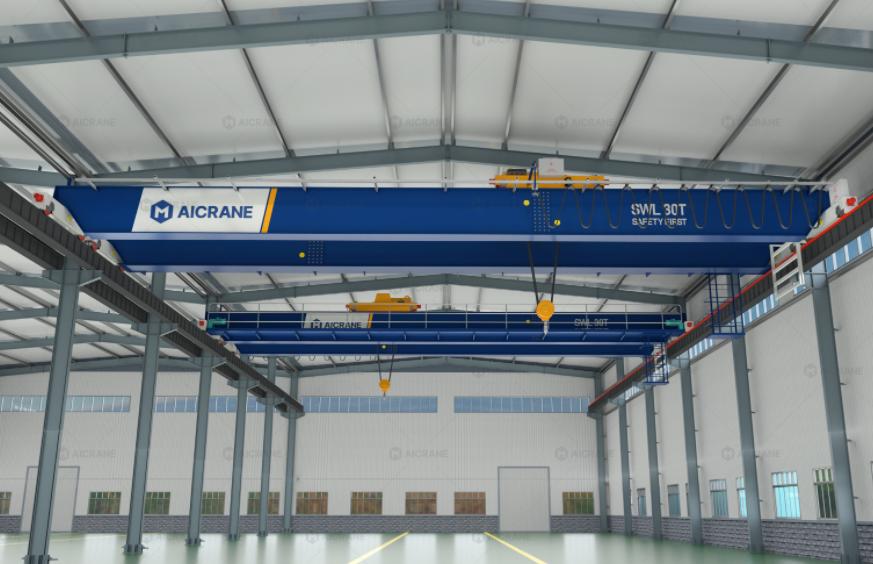
1. Understanding Load Requirements
Before beginning any civil or structural works, it is essential to understand the load requirements of the crane. A 30 ton overhead crane has a lifting capacity of 30 metric tons, but the actual loads the structure will endure are significantly higher due to dynamic factors such as acceleration, deceleration, impact loads, and trolley positioning.
Design Load Considerations Include:
-
Static Load: The weight of the crane itself including the bridge, trolley, hoist, and end trucks.
-
Dynamic Load: Additional forces caused by acceleration and deceleration of the crane and hoist. For a 30-ton crane, the dynamic load can increase the actual stress on the support structure by 25-50%.
-
Load Distribution: End trucks transfer the load to the runway beams, which then transfer it to the columns and ultimately to the foundation. Accurate load distribution calculations are vital to avoid structural failure.
2. Civil Works for Overhead Crane Installation
Civil works provide the foundation and groundwork necessary for a safe crane installation. This includes preparing the floor, constructing the crane runway, and ensuring proper drainage and environmental protection.
a. Foundation Construction
The foundation is one of the most critical elements in overhead crane installation. For a 30-ton crane, the foundation must be designed to support the vertical loads from the crane, horizontal forces from braking and acceleration, and torsional forces from uneven loading.
Key Elements of Foundation Design:
-
Load-Bearing Capacity: The foundation must be able to support the combined weight of the crane and the maximum dynamic load without excessive settlement. Soil tests are often conducted to determine the bearing capacity.
-
Reinforced Concrete Foundations: Foundations are typically made of reinforced concrete with steel reinforcement bars (rebar) to increase strength. For a 30-ton crane, foundations may include deep footings or pile foundations depending on soil conditions.
-
Foundation Dimensions: The size of the foundation must be calculated based on crane load, rail spacing, and floor slab thickness. Larger cranes generally require wider and deeper foundations to prevent tilting or differential settlement.
-
Anchor Bolts: Strong anchor bolts embedded in the foundation secure the crane runway rails. High-strength bolts are necessary to resist both shear and tensile forces.
b. Floor Preparation
The floor under and around the crane must be level, durable, and able to withstand heavy point loads. Industrial floors often consist of high-strength concrete slabs reinforced with steel mesh. For a 30-ton crane:
-
The floor thickness is typically 250-300 mm, reinforced with high-yield steel.
-
Expansion joints may be included to accommodate thermal expansion and prevent cracking.
-
Surface finishing ensures smooth movement of crane wheels and minimizes wear.
c. Environmental and Safety Considerations
Civil works should also consider environmental and operational safety:
-
Drainage Systems: Prevent water accumulation that could weaken the foundation or cause corrosion.
-
Seismic Reinforcement: In earthquake-prone areas, foundations and support structures should be designed to resist seismic forces.
-
Fire Protection: Concrete and steel structures may require fireproofing in high-risk industrial environments.
3. Structural Reinforcement for Crane Support
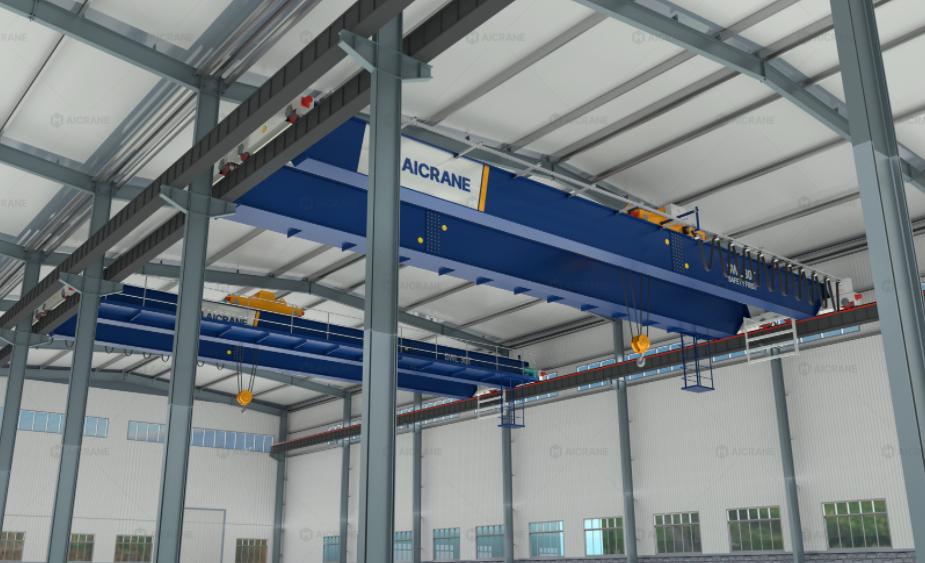
The structural reinforcement of the steel structure workshop is equally crucial. For a 30-ton overhead crane, the roof beams, columns, and crane runway girders must withstand substantial forces.
a. Crane Runway Beams
The runway beams carry the load of the crane along the building length and transfer it to the columns. These beams must be carefully designed:
-
Material Selection: Typically, high-strength steel sections such as I-beams or box girders are used.
-
Deflection Control: Excessive deflection can impair crane performance. For a 30-ton crane, allowable deflection is often limited to L/800 to L/1000, where L is the span of the beam.
-
Rail Support: Crane rails are welded or bolted to the top flange of the beams. Proper alignment and secure fixing are essential to prevent rail movement under load.
b. Building Columns and Bracing
The building’s vertical columns support the runway beams and must be reinforced to handle the crane loads:
-
Strengthening Existing Columns: If the building is retrofitted for a new crane, existing columns may require additional steel plates, concrete jackets, or bracing to meet load requirements.
-
Bracing: Diagonal or horizontal bracing reduces lateral sway and increases the rigidity of the structure. This is critical for maintaining crane stability during operation.
c. Roof and Overhead Clearance
A 30-ton crane has substantial height requirements. Structural reinforcement may involve:
-
Adjusting roof trusses to provide clearance for the crane hook at maximum lifting height.
-
Ensuring the crane bridge does not interfere with ventilation ducts, lighting, or other equipment.
4. Installation and Alignment
After completing civil works and structural reinforcement, the crane installation can proceed. Key steps include:
-
Rail Installation: Crane rails are laid on the reinforced runway beams and precisely leveled.
-
Bridge Assembly: The crane bridge is lifted into place, aligned, and secured.
-
Trolley and Hoist Installation: The trolley and hoist system are mounted and tested.
-
Load Testing: The crane is subjected to load tests, usually 125% of its rated capacity, to ensure safe operation.
5. Maintenance Considerations
Proper civil works and structural reinforcement reduce maintenance costs and extend crane lifespan. Routine inspections of runway rails, foundation cracks, and structural integrity are essential to detect wear or stress early. Reinforced foundations and steel beams also reduce vibrations, prolonging the service life of the crane components.
6. Retrofitting Existing Structures
In many cases, installing a 30-ton overhead crane involves retrofitting an existing building. Structural engineers evaluate the building’s load-bearing capacity and may recommend:
-
Adding steel columns or beams to support the crane.
-
Installing tie rods or bracing for lateral stability.
-
Strengthening floor slabs with concrete overlays or rebar reinforcement.
Conclusion
The installation of a 30-ton overhead crane is a complex project that requires detailed planning, precise civil works, and comprehensive structural reinforcement. Foundations, runway beams, columns, and floor slabs must all be engineered to withstand heavy dynamic loads and ensure long-term operational safety. Neglecting any aspect of civil or structural preparation can lead to crane misalignment, excessive deflection, or even catastrophic failure.
By investing in well-designed civil works and reinforced structures, manufacturers and industrial facilities can ensure that their 30-ton overhead crane operates safely, efficiently, and reliably for decades, ultimately improving productivity and safeguarding personnel and equipment.
Leave a Reply