Gantry cranes are among the most essential lifting equipment in industrial operations, enabling the movement of heavy and oversized loads with precision and efficiency. While gantry cranes are available in various capacities—from a few tons to several hundred tons—the 500-ton gantry crane represents a highly specialized category, designed for extremely heavy-duty applications. These cranes are integral in industries such as shipbuilding, power generation, heavy engineering, and large-scale infrastructure projects. However, their immense lifting capacity brings with it significant engineering challenges, requiring meticulous design, planning, and operational considerations.
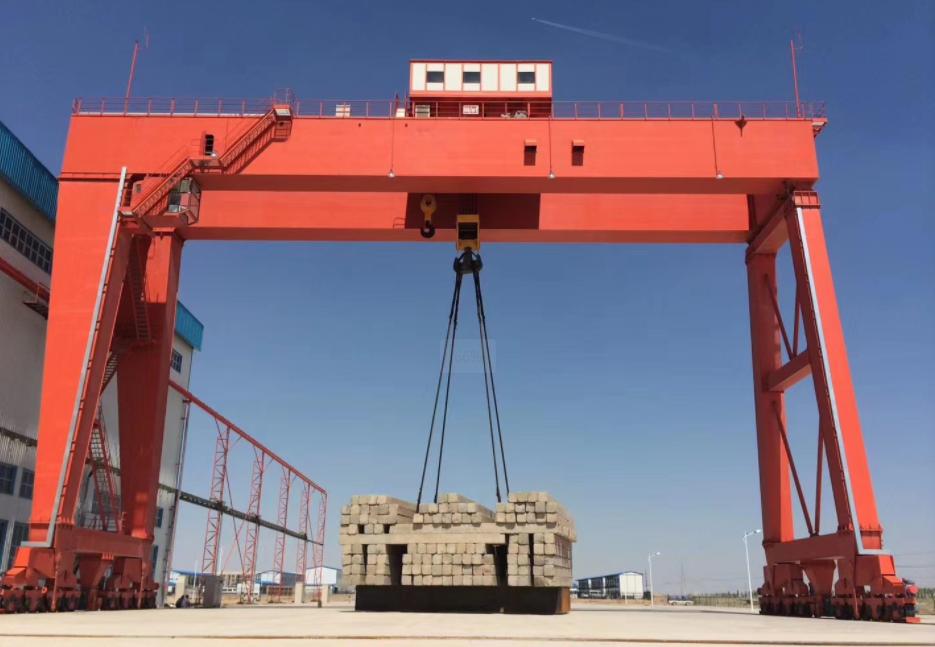
Specialized Uses of 500 Ton Gantry Cranes
1. Shipbuilding and Offshore Platforms
One of the most prominent applications of 500 ton gantry cranes is in the shipbuilding industry. Shipyards frequently handle large ship blocks, hull sections, and modules weighing hundreds of tons. A single ship block can easily exceed 400 tons, necessitating the use of cranes capable of safely lifting and maneuvering these structures.
In offshore engineering, the construction of oil rigs and wind turbine platforms often involves heavy prefabricated sections. Gantry cranes with a 500-ton capacity can handle these massive components with precision, ensuring that modules are correctly aligned during assembly.
2. Power Plant Construction
Power plants—especially nuclear and thermal facilities—require the movement of enormous machinery and structural components. Steam generators, turbines, condensers, and large heat exchangers often weigh several hundred tons. A 500-ton gantry crane enables the safe and efficient lifting of these components from transport vehicles to their installation positions within the plant.
The ability to handle such massive loads reduces reliance on multiple smaller cranes, improving workflow efficiency and minimizing project timelines.
3. Heavy Industrial Manufacturing
Industries producing heavy machinery, industrial presses, and mining equipment often rely on high-capacity gantry cranes. A 500-ton crane can lift large molds, casting parts, and assembly modules for manufacturing heavy-duty machinery. In steel production plants, for instance, these cranes assist in moving massive slabs, rolls, and furnaces that would otherwise require complex multi-crane arrangements.
4. Bridge and Infrastructure Projects
Large infrastructure projects, such as suspension bridges or long-span highway bridges, require the handling of massive girders and precast concrete segments. A 500-ton gantry crane can lift and precisely place these enormous structural elements, reducing assembly time and improving safety by minimizing manual handling.
In railway infrastructure, these cranes are often used to lift and position large track segments, concrete sleepers, and overhead support structures for high-speed rail lines or heavy freight corridors.
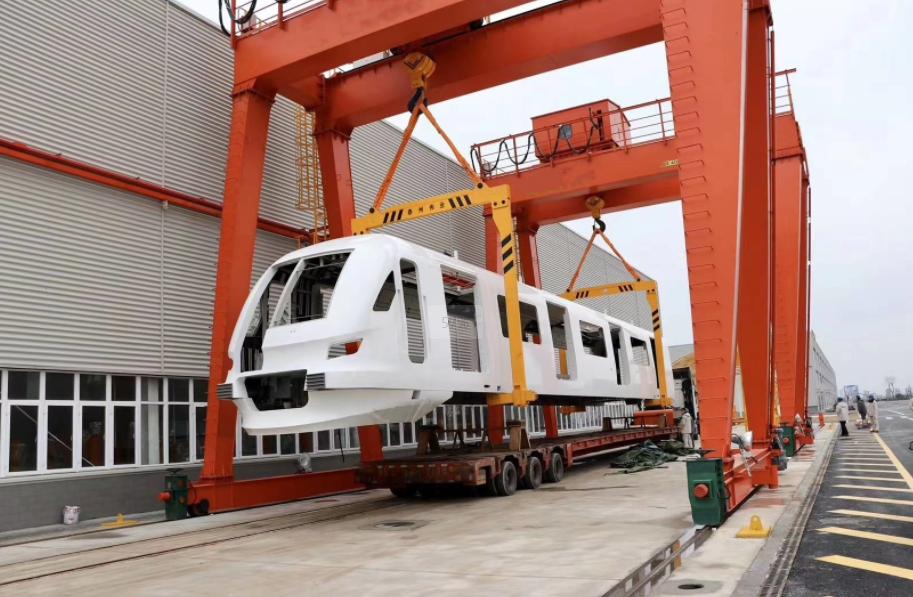
Engineering Challenges in Designing 500 Ton Gantry Cranes
While the applications of 500-ton gantry cranes are diverse and crucial, designing and operating such cranes is a highly complex engineering task. The challenges involve structural integrity, stability, material selection, safety systems, and operational efficiency.
1. Structural Design and Material Selection
A crane with a 500-ton capacity must have a robust structural framework capable of withstanding not only the vertical load but also dynamic forces during lifting and movement.
-
Main girder design: The main girder must resist bending and torsional stresses. Engineers often use box girders or truss structures made from high-strength steel to achieve the required stiffness and strength while keeping the weight manageable.
-
Leg and support structures: The crane’s legs must support the massive loads and transmit them safely to the foundation or rails. Reinforced steel with careful welding and bolting practices ensures durability and safety.
Material selection is critical. High-grade structural steels with excellent yield strength and fatigue resistance are essential to prevent permanent deformation or failure under repeated heavy loads.
2. Stability and Load Distribution
At such high capacities, stability becomes a paramount concern. Even slight deviations in load distribution or unexpected forces, such as wind gusts, can compromise the crane’s safety.
-
Counterweight systems: To maintain balance, engineers often incorporate counterweights that offset the load being lifted, reducing the risk of tipping.
-
Load moment calculations: Precise calculations of load moments, factoring in cantilevered extensions or asymmetrical loads, are necessary to prevent structural overstress.
-
Foundation engineering: The foundation or rail system supporting the crane must withstand enormous vertical and horizontal forces. In some cases, reinforced concrete pads or deep pile foundations are used to ensure stability.
3. Hoisting Mechanisms and Safety Systems
The hoisting system is one of the most critical components in a 500-ton gantry crane.
-
Multi-rope hoists: Lifting massive loads requires multiple wire ropes operating simultaneously. The synchronization of these ropes is critical to avoid uneven lifting and stress concentrations.
-
Hydraulic or electric drives: High-capacity cranes may use electric or hydraulic drive systems capable of controlling both speed and load smoothly. Precision control reduces dynamic loading and enhances safety.
-
Load monitoring: Advanced sensors and load monitoring systems ensure that the crane never exceeds its rated capacity. Overload detection, sway prevention, and automated emergency braking are standard safety measures.
4. Wind and Environmental Considerations
Outdoor operations introduce additional engineering challenges. Wind loads, temperature variations, and seismic activity can affect crane stability.
-
Wind load analysis: Large goliath cranes act like sails, and wind can induce significant lateral forces. Engineers must conduct wind load simulations and may incorporate aerodynamic design features to reduce these effects.
-
Seismic design: In earthquake-prone regions, the crane and its foundation must meet strict seismic criteria to prevent catastrophic failure.
5. Operational Challenges
Operating a 500-ton gantry crane is not just about engineering design; it also involves significant operational considerations:
-
Precision handling: Lifting massive loads requires careful maneuvering, often guided by sophisticated control systems that allow operators to make precise adjustments.
-
Maintenance demands: Regular inspections and maintenance are vital. Even minor wear on cables, hoists, or structural components can pose safety risks.
-
Training: Operators require specialized training to handle high-capacity cranes safely, including emergency response procedures and load management strategies.
Conclusion
A 500-ton gantry crane represents a pinnacle of industrial lifting capability, serving specialized roles in shipbuilding, power generation, heavy manufacturing, and large-scale infrastructure projects. Its ability to handle enormous loads with precision enhances efficiency, reduces project timelines, and enables construction and manufacturing feats that would be impossible with smaller cranes.
However, the engineering and operational challenges associated with such cranes are formidable. From structural integrity and material selection to stability, hoisting mechanics, and environmental considerations, every aspect of design and operation must be meticulously planned and executed. Advanced safety systems, precise load monitoring, and rigorous maintenance protocols are essential to ensure reliable performance and prevent catastrophic failures.
Ultimately, the 500-ton gantry crane is not merely a lifting machine – it is a testament to engineering excellence, combining structural ingenuity, mechanical sophistication, and operational precision to meet the demands of some of the world’s most challenging industrial applications. As industries continue to push the boundaries of scale and complexity, these cranes will remain indispensable tools in achieving engineering and construction milestones.