Selecting the right gantry crane is crucial for efficient material handling in industries ranging from manufacturing and construction to logistics and shipbuilding. Among the variety of gantry crane designs, A-frame and U-frame gantry cranes are two of the most commonly used structures. While both cranes serve the primary function of lifting and transporting heavy loads, their structural differences, load-handling capacities, and application suitability make the choice between them significant. Understanding load characteristics is key to determining which gantry crane type is optimal for your operation.
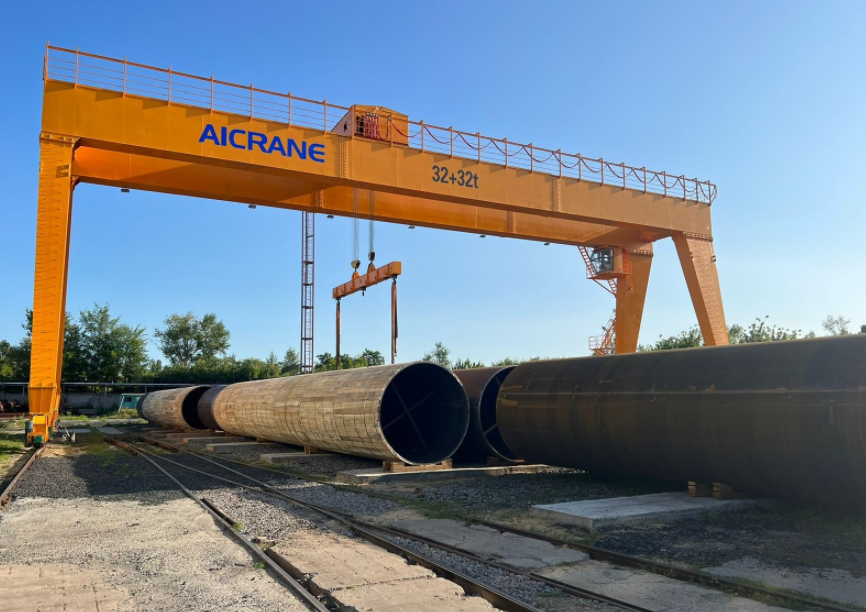
Understanding A-Frame and U-Frame Gantry Cranes
Before diving into the selection process, it’s important to understand the fundamental differences between A-frame and U-frame gantry cranes:
-
A-Frame Gantry Crane: As the name suggests, the side frames of this crane form a triangular “A” shape. The design typically involves two slanted legs that converge at the top, supporting a horizontal bridge beam. A frame gantry cranes are usually single or double girder and are popular for light-to-medium load applications.
-
U-Frame Gantry Crane: This crane features a rectangular “U” shape, with vertical legs that support the horizontal bridge beam without any slant. U-frame cranes are typically used for medium-to-heavy loads due to their robust structural stability. The straight vertical legs provide a wider lifting span and allow for higher clearance under the crane.
Both crane types can be either stationary or mobile, with mobile versions mounted on wheels or rails to provide operational flexibility.
Key Load Characteristics to Consider
When deciding between an A-frame and U-frame gantry crane, the primary factor is the load characteristics, which include weight, dimensions, frequency of handling, and lifting height. Understanding these characteristics will help ensure that the chosen crane performs efficiently and safely.
1. Load Weight
-
A-Frame Gantry Cranes: Ideal for lighter loads, usually ranging from 1 ton to 50 tons. The slanted legs of the A-frame design provide stability for moderate weight but may not withstand extremely heavy or concentrated loads.
-
U-Frame Gantry Cranes: Better suited for heavier loads, often exceeding 50 tons and going up to several hundred tons in industrial applications. The vertical legs and reinforced horizontal beam allow U-frame cranes to handle high-capacity loads without excessive deflection or structural stress.
Selection Tip: If your operation involves frequent handling of extremely heavy equipment or materials, a U-frame gantry crane is generally more appropriate.
2. Load Dimensions
-
A-Frame: The slanted legs reduce the effective clearance width under the crane, which can restrict movement for very large loads. A-frame cranes are best for smaller, compact loads that don’t require a wide span.
-
U-Frame: Vertical legs maximize the under-crane space, making it suitable for bulky or oversized loads. This design allows easier access for forklifts, trucks, or other handling equipment to pass under the crane.
Selection Tip: For wide or oversized loads, especially in shipyards, large workshops, or storage yards, U-frame gantry cranes offer better accessibility and handling.
3. Lifting Height
-
A-Frame: Due to the sloped leg design, A-frame cranes may offer limited lifting height compared to U-frame cranes. The structural configuration can restrict vertical clearance, especially for higher loads.
-
U-Frame: The straight vertical supports allow maximum lifting height, making U-frame cranes suitable for operations that require stacking, tall assemblies, or high-lift applications.
Selection Tip: When lifting loads to significant heights, particularly in multi-level storage facilities or construction sites, U-frame cranes provide more vertical flexibility.
4. Frequency and Speed of Operation
-
A-Frame: Lightweight and compact, A-frame cranes are often easier to set up and move, making them ideal for moderate-duty operations with lower lifting frequency. They can achieve faster assembly times and are more cost-effective for intermittent use.
-
U-Frame: Built for heavy-duty, high-frequency operations, U-frame cranes are designed for continuous lifting in demanding industrial environments. While they may have higher initial investment and installation requirements, they are more durable under repetitive heavy loads.
Selection Tip: Consider the operational tempo of your facility. For high-volume, continuous operations with heavy materials, U-frame cranes provide long-term reliability.
5. Load Stability and Precision
-
A-Frame: Due to the angled leg design, there can be minor lateral sway under heavy or uneven loads. For precise lifting tasks, A-frame cranes may require additional stabilizing mechanisms.
-
U-Frame: Offers superior load stability thanks to vertical legs and a more rigid bridge. For precision lifting, alignment, or installation tasks—such as in machinery assembly, shipbuilding, or steel fabrication – U-frame cranes excel.
Selection Tip: When handling loads that require precise placement, U-frame cranes reduce the risk of swaying and ensure smoother operation.
6. Environmental and Site Considerations
-
A-Frame: More suitable for smaller workshops, short-span applications, or areas with limited headroom. The compact footprint allows A-frame cranes to fit in tighter spaces.
-
U-Frame: Ideal for outdoor yards, shipyards, and industrial facilities where larger spans and higher lifting heights are needed. The robust structure withstands wind and outdoor conditions better than A-frame designs.
Selection Tip: Evaluate your facility’s dimensions, ground conditions, and exposure to weather. U-frame cranes are generally more adaptable for outdoor or large-span applications.
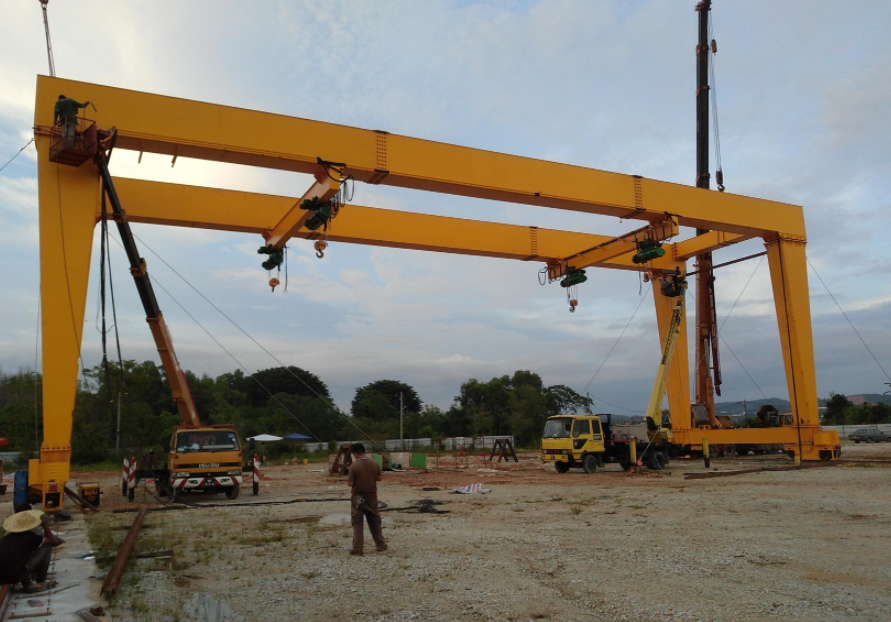
Other Considerations
Beyond load characteristics, there are additional factors that may influence your choice:
-
Mobility: Both A-frame and U-frame cranes can be mobile, but U-frame designs are often integrated with rubber-tyred wheels or rails for handling heavier materials outdoors.
-
Installation Costs: A-frame cranes typically have lower installation costs and simpler foundations, while U-frame cranes may require reinforced foundations due to higher load capacity.
-
Maintenance: Heavier U-frame cranes may require more maintenance but are generally built with durability in mind. A-frame cranes, while simpler, can have more wear if misused with heavier loads than intended.
-
Customization: Both gantry crane types can be customized with electric hoists, hydraulic lifting, or advanced control systems, but the frame type influences maximum capacity and span options.
Practical Examples
-
A-Frame Applications: Small factories handling metal sheets, light machinery, or containers; workshops with limited space; operations requiring moderate lifting with occasional mobility.
-
U-Frame Applications: Shipyards lifting large hull sections; steel fabrication plants moving heavy beams; precast concrete operations handling massive slabs; logistics yards handling oversized cargo.
Conclusion
Choosing between an A-frame and U-frame gantry crane requires careful analysis of load characteristics. Key factors include load weight, size, lifting height, frequency, precision requirements, and environmental conditions.
-
For light-to-medium loads, compact operations, or limited headroom, A-frame gantry cranes are cost-effective and versatile.
-
For heavy-duty, high-capacity, or high-precision operations, especially with large or oversized loads, U-frame gantry cranes offer superior stability, height clearance, and durability.
By thoroughly assessing your operational requirements and understanding the structural strengths of each frame type, you can select a gantry crane that maximizes efficiency, safety, and long-term reliability.