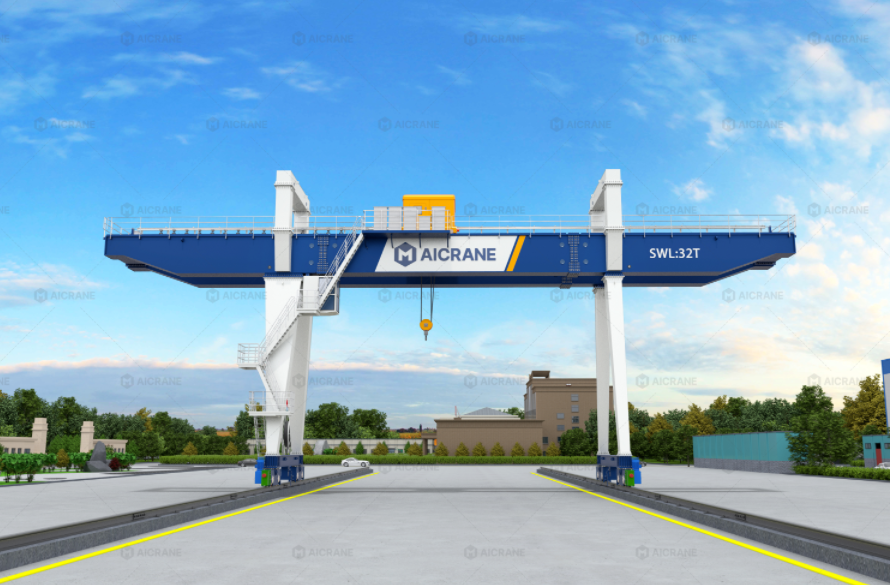
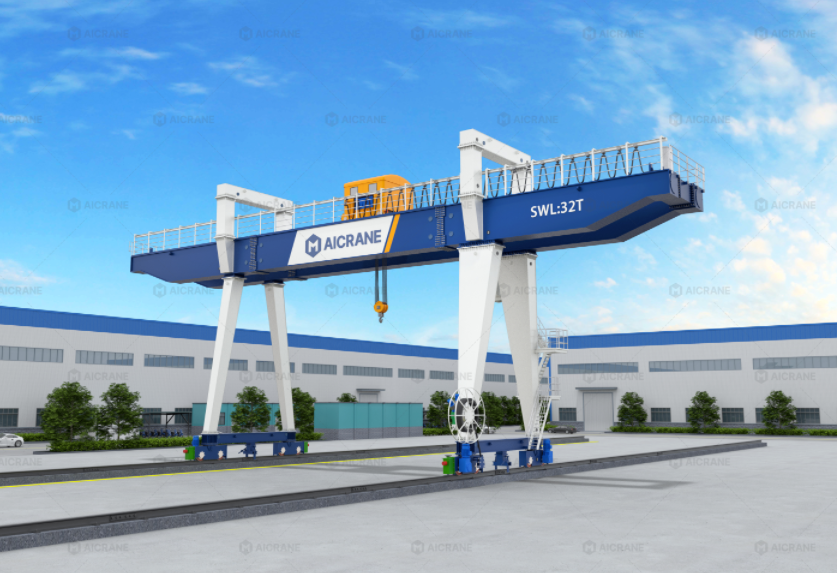
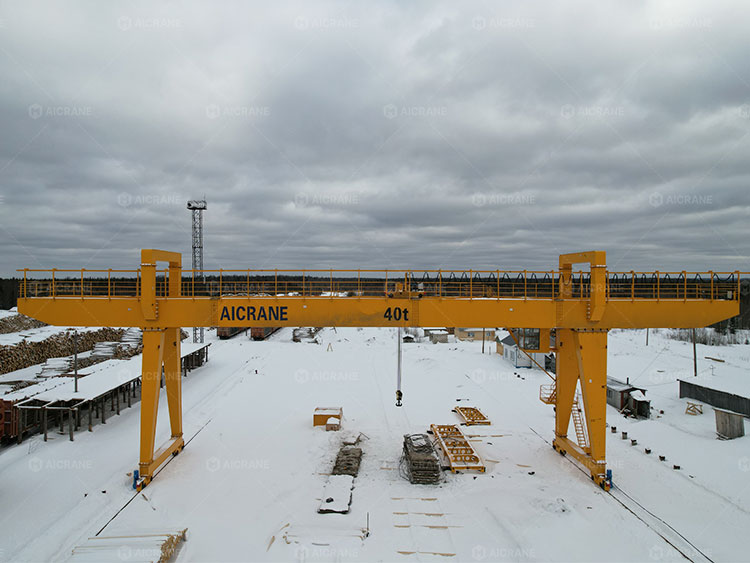
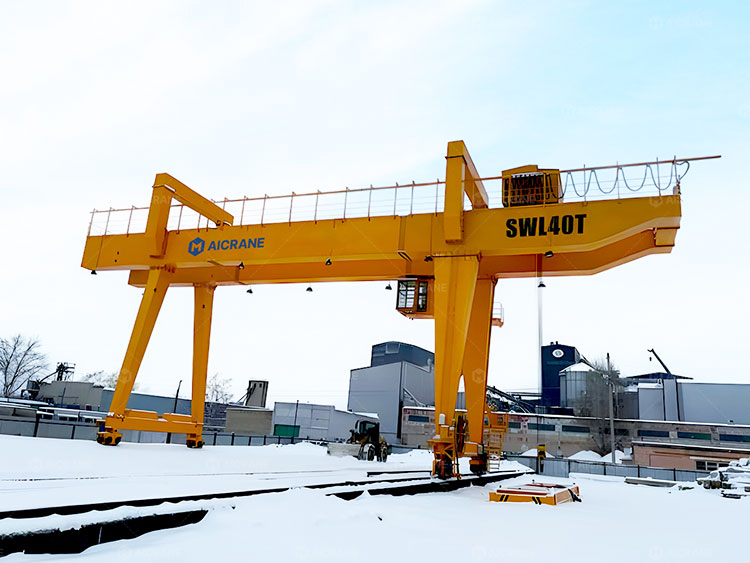
As industrial lifting demands continue to grow, many projects require double girder gantry cranes with increasingly higher lifting capacities. From 20 tons to 100 tons and beyond, capacity upgrades are not simply a matter of installing a larger hoist. Increasing the rated load of a double girder gantry crane has far-reaching structural implications, particularly for the steel structure that forms the backbone of the crane system.
Understanding how increased capacity affects the steel structure is critical for crane designers, manufacturers, project engineers, and end users. Improper structural scaling can lead to excessive deflection, fatigue damage, reduced service life, or even structural failure. This article explores in detail how increasing lifting capacity influences the steel structure of double girder gantry cranes, including girder design, leg systems, connections, materials, and compliance with international standards.
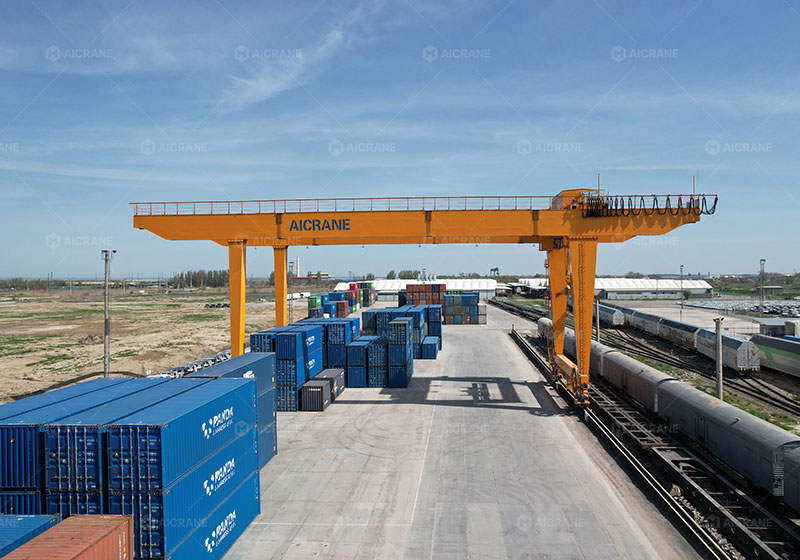
1. Relationship Between Lifting Capacity and Structural Load
1.1 Direct Increase in Static Load
The most obvious impact of higher lifting capacity is the increase in static vertical load acting on the crane structure. When capacity doubles, the steel structure must support not only the additional lifted weight but also:
-
Heavier hoisting mechanisms
-
Larger trolley assemblies
-
Stronger rails and walkways
This means that the total design load grows disproportionately, not linearly. For example, upgrading a crane from 50 tons to 100 tons may increase the total structural load by more than 100% once self-weight and auxiliary equipment are included.
1.2 Amplification of Dynamic Loads
Higher capacity cranes experience stronger dynamic effects, including:
-
Impact loads during lifting and lowering
-
Inertia forces during trolley travel
-
Braking and acceleration forces
These dynamic loads significantly affect stress distribution in the steel structure, particularly at mid-span girders, wheel loads, and leg-to-girder connections.
2. Impact on Main Girder Design
2.1 Girder Section Size and Shape
As capacity increases, the main girders must resist higher bending moments and shear forces. This directly influences:
-
Girder height (depth)
-
Web plate thickness
-
Flange plate width and thickness
In high-capacity double girder gantry cranes, box-type girders are commonly used because they offer:
-
Higher torsional rigidity
-
Better fatigue performance
-
Improved resistance to lateral deformation
Increasing capacity often requires significantly deeper girders, not just thicker plates, to control deflection within allowable limits.
2.2 Deflection Control Requirements
Structural deflection becomes more critical as capacity increases. Excessive deflection can:
-
Affect trolley movement stability
-
Cause uneven wheel loads
-
Reduce operator comfort and safety
Typical deflection limits (such as L/700 or L/800) become more difficult to achieve at higher capacities, forcing designers to optimize girder geometry and material distribution.
3. Effects on Gantry Legs and Support System
3.1 Leg Section Reinforcement
The gantry legs transmit all vertical and horizontal forces to the foundation. As lifting capacity increases:
-
Axial compression forces rise sharply
-
Bending moments from wind and trolley movement increase
-
Buckling risk becomes a primary concern
High-capacity cranes often require box-type or multi-plate welded legs, replacing simpler I-beam or tubular designs used in lower-capacity systems.
3.2 Stiffness and Lateral Stability
Larger loads demand greater lateral stiffness to resist:
-
Skewing forces during travel
-
Wind loads in outdoor applications
-
Uneven rail conditions
This leads to wider leg spacing, thicker plates, and additional internal stiffeners within the leg structure.
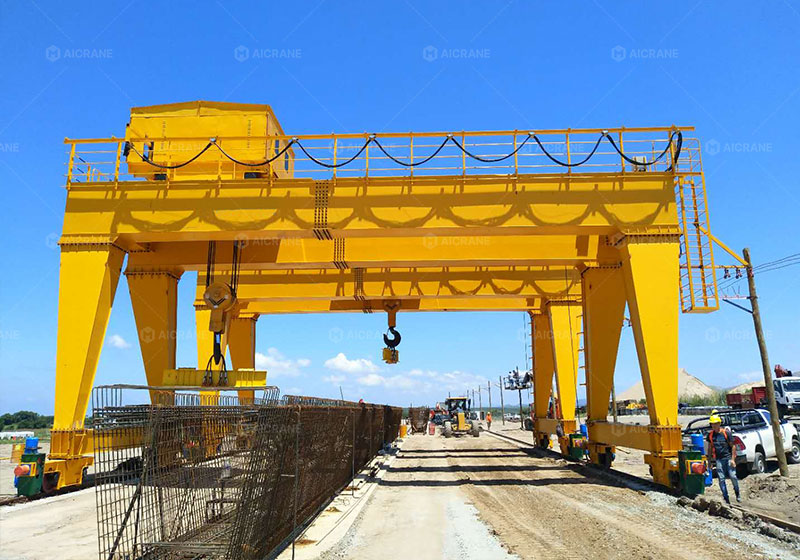
4. Influence on Connection and Joint Design
4.1 Bolted vs. Welded Connections
With increased capacity, joint design becomes more critical. High-stress regions such as:
-
Girder-to-leg connections
-
End beam interfaces
-
Diagonal bracing joints
must withstand greater cyclic loads. As a result:
-
High-strength bolts (e.g., Grade 10.9) are often required
-
Weld sizes and inspection standards increase
-
Stress concentration must be carefully managed
4.2 Fatigue Performance of Joints
Higher capacity cranes often operate under heavy-duty classifications (A5, A6, A7), increasing fatigue risk. Structural joints must be designed to:
-
Minimize stress concentrations
-
Use smooth load transitions
-
Meet fatigue design criteria under international standards
5. Material Selection and Steel Grade Upgrades
5.1 Higher Strength Steel Requirements
To control weight while increasing capacity, designers often upgrade steel grades, such as:
-
From Q235 to Q345 or Q355
-
From S235 to S355 or S460
Higher-strength steel allows thinner sections while maintaining load-bearing capacity, but it also requires:
-
Stricter welding procedures
-
Better quality control
-
Enhanced inspection methods
5.2 Trade-Off Between Strength and Toughness
In heavy-duty and cold-environment applications, higher capacity large gantry cranes must balance strength with toughness. Brittle fracture risk increases if inappropriate steel grades are used, making material selection a critical structural consideration.
6. Effects on Wheel Loads and End Beams
6.1 Increased Wheel Pressure
Higher lifting capacity significantly increases wheel loads, which affects:
-
End beam structural design
-
Rail selection
-
Wheel material and diameter
The steel structure must distribute wheel loads evenly to prevent local overstressing and premature rail damage.
6.2 Reinforcement of End Beams
End beams may require:
-
Thicker web plates
-
Reinforced wheel seats
-
Additional diaphragms
to accommodate the higher reaction forces transferred from the main girders.
7. Influence on Bracing and Overall Structural Stiffness
7.1 Need for Additional Bracing
As capacity increases, structural stiffness becomes more important than pure strength. Designers often add:
-
Horizontal bracing between girders
-
Diagonal bracing in leg systems
-
Portal frame reinforcements
These elements help control deformation and improve overall structural integrity.
7.2 Resistance to Environmental Loads
High-capacity gantry cranes are frequently installed outdoors, where wind loads combine with high lifting loads. A stronger steel structure ensures:
-
Better resistance to overturning moments
-
Improved stability during non-operational conditions
8. Impact on Manufacturing and Fabrication Process
8.1 Increased Welding Volume
Higher capacity steel structures require:
-
Thicker plates
-
Longer weld seams
-
Multi-pass welding
This increases fabrication complexity and demands higher welding quality standards.
8.2 Stricter Quality Control
Non-destructive testing (NDT), such as ultrasonic testing (UT) and magnetic particle testing (MT), becomes more critical as structural stresses increase. Fabrication tolerances must be tightly controlled to ensure structural performance.
9. Compliance with Standards and Safety Margins
Increasing capacity means the steel structure must comply with stricter requirements under standards such as:
-
FEM
-
ISO
-
EN
-
CMAA
Safety factors, fatigue classifications, and load combinations all become more conservative, directly influencing structural dimensions and material usage.
10. Economic and Operational Implications
10.1 Cost Increase Is Not Linear
Increasing crane capacity significantly affects steel structure cost due to:
-
Heavier materials
-
Higher steel grades
-
Increased fabrication time
However, a well-optimized structure can minimize unnecessary weight while ensuring safety.
10.2 Long-Term Performance Benefits
A properly designed high-capacity steel structure delivers:
-
Longer service life
-
Reduced maintenance
-
Higher operational reliability
These benefits often outweigh the higher initial investment.
Conclusion
Increasing the lifting capacity of a double girder gantry crane has a profound impact on its steel structure. From main girders and legs to connections, materials, and fabrication processes, every structural element must be carefully redesigned to handle higher static and dynamic loads.
Rather than simple scaling, capacity increases require holistic structural optimization, balancing strength, stiffness, fatigue resistance, and economic efficiency. For high-capacity gantry cranes, the steel structure is not just a supporting frame—it is a critical engineered system that determines safety, performance, and long-term value.
Understanding these structural implications allows project owners and engineers to make informed decisions, ensuring that higher capacity gantry cranes operate safely, efficiently, and reliably throughout their service life.