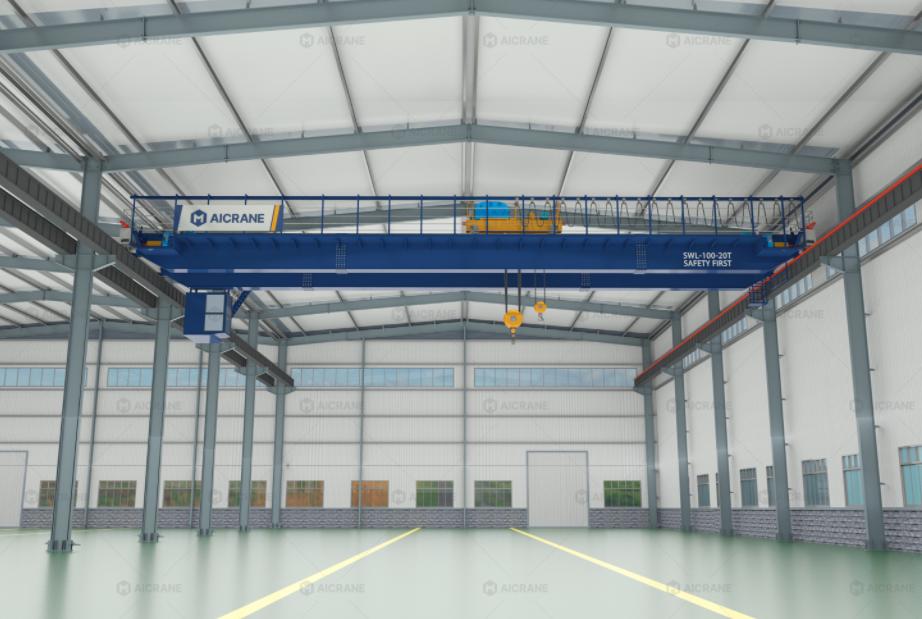
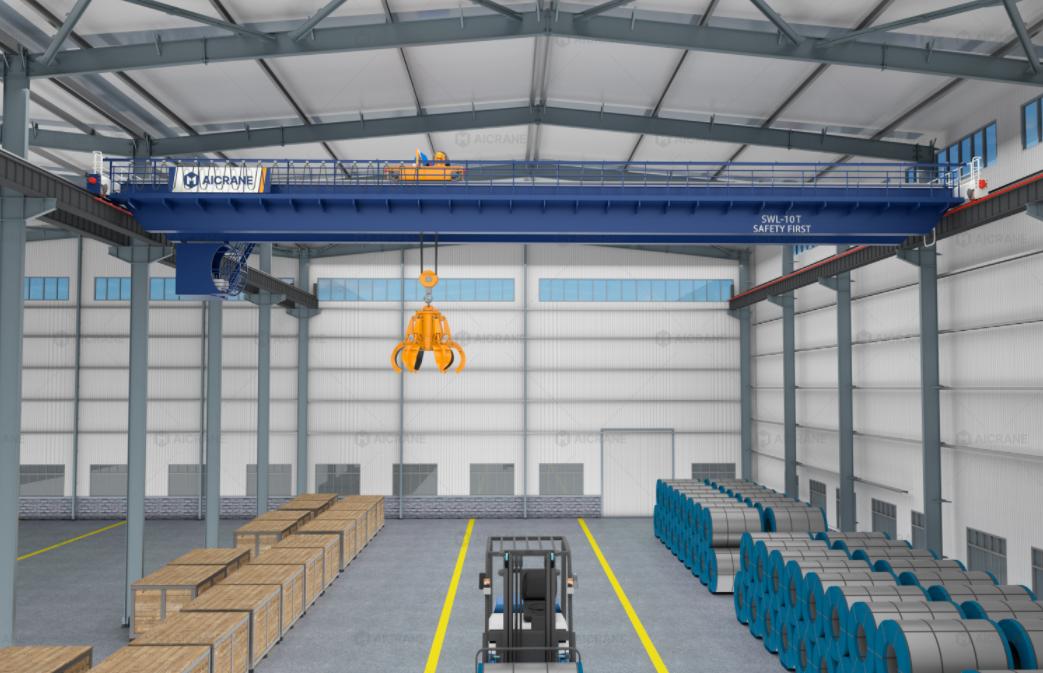
Double girder overhead cranes are widely used in industrial environments where heavy-duty lifting, precise load control, and efficient material handling are essential. These cranes are typically employed in factories, warehouses, shipyards, steel plants, and power generation facilities, with lifting capacities ranging from 10 tons to several hundred tons. While the crane itself is a critical component of any industrial operation, the steel structure that supports it is equally important. Designing a steel structure to safely and efficiently support double girder overhead crane loads is a complex engineering challenge that requires careful planning, precise calculations, and adherence to industry standards.
1. Understanding Double Girder Overhead Cranes
A double girder overhead crane consists of two parallel girders that span the width of a building or workshop. The hoist, trolley, and bridge run along these girders, providing high lifting capacity and enhanced stability. Unlike single girder cranes, double girder systems distribute the weight of the load across two girders, reducing stress on individual components. This design allows for heavier loads, higher lifting heights, and greater operational safety. However, the increased weight and dynamic forces necessitate a robust supporting steel structure engineered specifically for these loads.
2. Key Considerations in Steel Structure Design
When designing a steel structure to support a double girder overhead crane, engineers must consider several critical factors:
a. Load Analysis
Load analysis is the foundation of steel structure design. The structure must safely support the dead weight of the crane itself (girders, trolley, hoist, and bridge) as well as the live load, which is the material being lifted. Additionally, dynamic loads such as acceleration, deceleration, wind forces, and potential seismic activity must be accounted for. For double girder cranes, point loads are concentrated at the wheels of the crane bridge, requiring careful calculation to ensure that columns, beams, and supporting trusses can withstand these forces without excessive deflection.
b. Span Length
The span length—the distance between crane-supporting columns—directly affects the design of the steel structure. Longer spans require stronger beams or trusses to prevent sagging and maintain structural stability. Integrated truss systems are often used in wide-span buildings to distribute the crane load efficiently across multiple members.
c. Building Height and Lifting Clearance
The steel structure must accommodate the lifting height of the crane, ensuring sufficient headroom for the hoist and the load. Designers must also consider space for maintenance, crane operation, and the installation of safety devices. An adequately high structure ensures that the crane can operate at full lifting capacity without interference.
d. Column and Beam Design
Columns and beams form the primary load-bearing elements of the steel structure. The choice of material grade, cross-sectional dimensions, and bracing methods are critical for supporting double girder cranes. Columns must resist vertical loads and lateral forces, while beams (girders, roof trusses) must carry both the crane weight and the transferred load from the crane wheels.
e. Deflection Control
Deflection is a key concern in crane-supported steel structures. Excessive deflection can affect crane operation, lead to misalignment, and increase wear on crane components. Engineers typically limit deflection to a fraction of the span length, following standards such as the European FEM or American CMAA guidelines. Adequate bracing, proper member sizing, and material selection all contribute to controlling deflection.
3. Dynamic Load Considerations
Double girder overhead cranes impose dynamic forces on the supporting structure due to acceleration, deceleration, and load swinging. These dynamic effects can amplify stresses and lead to fatigue over time. Steel structures must be designed with safety factors to account for these variations:
-
Impact Factor – Additional load applied to account for the crane’s moving mass and sudden braking.
-
Vibration and Resonance – The structure must avoid natural frequencies that could resonate with crane movements.
-
Lateral Forces – Side forces generated during travel or lifting must be transferred safely to the foundation.
Designing for dynamic loads ensures operational reliability and prolongs the life of both the crane and the steel structure.
4. Foundation Design
The steel structure must transfer crane loads safely to the ground through the foundation. Crane foundations are often reinforced with concrete footings, embedded steel plates, and anchor bolts that secure columns. Proper soil analysis is essential to prevent settlement, tilting, or uneven load distribution, which could compromise crane operation. The foundation design must consider:
-
Load intensity from crane wheels.
-
Concentrated point loads at column bases.
-
Potential vibration from crane movements.
-
Soil bearing capacity and local building codes.
5. Integration with Building Roof and Trusses
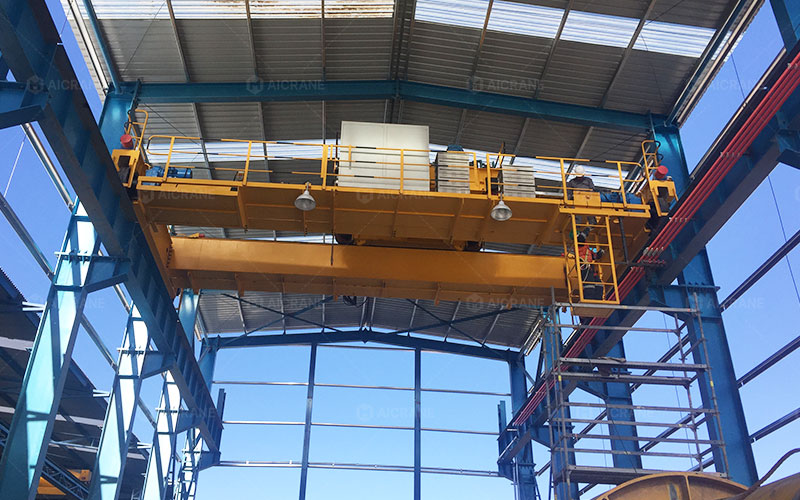
Double girder cranes typically run on rails mounted at the top of columns or along dedicated runway beams. Integrating the crane rails into the steel structure requires precise alignment and level installation. Roof trusses may also need reinforcement to support additional loads if the building is used for overhead cranes in areas where cranes travel near the roofline. In some cases, gantry-like extensions or supplementary beams are designed to ensure full structural integrity.
6. Safety Standards and Regulations
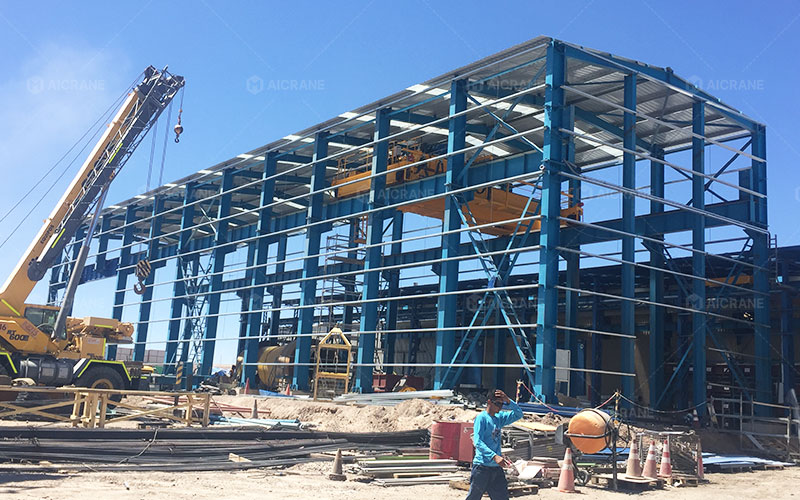
Designing steel structures to support double girder overhead cranes is not merely a matter of structural calculations—it also involves strict adherence to safety standards. Organizations such as the Crane Manufacturers Association of America (CMAA), Fédération Européenne de la Manutention (FEM), and local building codes provide guidelines on:
-
Load combinations.
-
Structural deflection limits.
-
Safety factors for dynamic loads.
-
Design for seismic and wind resistance.
Compliance with these standards is essential for legal, operational, and insurance purposes.
7. Material Selection and Corrosion Protection
High-strength structural steel is commonly used for crane-supporting buildings due to its load-bearing capabilities and durability. Engineers must select steel grades that offer optimal balance between strength, ductility, and cost. Corrosion protection is also crucial, especially in humid, coastal, or industrial environments. Options include galvanization, powder coating, or applying industrial-grade paints to extend the service life of the steel structure.
8. Advantages of Purpose-Built Structures
Designing steel structures specifically for double girder overhead cranes offers several benefits over retrofitting cranes into existing buildings:
-
Optimized Load Distribution – The structure is engineered to handle point loads without overstressing beams or columns.
-
Reduced Maintenance Costs – Proper alignment and structural support minimize wear and tear on crane components.
-
Increased Safety – Custom designs ensure safe operation under full load and dynamic conditions.
-
Operational Efficiency – Adequate span, height, and clearance improve workflow and crane productivity.
-
Future Scalability – Purpose-built structures can accommodate heavier or additional cranes if operational needs grow.
9. Practical Applications
Double girder cranes supported by purpose-built steel structures are widely used across industries:
-
Steel Plants – Lifting coils, slabs, and finished metal products.
-
Warehouses and Logistics Centers – Handling large containers and heavy pallets.
-
Construction Equipment Factories – Moving heavy machinery components during assembly.
-
Power Stations – Installing turbines, generators, and other heavy components safely.
In each scenario, the steel structure is tailored to the crane’s operational requirements, ensuring smooth and safe material handling.
Conclusion
Designing steel structures to support double girder overhead crane loads is a highly specialized engineering task. From load analysis and dynamic forces to foundation design, material selection, and safety compliance, every aspect of the structure must be carefully considered. Purpose-built steel structures not only provide the strength and stability required for heavy lifting but also enhance operational efficiency, reduce maintenance costs, and improve safety. Industrial facilities that invest in well-designed steel structures for their double girder cranes benefit from reliable, long-lasting, and adaptable material handling solutions.
For manufacturers, warehouses, and industrial plants seeking optimal crane performance, the integration of double girder cranes with thoughtfully engineered steel structures is not just an option—it is the foundation of efficient, safe, and future-proof operations.