Tag: overhead crane

  • Effects of Overhead Crane Capacity on Steel Structure Factory Design

    The integration of overhead cranes into steel structure factories is not merely a matter of installing heavy lifting equipment; it is a pivotal aspect that directly influences the design, functionality, and safety of the entire facility. Among the various factors that must be considered during the planning stage, the capacity of the overhead crane plays a central role. Overhead cranes are essential for lifting, moving, and positioning heavy materials such as steel beams, plates, and pre-fabricated components, and their specifications dictate many elements of factory layout and structural engineering. This article explores how the capacity of an overhead crane affects the design of a steel structure factory, including considerations for structural integrity, space planning, workflow efficiency, safety, and cost optimization.
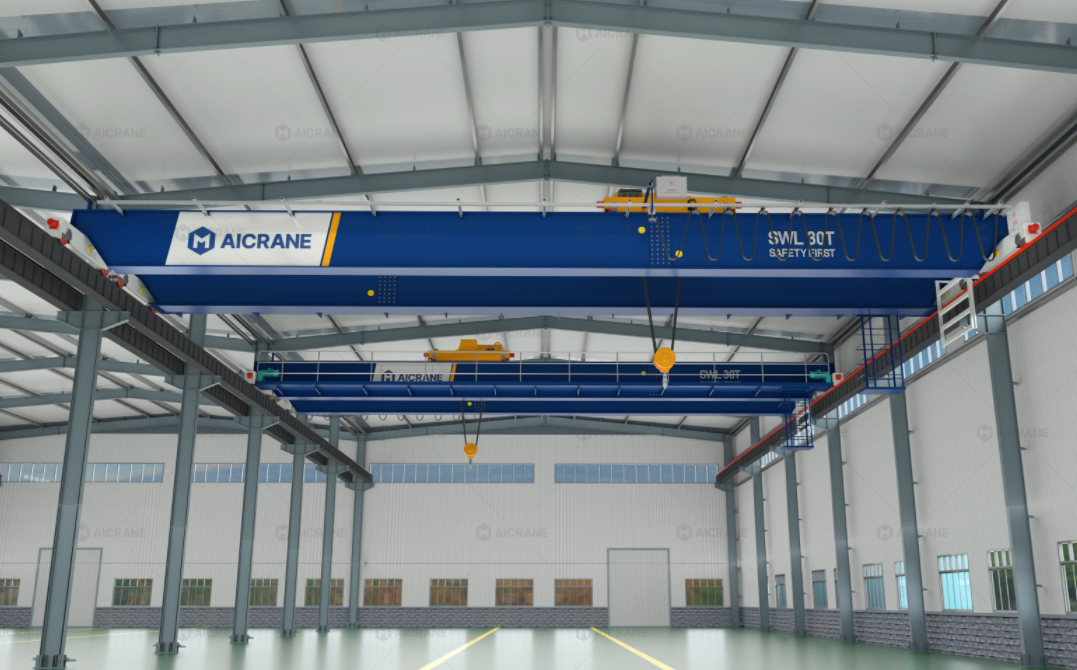
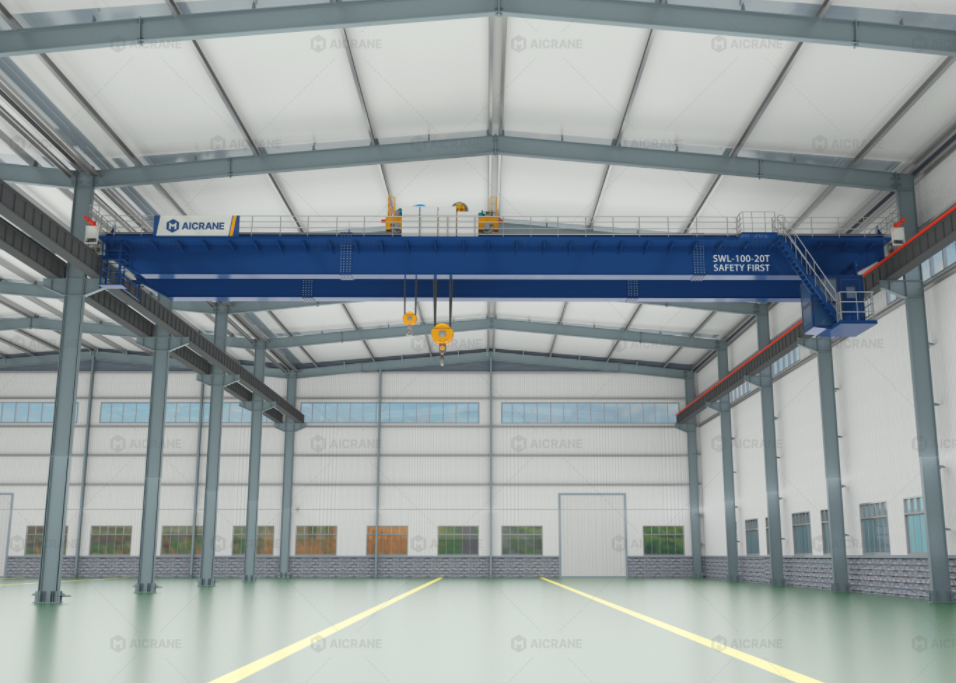
    Overhead Cranes in Steel Structure Factory

    1. Understanding Overhead Crane Capacity

    Overhead crane capacity refers to the maximum weight that the crane can safely lift and transport. Capacities vary widely, from light-duty cranes handling 1–10 tons to heavy-duty gantry or bridge cranes capable of lifting 500 tons or more. In a steel structure factory, selecting the correct crane capacity is critical. A crane with insufficient capacity may slow production, cause frequent maintenance issues, or even risk catastrophic failure. Conversely, an over-specified crane may lead to unnecessary structural requirements and higher costs without delivering proportional benefits.

    The crane capacity directly affects design parameters such as building height, column spacing, foundation strength, and crane runway configuration. Therefore, early-stage decisions regarding crane capacity are crucial for creating a factory layout that is safe, efficient, and cost-effective.

    2. Structural Implications of Crane Capacity

    One of the primary ways crane capacity affects factory design is through structural requirements. Higher capacity cranes impose greater loads on the supporting steel structure, which has significant implications for columns, beams, and foundations.

    2.1 Column and Beam Design

    For cranes handling heavy loads, the columns supporting the crane runway must be robust enough to withstand not only the vertical weight of the crane and lifted load but also dynamic forces caused by movement and acceleration. The beam spans that support the crane rails also need to be reinforced to prevent deflection, vibration, or structural fatigue over time. Engineers must account for the maximum lifting load, trolley weight, and potential side loads to ensure that deflection remains within safe limits.

    For example, a factory planning to use a double girder 50 ton overhead crane may require columns spaced at 20–25 meters, reinforced beams with higher moment of inertia, and cross-bracing to resist lateral forces. In contrast, a 10-ton light-duty crane may allow for columns spaced at 30–40 meters and lighter beams, resulting in material cost savings.

    2.2 Foundation Requirements

    Crane capacity also dictates the type and size of foundations. Heavy-duty cranes generate significant vertical and horizontal loads that are transmitted through columns to the ground. Foundations must be designed to prevent settlement, tilting, or cracking, which could compromise crane operation and safety. High-capacity cranes may necessitate deep reinforced concrete footings or a raft foundation, while light-duty cranes might only require shallow isolated footings.

    3. Building Height and Clearance

    Another major design consideration influenced by crane capacity is building height. Higher capacity cranes often require taller hoisting mechanisms to lift large loads. The lifting height, combined with the height of the crane bridge and clearance for operator cabins, influences the overall height of the steel structure. Additionally, overhead clearance is necessary for safe handling and storage of materials.

    For factories that handle long steel beams or large pre-fabricated modules, insufficient vertical clearance can restrict operations, reduce efficiency, and create safety hazards. Designers must carefully calculate the required headroom, which is typically determined by the sum of maximum load height, hook travel, and safety clearance.

    4. Impact on Factory Layout and Workflow

    Crane capacity has a direct influence on factory layout and workflow. Larger cranes can lift heavier loads and span longer distances, enabling more flexible material handling. This flexibility allows for optimized storage layouts, reduced travel times, and improved production efficiency.

    4.1 Column Spacing and Work Zones

    High-capacity cranes generally require more closely spaced columns to support the heavier load, which can affect the layout of workstations, assembly lines, and storage areas. Designers must balance structural requirements with operational needs, ensuring that the placement of columns does not obstruct workflows or limit access to machinery.

    4.2 Multi-Crane Operations

    In many steel structure factories, multiple overhead cranes operate simultaneously to handle large or irregular loads. The capacity of each crane affects the design of crane interference zones, overlapping spans, and synchronized operation protocols. Planning for adequate separation, collision prevention, and coordinated movement is crucial for safe and efficient operations.
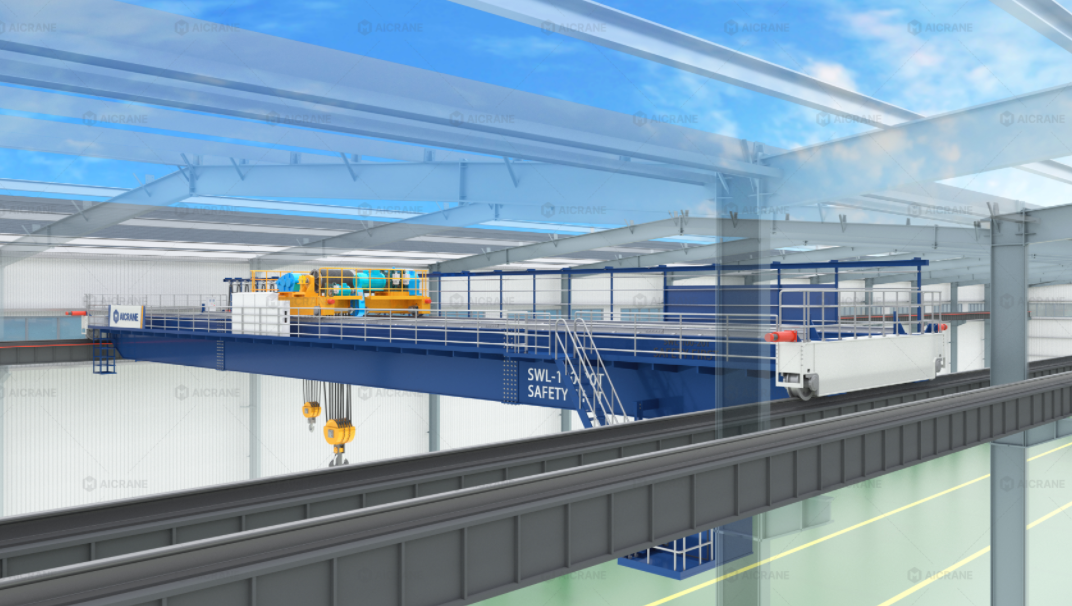
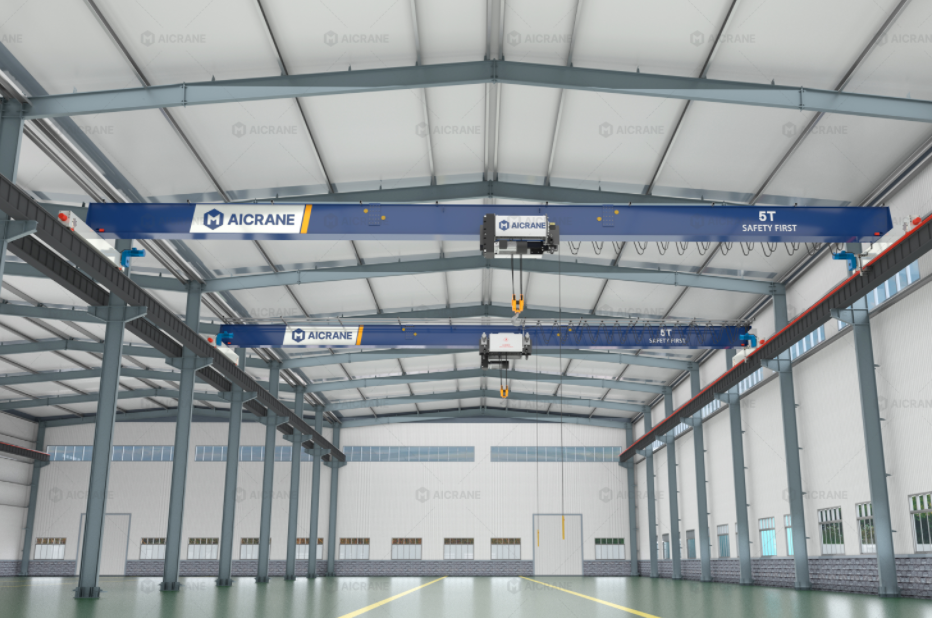
    Steel Structure Factory with Overhead Cranes

    5. Safety Considerations

    The capacity of an overhead crane is a critical factor in ensuring workplace safety. Overloading a crane beyond its rated capacity can lead to mechanical failure, structural damage, or accidents involving personnel. Factory designers must incorporate safety margins into structural design, including:

    • Load Distribution: Ensuring that beams, columns, and foundations can handle peak loads without exceeding material stress limits.

    • Dynamic Forces: Accounting for acceleration, deceleration, and load swinging, which can create forces exceeding static weight calculations.

    • Emergency Systems: Designing adequate access and egress for operators, emergency stops, and protective barriers in high-load zones.

    Safety standards and building codes often specify minimum requirements for crane integration, which must be adapted based on crane capacity.

    6. Cost Implications

    Crane capacity influences not only structural design but also overall project cost. Higher-capacity cranes require more robust steel structures, stronger foundations, and larger clearances, all of which increase material and construction expenses. Additionally, operational costs, including energy consumption and maintenance, typically rise with crane capacity.

    Conversely, underestimating crane requirements can result in operational inefficiencies, delays, and retrofitting costs. Therefore, a careful balance between capacity, factory design, and budget is essential. Engineers often perform a cost-benefit analysis to determine the optimal crane capacity, taking into account expected loads, future expansion plans, and operational flexibility.

    7. Integration with Automation and Technology

    Modern steel structure factories increasingly incorporate automated systems, including CNC machinery, automated storage, and robotic material handling. The crane capacity determines the types of automation compatible with the facility. For instance, a high-capacity gantry crane equipped with automation features can handle heavy steel modules with precise positioning, enabling advanced assembly lines and reducing manual labor. Integrating crane capacity into digital factory layouts ensures smooth coordination between automated equipment and human operators.

    8. Conclusion

    The capacity of an overhead crane is a fundamental factor that shapes the design, functionality, safety, and cost of a steel structure factory. From structural requirements and foundation design to building height, column spacing, workflow optimization, and safety protocols, every aspect of factory design is influenced by the crane’s lifting capability. Engineers, architects, and factory planners must collaborate early in the design process to select the appropriate crane capacity, ensuring that the facility can handle present and future production needs efficiently and safely.

    Choosing the correct overhead crane capacity is not simply a matter of lifting capability—it is a strategic decision that affects the structural integrity, operational efficiency, and overall cost-effectiveness of the steel structure factory. By carefully analyzing lifting requirements, load characteristics, and workflow considerations, factory designers can create a facility that maximizes productivity while maintaining the highest standards of safety and reliability.
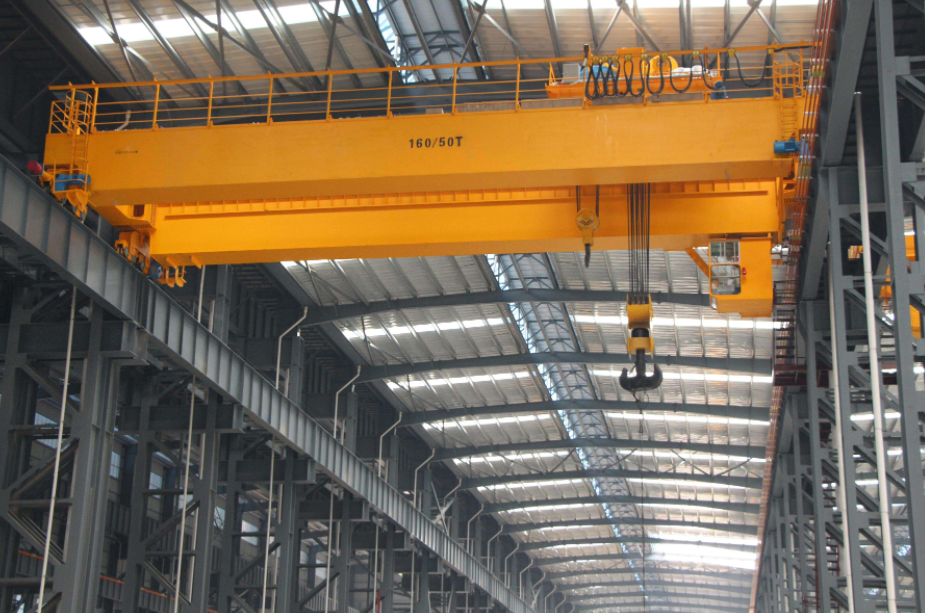
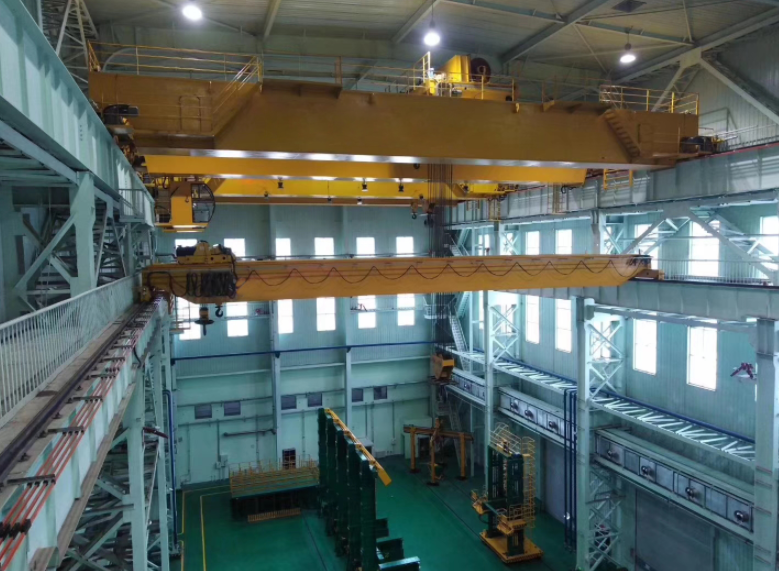
  • Understanding Shock Loads and Their Influence on Overhead Crane Components

    Overhead cranes are essential pieces of equipment in industries ranging from steel manufacturing to logistics and heavy machinery handling. Their primary role is to lift, transport, and precisely place heavy loads with efficiency and safety. While these cranes are engineered to handle significant static weights, dynamic forces—particularly shock loads—pose unique challenges that can impact crane performance, safety, and lifespan. Understanding shock loads, how they arise, and their influence on crane components is critical for engineers, operators, and maintenance personnel.

    overhead crane

    What Are Shock Loads?

    A shock load is a sudden, extreme force applied to an industrial overhead crane and its components, typically occurring over a very short duration. Unlike static loads, which are constant and predictable, shock loads are dynamic and can exceed the nominal weight of the lifted object. These forces often occur during sudden starts, stops, collisions, or abrupt lifting of heavy loads.

    Shock loads can originate from several sources:

    1. Load Impact: Dropping a load or inadvertently letting it strike a surface can create a significant instantaneous force on the hoist, trolley, and bridge.

    2. Sudden Crane Movements: Quick acceleration or deceleration of the hoist or bridge can generate shock forces.

    3. Material Handling Irregularities: Lifting uneven, unbalanced, or swinging loads increases the risk of shock loading.

    4. Environmental Factors: Wind gusts, seismic activity, or external vibrations may induce transient forces on the crane structure.

    Understanding these sources is essential because even cranes designed for heavy-duty applications can be damaged if shock loads are not properly accounted for.

    How Shock Loads Affect Crane Components

    Shock loads do not impact all crane components equally. Certain parts are particularly vulnerable due to their role in load transfer and motion control.

    1. Hoist Mechanism

    The hoist is the most directly affected component during shock loading. Hoists are designed for steady lifting and lowering operations. When a sudden impact occurs:

    • Gear and Motor Stress: Shock forces can overload the gearbox and electric motor, causing premature wear or failure. Spur and helical gears are particularly sensitive to sudden torque spikes.

    • Brake Overload: Overhead crane hoists use brakes to hold the load stationary. Shock loads can cause brake slippage or even failure if the brakes are not rated for dynamic overload conditions.

    • Wire Rope or Chain Damage: The lifting medium, whether a wire rope or chain, can experience instant tension spikes, leading to accelerated fatigue, deformation, or breakage.

    2. Trolley and Bridge Structure

    The trolley and bridge distribute the load across the crane span and rails. Shock loads can significantly impact these structural elements:

    • Bending and Deflection: Sudden forces can induce bending moments that exceed the design limits of beams or girders. Repeated exposure to shock loads accelerates fatigue damage, potentially leading to cracks or permanent deformation.

    • Joint and Weld Stress: Welded connections, gussets, and bolts may be subjected to forces beyond their intended capacity. Fatigue at joints is a common failure mode in cranes experiencing frequent shock loading.

    • Rail Impact: Shock loads can also transfer to the rails, potentially leading to rail misalignment, uneven wear on wheels, and vibration issues.

    3. End Trucks and Wheels

    End trucks carry the bridge along the runway rails. Shock loads affect them through:

    • Wheel Bearing Stress: Sudden impact forces can overload wheel bearings, causing wear or seizure.

    • Wheel Deformation: Extreme shock loads may deform wheels, leading to misalignment, increased rolling resistance, and uneven crane movement.

    • Rail Wear: Concentrated dynamic loads accelerate rail wear and may require more frequent maintenance or replacement.

    4. Control Systems

    While not mechanical, control systems are indirectly affected:

    • Electrical Overloads: Rapid acceleration or deceleration can trigger motor overloads or cause abrupt current spikes in the electrical system.

    • Sensor Malfunction: Shock vibrations may interfere with limit switches, load cells, or anti-collision sensors, potentially compromising safety.

    Recognizing Shock Loads in Operation

    Operators and engineers must identify when shock loads are likely occurring to mitigate their effects. Key indicators include:

    • Unusual Noise or Vibration: Sudden jerks or thuds during lifting operations are clear signs.

    • Load Swinging: Excessive load movement often precedes impact-induced shocks.

    • Frequent Mechanical Failures: Premature wear on hoist components, wire ropes, or rails may indicate repeated shock loading.

    overhead bridge crane

    Designing Cranes to Handle Shock Loads

    Modern overhead cranes are often designed with factors of safety that account for occasional shock loads. However, understanding how to enhance resistance to these forces is crucial:

    1. Over-Sizing Components: Using hoists, gears, and structural members rated for higher-than-nominal loads can help accommodate occasional shocks.

    2. Shock-Absorbing Elements: Some cranes incorporate buffer systems, spring-loaded hooks, or tension dampers to reduce the impact of sudden forces.

    3. Dynamic Load Monitoring: Installing load sensors and monitoring systems can detect excessive shock forces in real time, allowing for corrective action.

    4. Proper Maintenance: Regular inspection of hoists, wire ropes, wheels, and structural components ensures early detection of fatigue damage caused by shock loads.

    5. Operator Training: Skilled operators can minimize sudden starts, stops, and improper load handling that contribute to shock loads.

    Case Studies of Shock Load Effects

    Example 1: Wire Rope Fatigue

    A factory overhead crane used to lift steel billets experienced frequent wire rope replacement. Investigation revealed that operators were rapidly lifting uneven loads, causing repeated shock loading. Switching to a more flexible wire rope with higher dynamic load capacity and training operators in smooth handling reduced failures by over 50%.

    Example 2: Bridge Beam Cracks

    In another instance, an overhead crane in a manufacturing plant developed cracks in its main girder. Analysis showed that frequent sudden stops during high-speed lifting created shock loads beyond the fatigue limit of the steel. Reinforcing the bridge, installing shock-absorbing buffers, and revising operational procedures mitigated further damage.

    Mitigation Strategies

    Preventing damage from shock loads involves a combination of design, operational, and maintenance strategies:

    1. Smooth Acceleration and Deceleration: Ensuring crane movements are gradual reduces dynamic impact. Modern VFD (variable frequency drive) motors are particularly effective.

    2. Load Distribution Management: Balancing loads and avoiding eccentric lifting reduces stress concentrations.

    3. Environmental Considerations: Minimizing external vibrations, securing work areas, and controlling wind effects can reduce unexpected shock loads.

    4. Preventive Inspections: Establishing inspection schedules focusing on high-stress components (hoist, wire ropes, beams, wheels) ensures early detection of shock-induced damage.

    Conclusion

    Shock loads are an inevitable aspect of overhead crane operation, particularly in environments handling heavy, irregular, or dynamic loads. While cranes are engineered with safety factors, repeated or severe shock forces can compromise hoists, trolleys, bridge structures, wheels, and control systems. Understanding the sources, impacts, and mitigation strategies for shock loads is essential to maintain safe, reliable, and efficient crane operations.

    By designing for higher dynamic loads, incorporating shock-absorbing features, training operators, and adhering to robust maintenance schedules, industries can extend the life of their overhead cranes while minimizing downtime and repair costs. Ultimately, awareness and proactive management of shock loads protect both equipment and personnel, ensuring that overhead cranes continue to deliver the performance and reliability that modern industrial operations demand.

  • How Overhead Crane Type Influences Steel Structure Warehouse Design Parameters

    When planning and constructing a steel structure warehouse, one of the most important design considerations is the type of overhead crane that will be installed. Overhead cranes are integral to material handling in industrial facilities, enabling the movement of heavy loads efficiently and safely across large areas. However, not all cranes are the same—different crane types, such as single girder, double girder, and suspension cranes, impose distinct requirements on the warehouse structure. Understanding how the crane type influences key design parameters—such as span, height, column spacing, runway beams, and foundation loads—is crucial for ensuring both operational efficiency and structural safety.

    overhead crane in steel structure warehouse

    1. Understanding the Relationship Between Crane Type and Building Design

    The integration of an overhead crane into a steel structure warehouse must be considered from the very beginning of the design process. The crane’s load capacity, operating class, span, and lifting height all affect the geometry and strength of the steel structure.

    Each crane type interacts differently with the warehouse frame:

    • Single girder overhead cranes are lighter and typically require less structural reinforcement.

    • Double girder overhead cranes can handle heavier loads and longer spans, thus demanding stronger runway beams and columns.

    • Suspension cranes are supported directly from the roof structure, influencing truss design and roof loading capacity.

    Therefore, selecting the right crane type early in the planning stage allows the structural designer to optimize the warehouse’s frame layout, minimize steel consumption, and ensure long-term performance.

    2. Structural Loads and Support Requirements

    One of the most direct influences of crane type on warehouse design is the load distribution. The total load a building must bear includes not only the crane’s self-weight but also the weight of the hoist, trolley, and lifted materials.

    • Single girder cranes exert moderate loads through one main beam and end trucks. The vertical load is transferred via the crane runway beam to the supporting columns. Since these cranes usually have lower lifting capacities (1–20 tons), they require lighter runway beams and smaller column sections.

    • Double girder cranes, which can lift up to several hundred tons, impose much higher loads. Their dual girders and heavier trolleys require reinforced crane girders, larger columns, and stronger foundations.

    • Suspension cranes (or underhung cranes) do not require floor-mounted runway beams. Instead, they hang from the roof trusses, transferring dynamic loads directly to the roof structure. This demands robust roof bracing and precise load path calculations to avoid excessive deflection or vibration.

    Thus, the type of overhead crane determines the size and material grade of runway beams, column profiles, and bracing system required to maintain structural integrity.

    single girder overhead crane in steel structure warehouse

    3. Influence on Warehouse Span and Column Spacing

    Crane span refers to the distance between the centerlines of the runway rails. The type of overhead crane significantly impacts both the span of the crane itself and the corresponding spacing of the warehouse columns.

    • Single girder cranes are suitable for smaller spans (usually up to 25 meters) and light-duty operations. The columns can be spaced closer together, resulting in more economical steel use.

    • Double girder cranes can achieve longer spans—often exceeding 30 meters—allowing larger unobstructed working areas. However, this increases the bending moments on runway beams and the spacing between columns must be carefully optimized to balance structural efficiency and cost.

    • Suspension cranes, being roof-supported, allow for completely column-free interiors, ideal for warehouses requiring open floor space. The design challenge lies in ensuring the roof truss system is capable of supporting both vertical and lateral crane loads.

    In summary, selecting a heavy-duty double girder bridge crane typically means the building must accommodate wider spans and heavier structural elements, while a light-duty single girder or suspension crane allows for simpler, lighter steel frameworks.

    4. Impact on Building Height and Clearances

    The lifting height and hook travel of an overhead crane directly affect the warehouse’s vertical dimensions.

    • Single girder cranes have a lower profile since the hoist is suspended beneath the main beam. Therefore, the building can have a relatively low height while maintaining sufficient headroom for operations.

    • Double girder cranes place the hoist between the two girders, allowing higher lifting heights but requiring more vertical space for the crane structure and maintenance access. This increases the overall building height and the cost of steel columns and wall cladding.

    • Suspension cranes usually have the most compact design, suitable for facilities with limited headroom or height restrictions.

    Additionally, maintenance platforms, walkways, and electrical festoon systems must be accounted for in the vertical clearance design. A mismatch between crane dimensions and building height can lead to operational inefficiencies or even safety hazards.

    5. Runway Beam and Rail Design

    The runway system—including beams, rails, and supporting brackets—is a key interface between the crane and the building structure. Different crane types have distinct runway design requirements.

    • Single girder cranes use lighter runway beams, often with a square rail or an integrated I-beam track.

    • Double girder cranes require larger box-type runway beams or independent girder beams with robust rail anchorage systems.

    • Suspension cranes run on bottom flanges of roof beams or special tracks fixed to roof trusses. The roof structure must be designed to prevent torsion and excessive lateral movement.

    Proper alignment and stiffness of runway beams are essential to avoid rail misalignment, wheel wear, and vibration. The building’s columns must provide sufficient lateral restraint to the runway beams to maintain geometric accuracy under dynamic loading.

    6. Foundation and Vibration Considerations

    The foundation design of a steel structure warehouse is closely linked to the crane’s operating characteristics. Heavy-duty cranes such as double girder types with large lifting capacities generate significant vertical and horizontal forces. These forces are transmitted through the columns into the foundation.

    To mitigate vibration and settlement:

    • Heavier cranes may require reinforced concrete pedestals or isolated column footings.

    • Lighter single girder or suspension cranes can rely on standard spread foundations.

    • Dynamic load analysis must be performed to assess how the crane’s acceleration and braking affect the building’s structural response.

    Neglecting this interaction can result in excessive deflection, uneven settlements, and premature wear of crane components.

    7. Roof and Bracing System Design

    For suspension cranes or buildings housing multiple cranes, the roof structure must be carefully analyzed for combined loading effects. The top bracing system plays a critical role in stabilizing the warehouse frame against horizontal loads from crane motion.

    In single and double girder crane warehouses, cross bracing or portal bracing between columns enhances lateral stability. For suspension cranes, roof trusses often require additional gusset plates and stiffeners to resist dynamic load transfer from the crane.

    8. Conclusion: Integrating Crane Selection into Early Warehouse Design

    The type of overhead crane chosen for a steel structure warehouse is far more than a mechanical equipment decision—it fundamentally shapes the building’s architectural and structural parameters.

    Single girder cranes are ideal for light-duty warehouses where economy and simplicity are priorities. Double girder cranes suit heavy industrial environments demanding long spans and high lifting capacities, but they require a stronger, taller, and more expensive steel structure. Suspension cranes offer flexible installation in small or height-limited buildings, with careful attention to roof load distribution.

    Ultimately, early coordination between the crane supplier and the steel structure designer ensures that the warehouse layout, column grid, runway beams, and foundation are all optimized for the specific crane system. This integrated approach not only guarantees safety and performance but also minimizes construction and maintenance costs over the life of the facility.

  • Turnkey Solutions: Steel Structure and Overhead Crane Package Delivery

    In the fast-evolving industrial landscape, efficiency, reliability, and integration are critical factors in facility construction and equipment installation. For industries relying on heavy lifting and material handling – such as manufacturing, logistics, steel fabrication, and warehousing – the combination of steel structures and overhead cranes forms the backbone of their operational capabilities. Delivering these two essential components as a turnkey package offers significant advantages in terms of time savings, cost control, and seamless integration.

    This article explores the concept of turnkey solutions involving steel structures and overhead cranes, explains why such integrated delivery is becoming a preferred approach, outlines the key steps in the process, and highlights best practices for ensuring a successful project outcome.

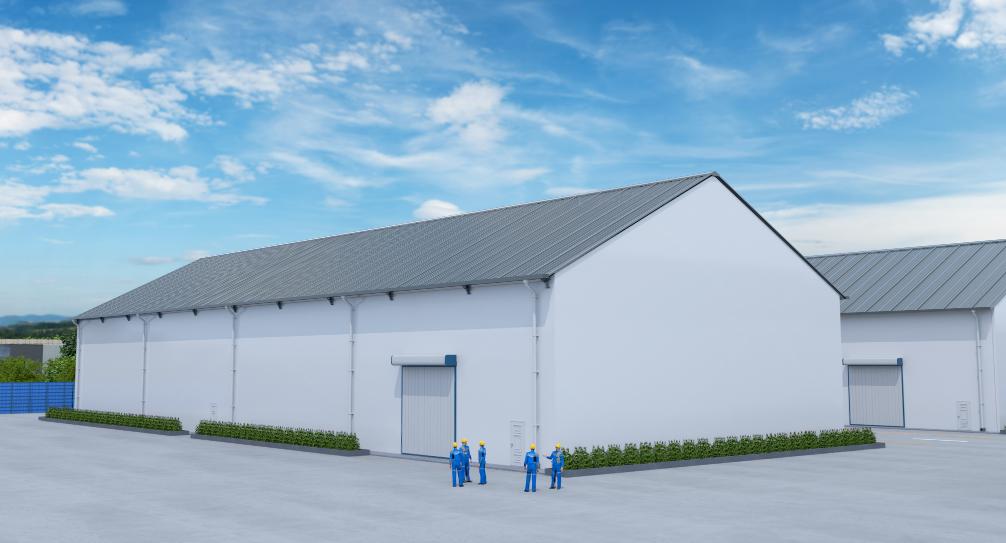
    steel structure

    What is a Turnkey Solution?

    A turnkey solution refers to a comprehensive package where a single supplier or contractor manages the entire process of design, fabrication, supply, installation, and commissioning of a complete system or facility. The client receives a ready-to-use, fully functional product or infrastructure with minimal additional input needed.

    In the context of steel structures combined with overhead cranes, a turnkey package typically includes:

    • Design and engineering of the steel building structure

    • Fabrication and erection of the steel frame

    • Design, manufacture, and supply of the overhead crane system (single girder, double girder, or specialized cranes)

    • Installation of crane runway beams integrated with the steel structure

    • Electrical wiring, control systems, and testing of the crane

    • Final commissioning and handover

    By contracting a single provider for the entire project, clients benefit from streamlined coordination, unified project management, and reduced interface risks between structure and crane suppliers.

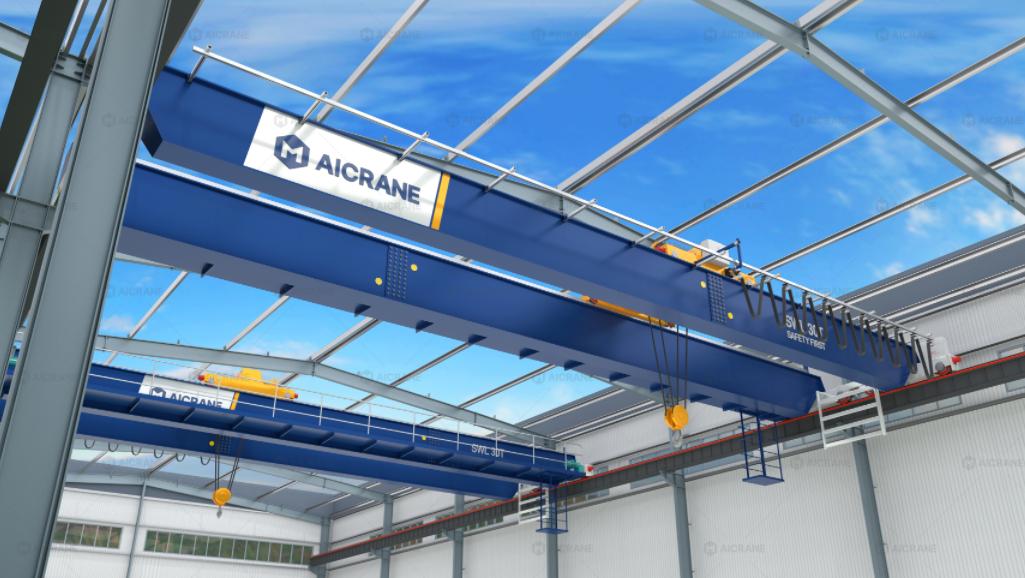
    Overhead Crane in Steel Structure Factory

    Why Choose Turnkey Package Delivery?

    1. Simplified Project Management

    Coordinating separate vendors for steel structure and overhead cranes can be complex and prone to delays or conflicts in schedules and specifications. A turnkey provider acts as the single point of contact, managing every detail from structural design through crane commissioning, ensuring timelines are met and communication flows smoothly.

    2. Design Integration and Compatibility

    Steel structures and overhead cranes must work in perfect harmony to ensure safety, performance, and durability. For example, the crane runway beams need to be precisely designed and fabricated to carry crane loads safely without compromising the structural integrity of the building. With turnkey delivery, structural engineers and crane specialists collaborate early in the design phase, guaranteeing compatibility and optimal performance.

    3. Cost Efficiency

    Bundling steel structure and crane supply into one contract can lead to cost savings by reducing duplicated engineering work, optimizing material usage, and negotiating package discounts. Additionally, better project scheduling prevents costly downtime and delays on site.

    4. Quality Assurance

    A single provider is accountable for the entire scope, which encourages stringent quality control throughout fabrication and installation. This reduces the risk of defects or mismatched components and results in a safer, more reliable facility.

    5. Faster Delivery Time

    Turnkey projects benefit from coordinated workflows and reduced administrative burden, enabling faster completion from contract award to operational readiness. This speed-to-market can be critical in competitive industries where downtime directly impacts revenue.

    The Turnkey Package Delivery Process

    Step 1: Needs Assessment and Feasibility Study

    The turnkey provider begins by engaging with the client to understand operational requirements, budget constraints, site conditions, and timeline expectations. This phase includes preliminary site surveys, load capacity analysis, and reviewing any regulatory compliance needs.

    Step 2: Conceptual and Detailed Design

    Engineers from both steel structure and overhead crane teams collaborate on creating an integrated design. This involves:

    • Steel frame calculations to ensure the building supports all static and dynamic loads, including crane loadings

    • Designing runway beams, columns, and bracing systems capable of safely transferring crane loads to foundations

    • Selecting the appropriate crane type (single/double girder, electric, hydraulic, etc.) based on lifting capacity, span, and duty cycle

    • Preparing structural drawings, crane layout plans, and wiring diagrams

    At this stage, 3D modeling and BIM (Building Information Modeling) tools are often used to visualize and validate the design.

    Step 3: Procurement and Fabrication

    Once designs are approved, material procurement begins. The steel structure components are fabricated in specialized workshops using CNC cutting, welding, and painting processes to ensure precision and durability. Simultaneously, the overhead crane components – including girders, hoists, trolleys, motors, control panels – are manufactured and tested.

    Step 4: Site Preparation and Erection

    Before steel structure erection, the site must be prepared with foundations and concrete footings designed to withstand crane loads. After that:

    • Steel columns and beams are assembled and erected on site according to detailed erection plans

    • Crane runway beams are installed with tight tolerance requirements to ensure smooth crane operation

    • The overhead crane is assembled and installed on the runway beams, including wiring, control systems, and safety devices

    Close collaboration between steel erectors and crane installers is crucial during this phase.

    Step 5: Testing and Commissioning

    Comprehensive testing ensures the crane and structure operate safely and reliably. This includes:

    • Load testing the crane with test weights

    • Verifying alignment and smooth travel of crane hoist and trolley

    • Testing control responsiveness and emergency stops

    • Inspecting steel structure connections for any signs of stress or deformation

    Only after all checks are passed does the turnkey provider hand over the fully operational system to the client.

    Key Considerations for Turnkey Package Delivery

    Regulatory Compliance and Standards

    Steel structures and overhead cranes are subject to strict codes and standards, such as AWS, ISO, FEM, CMAA, and local building regulations. The turnkey provider must ensure all designs, materials, and processes meet or exceed these requirements.

    Customization vs. Standardization

    While standard crane models and steel structures can reduce costs, many clients require customized solutions to fit unique site conditions or operational needs. Turnkey suppliers should offer flexible design options to accommodate various industry demands.

    Future Expansion and Maintenance

    Clients should discuss potential future expansion with the turnkey provider to design structures and cranes that can be upgraded or extended easily. Additionally, clear maintenance and service plans should be included in the turnkey contract.

    Risk Management

    Turnkey contracts often come with fixed pricing and deadlines. Providers must have robust risk management plans to handle unexpected site issues, supply chain disruptions, or design changes without compromising quality or schedule.

    Case Study: A Successful Turnkey Delivery for a Steel Fabrication Plant

    A recent example highlights the benefits of turnkey delivery. A steel fabrication client required a 30-meter span workshop equipped with a double girder overhead crane 20 ton for heavy load handling.

    The turnkey supplier conducted a thorough site survey and designed a steel structure with integrated crane runway beams. Fabrication and installation were coordinated tightly, resulting in:

    • 25% reduction in project duration compared to separate contracts

    • 15% cost savings through material and labor optimization

    • Flawless integration with no post-installation modifications needed

    The client reported immediate operational benefits and praised the single-source responsibility model for simplifying project management.

    Conclusion

    Turnkey solutions for steel structures combined with overhead cranes present a compelling value proposition for industrial clients aiming to enhance operational efficiency and reduce project complexity. From integrated design and quality-controlled fabrication to coordinated installation and commissioning, turnkey delivery offers significant benefits in terms of cost, time, and performance.

    When selecting a turnkey provider, clients should focus on experience, technical expertise, compliance capabilities, and proven track records in handling complex steel and crane projects. A well-executed turnkey package is more than just a building and a crane – it’s a turnkey asset that supports long-term productivity and safety.

  • Overhead Crane vs. Rail Gantry Crane vs. Rubber Tyred Gantry Crane: Which Is Suitable for My Warehouse?

    Choosing the right crane for your warehouse is a critical decision that impacts operational efficiency, safety, and cost-effectiveness. Among the popular lifting solutions, three crane types often come into consideration: overhead cranes (also called bridge cranes), rail gantry cranes, and rubber tyred gantry cranes (RTGs). Each has unique characteristics, advantages, and limitations depending on your warehouse layout, lifting requirements, budget, and operational goals.

    In this article, we will explore these three types of cranes in detail, highlighting their design, applications, pros and cons, and factors you should consider when deciding which one is best suited for your warehouse.

    1. Overview of the Crane Types

    Overhead Crane (Bridge Crane)

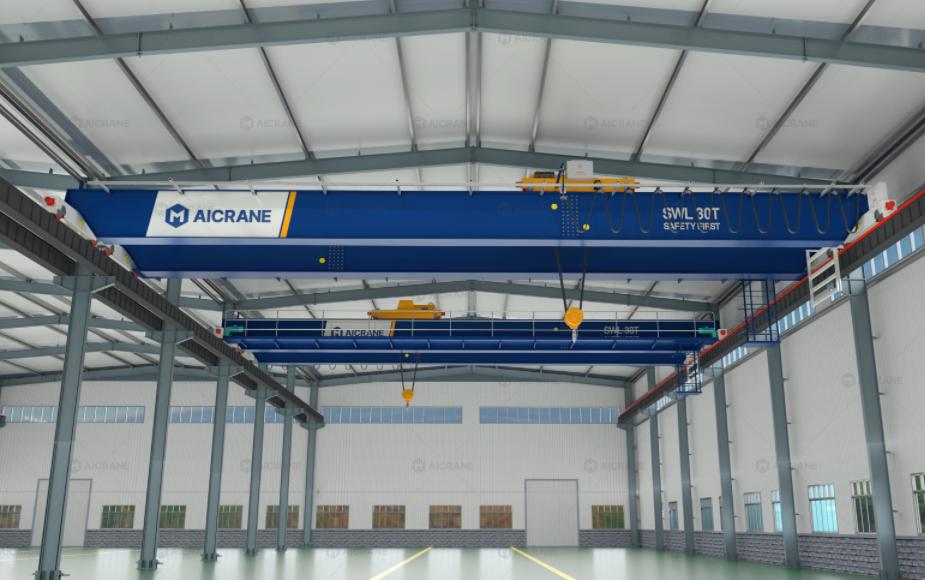
    An overhead crane consists of parallel runways with a traveling bridge spanning the width of the workspace. The hoist moves along the bridge to lift and move loads across the length and width of the area. Overhead cranes are typically installed indoors and mounted on steel beams or concrete columns.

    Common uses: manufacturing plants, warehouses, workshops, assembly lines, steel mills.

    Overhead Crane for Warehouse
    Overhead Crane for Warehouse

    Rail Gantry Crane

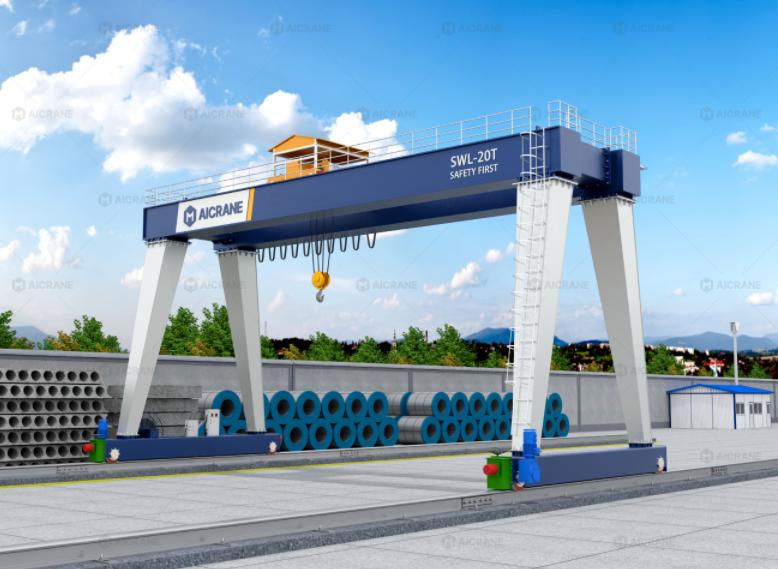
    A rail gantry crane is similar to an overhead crane but the entire crane structure is supported on legs that run on rails fixed on the ground, instead of being suspended from overhead beams. Rail gantry cranes are often outdoors or in semi-covered environments where an overhead crane structure is impractical.

    Common uses: outdoor storage yards, container yards, steel stockyards, large industrial sites.

    Rail Gantry Crane for Warehouse
    Rail Gantry Crane for Warehouse

    Rubber Tyred Gantry Crane (RTG)

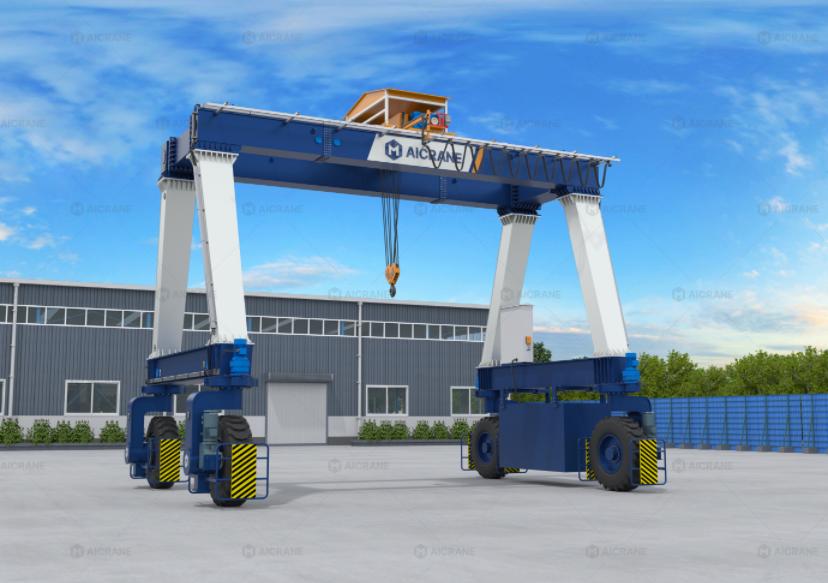
    A rubber tyred gantry crane for sale is a mobile gantry crane mounted on rubber tires, allowing it to move freely over a flat surface without the need for fixed rails. RTGs are most common in container terminals, ports, and outdoor industrial yards, where mobility is crucial.

    Common uses: container stacking, heavy load handling, port logistics.

    Rubber Tyred Gantry Crane for Warehouse
    Rubber Tyred Gantry Crane for Warehouse

    2. Key Factors to Consider for Warehouse Crane Selection

    Before comparing these cranes, here are some important warehouse-specific factors you should evaluate:

    • Warehouse Layout & Space Availability
      Does your warehouse have sufficient headroom? Is the workspace indoors or outdoors? Are there existing overhead beams or columns? How much clear space do you have?

    • Load Capacity & Lifting Height
      What are the typical weights and sizes of loads you need to handle? How high do you need to lift materials?

    • Mobility Needs
      Do you need the crane to move between multiple locations or aisles? Or is the crane mostly fixed in a single position?

    • Floor Conditions
      What is the ground surface like? Smooth concrete floors are ideal, but rough or uneven floors may limit some crane options.

    • Installation and Maintenance Costs
      What is your budget for initial installation and ongoing maintenance?

    • Operational Environment
      Will the crane operate indoors in a controlled environment or outdoors exposed to weather?

    3. Overhead Crane: Pros and Cons for Warehouses

    Advantages

    • Space Efficiency: Overhead cranes utilize the overhead space, freeing up valuable floor area for storage and operations.

    • High Precision: They offer smooth, precise load movement across two axes (length and width).

    • High Lifting Capacity: Suitable for heavy and bulky loads with various lifting heights.

    • Clean and Safe Operation: Being fixed above, they reduce floor clutter and minimize obstacles.

    • Energy Efficient and Low Operating Cost: Electricity-powered with efficient hoists.

    Disadvantages

    • High Initial Installation Cost: Requires structural support such as runway beams or reinforced columns.

    • Limited Mobility: Fixed to specific pathways—cannot move beyond the installed runway.

    • Installation Complexity: May require structural modifications or building reinforcements.

    • Indoor Use Preferred: Usually not suited for outdoor use unless specially designed.

    Best for

    Warehouses with high ceilings, well-defined fixed paths for load movement, and where saving floor space is a priority. Ideal for indoor environments handling heavy and repetitive lifting tasks like manufacturing or assembly.

    4. Rail Gantry Crane: Pros and Cons for Warehouses

    Advantages

    • No Need for Overhead Structures: Useful when existing building structures can’t support overhead cranes.

    • Higher Flexibility in Layout: Rails installed on the ground allow cranes to cover large areas.

    • High Load Capacity: Suitable for heavy materials and bulky loads.

    • Semi-Outdoor and Outdoor Use: Can operate in less sheltered environments.

    • Lower Structural Investment: No need to reinforce buildings for overhead cranes.

    Disadvantages

    • Rail Installation Required: Ground rails must be installed and maintained.

    • Limited Mobility Beyond Rails: Crane movement confined strictly to rail tracks.

    • Floor Surface Preparation Needed: Rails require smooth, level surfaces.

    • Takes Up Floor Space: Gantry legs occupy ground space, reducing usable floor area.

    Best for

    Warehouses or yards where installing overhead runways is impossible or impractical, and where load movement is needed along fixed, linear paths—often large outdoor or semi-covered storage yards.

    5. Rubber Tyred Gantry Crane (RTG): Pros and Cons for Warehouses

    Advantages

    • Maximum Mobility: Can move freely across the yard without rails.

    • Flexible Operations: Ideal for areas requiring variable load handling points.

    • Quick Deployment: No need for runway or rail installation.

    • Outdoor Use: Designed to withstand weather and harsh environments.

    • Versatile Load Handling: Commonly used for containers, heavy equipment, or bulky loads.

    Disadvantages

    • Requires Smooth, Level Surface: Best on paved, even ground; rough surfaces reduce efficiency.

    • High Maintenance: Tires, engines, and hydraulics require regular servicing.

    • Larger Footprint: Takes up more space and may disrupt warehouse traffic.

    • Higher Operating Costs: Diesel or electric-powered engines can be expensive to run.

    • Less Precise Positioning: Compared to fixed rails or overhead cranes.

    Best for

    Warehouses or yards with large open spaces, where flexibility in crane positioning and movement is essential—especially in container yards, port terminals, or outdoor heavy load storage areas.

    6. Comparison Table: At a Glance

    Feature Overhead Crane Rail Gantry Crane Rubber Tyred Gantry Crane (RTG)
    Mobility Fixed on runway Moves on fixed ground rails Free movement on tires
    Installation Cost High (building modifications) Moderate (rails on ground) Moderate to High
    Floor Space Usage Minimal (overhead) Gantry legs occupy floor Large footprint on floor
    Suitable Environment Indoor Semi-outdoor/outdoor Outdoor
    Load Capacity High High High
    Maintenance Low to moderate Moderate High
    Precision High Moderate Lower
    Flexibility in Layout Low (fixed path) Moderate (fixed rails) High (free movement)
    Typical Applications Manufacturing, warehouses Yards, steel stockyards Ports, container handling

    7. How to Decide Which Crane Fits Your Warehouse

    Step 1: Evaluate Your Warehouse Space and Infrastructure

    • If you have sufficient overhead clearance and strong building structure, an overhead crane maximizes space.

    • If your building can’t support overhead cranes or you operate outdoors with fixed paths, rail gantry cranes are a good choice.

    • If you need maximum operational flexibility and free movement across the yard, especially outdoors, rubber tyred gantry cranes work best.

    Step 2: Determine Your Lifting Needs and Load Types

    • For precise, repetitive lifting of heavy materials indoors, overhead cranes excel.

    • For heavy lifting along linear tracks outdoors or semi-covered areas, rail gantry cranes perform well.

    • For container handling or mobile heavy lifting, RTGs provide unmatched flexibility.

    Step 3: Consider Your Budget and Maintenance Capacity

    • Overhead cranes generally have higher installation costs but lower ongoing maintenance.

    • Rail gantry cranes require rail installation and periodic rail upkeep.

    • RTGs have lower installation costs but higher operating and maintenance expenses.

    Step 4: Factor in Safety and Operator Training

    • Overhead cranes require well-trained operators due to height and complexity.

    • Rail gantry cranes need careful rail maintenance to avoid derailments.

    • RTGs require skilled operators for safe maneuvering and regular tire and engine checks.

    8. Conclusion

    There’s no one-size-fits-all answer when choosing between an overhead crane, rail gantry crane, or rubber tyred gantry crane for your warehouse. Your choice depends on many factors including warehouse design, operational needs, budget, and environment.

    • Choose an Overhead Crane if you want to save floor space, work indoors, and need precise, efficient lifting with minimal footprint.

    • Choose a Rail Gantry Crane if overhead structures are impossible, you have outdoor or semi-covered areas with rails, and need reliable heavy lifting along fixed tracks.

    • Choose a Rubber Tyred Gantry Crane if you need maximum flexibility, frequent position changes, and operate mostly outdoors with smooth ground.

    If you are unsure which option suits your warehouse best, consulting with experienced crane manufacturers or engineers can help tailor the perfect lifting solution for your specific needs.