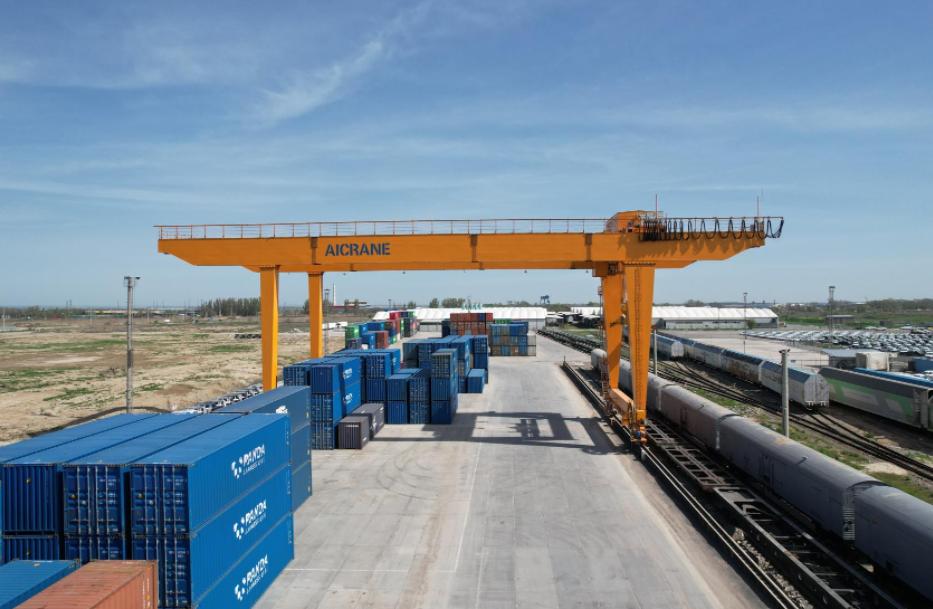
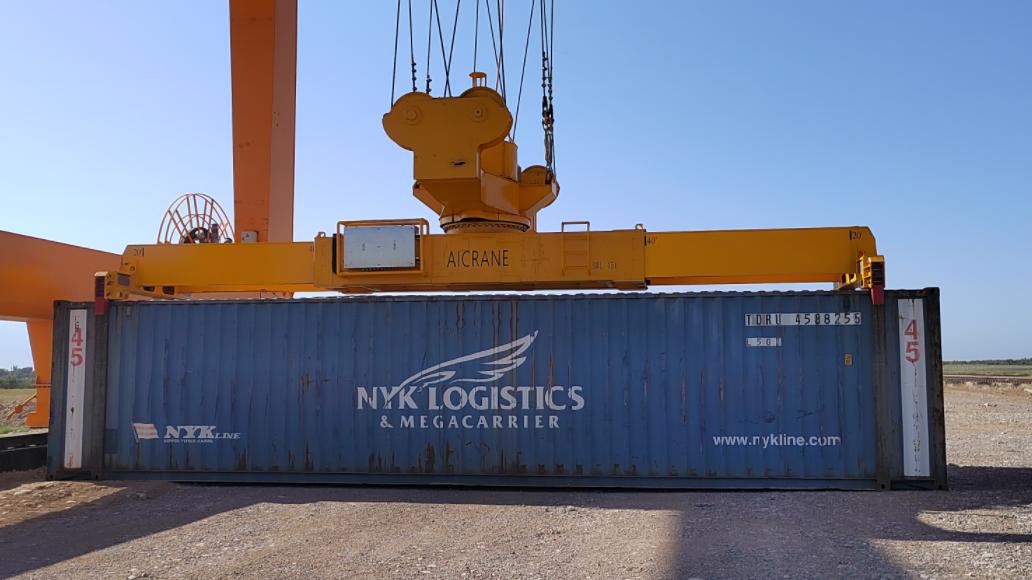
Tag: rail mounted gantry crane

  • RMG Crane Mechanical Coordination Between Hoisting, Trolley, and Traveling Systems

    Rail Mounted Gantry (RMG) cranes are pivotal in modern material handling operations, particularly in container terminals, logistics hubs, and industrial yards. Their primary advantage lies in their ability to transport heavy loads across wide areas while ensuring precise positioning. However, the effectiveness of an RMG crane depends heavily on the mechanical coordination between its three core systems: the hoisting mechanism, the trolley mechanism, and the traveling system. Understanding how these systems interact is essential for optimizing performance, minimizing wear, and ensuring safety. This article delves into the intricacies of this mechanical coordination, exploring each system and their interdependencies.
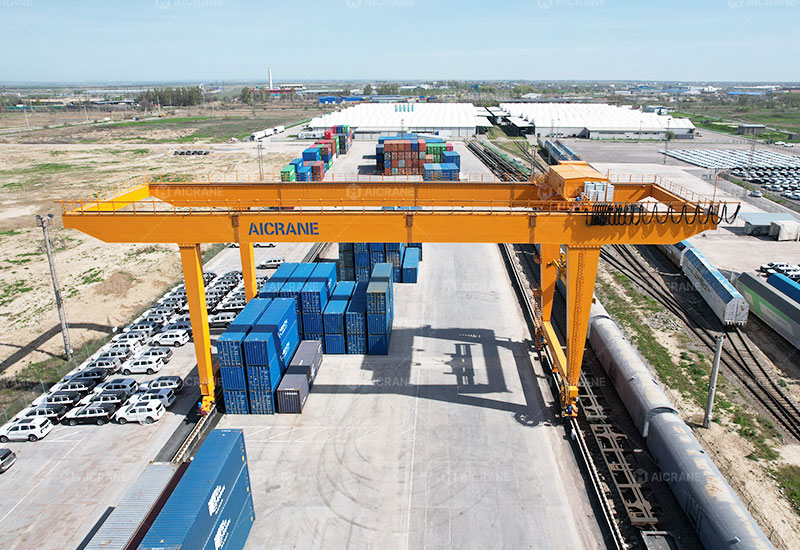
    RMG container crane

    1. Overview of RMG Crane Mechanisms

    A rail mounted gantry crane for sale essentially consists of a bridge supported by wheels that travel along rails, a trolley that moves along the bridge, and a hoist that lifts and lowers the load. Each mechanism operates independently yet must work harmoniously to achieve precise load handling. The three primary systems are:

    1. Hoisting System – Responsible for lifting and lowering the load. It usually includes a hoist drum, wire rope, motor, gearbox, and braking system.

    2. Trolley System – Moves the hoist along the bridge, providing lateral positioning of the load. The trolley is equipped with wheels, a drive system, and often a guiding system for smooth motion.

    3. Traveling System – Moves the entire crane along the runway rails, covering the longitudinal direction of the working area. It involves wheel bogies, drive motors, and sometimes steering or guidance mechanisms.

    While these systems are individually critical, the efficiency of an RMG crane hinges on how well they are coordinated.

    2. Hoisting System Dynamics

    The hoisting mechanism is the core lifting component of an RMG crane. It typically employs an electric or hydraulic motor to rotate a drum that winds or unwinds a wire rope, raising or lowering the hook or spreader. Key factors in the hoisting system include:

    • Load Capacity: The crane’s maximum lifting load dictates motor size, gearbox ratio, and rope specifications.

    • Speed Control: Smooth acceleration and deceleration prevent load sway and reduce mechanical stress. Variable frequency drives (VFDs) are commonly used for precise speed regulation.

    • Braking System: Mechanical, hydraulic, or electromagnetic brakes ensure the load remains stable when hoisting stops.

    • Wire Rope Coordination: For twin or multi-rope systems, synchronized rope movement is crucial to maintain balance and prevent torsion.

    The hoist must coordinate with the trolley and traveling systems, particularly when handling dynamic loads. For instance, rapid trolley movement while hoisting can generate swing or impact forces, requiring synchronized control to maintain stability.

    3. Trolley Mechanism Functionality

    The trolley mechanism allows the hoist to move horizontally along the bridge girder, enabling precise positioning over containers or cargo. Its main components include:

    • Trolley Wheels and Rails: Wheels designed for smooth motion along the bridge rails, often with flanges for lateral guidance.

    • Drive System: Electric motors with reduction gears provide controlled acceleration and deceleration.

    • Guidance and Alignment: Sensors or mechanical guides help keep the trolley aligned to avoid derailment or uneven load distribution.

    The trolley’s operation must be coordinated with hoisting because lateral motion of a lifted load can create oscillations. In modern RMG cranes, synchronization is often managed electronically through the crane control system, but mechanical design considerations remain critical:

    • Rigid Frame and Low Flexibility: The trolley frame must resist bending to avoid uneven load distribution across the hoist ropes.

    • Balanced Load Transfer: The trolley’s position affects how forces are transmitted to the bridge and traveling system. Incorrect alignment can lead to uneven rail loading and premature wear.
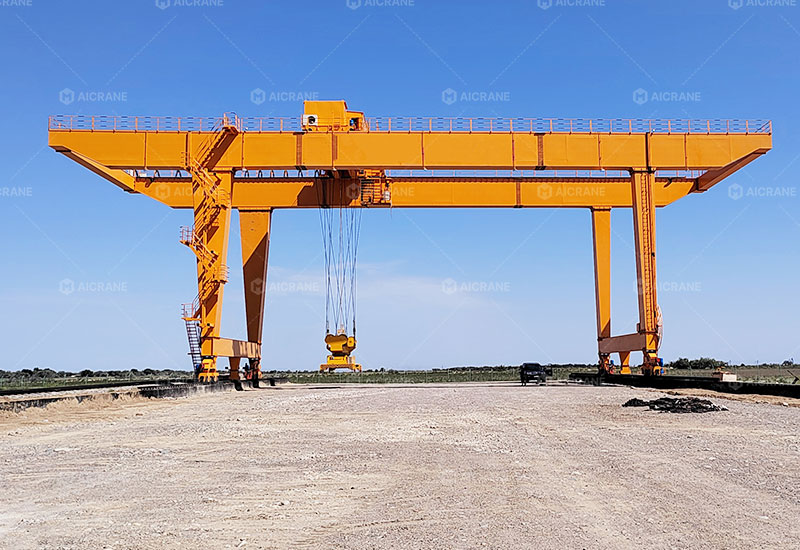
    RMG crane

    4. Traveling System Mechanics

    The traveling system moves the entire crane along the rails spanning the storage yard or terminal. It is composed of:

    • Bridge Wheels and Bogies: Wheels with appropriate flanges and bogies for weight distribution.

    • Drive Motors and Gearboxes: Ensure smooth acceleration, deceleration, and control at low speeds.

    • Braking Mechanism: Maintains stability during load handling or in emergencies.

    Traveling a crane while the hoist is carrying a load requires careful coordination. High-speed longitudinal travel can induce sway in a lifted load, increasing stress on the hoist ropes and trolley bearings. Therefore, mechanical design often incorporates:

    • Shock Absorbers or Dampers: Minimize impact forces on structural components.

    • Load Distribution Optimization: Ensures bridge wheels carry weight evenly to prevent rail or wheel damage.

    • Rigid Frame Design: The crane structure must resist twisting from uneven load forces during travel.

    5. Coordination Between Systems

    The core challenge in rail mounted container gantry crane design is ensuring seamless mechanical coordination among hoisting, trolley, and traveling systems. Several principles govern this coordination:

    5.1 Load Transfer Path

    Every RMG crane must transfer load efficiently from the hoist to the trolley, then to the bridge, and finally to the traveling wheels. Any misalignment in this load path can lead to:

    • Excessive bending in the bridge girder

    • Premature wear on trolley wheels or hoist ropes

    • Load sway during travel, affecting operational safety

    5.2 Motion Synchronization

    When lifting and moving loads simultaneously, mechanical forces must be harmonized:

    • Hoisting and Trolley Coordination: As the hoist raises a container, the trolley’s acceleration should be gradual to prevent pendulum-like swinging.

    • Trolley and Traveling Coordination: Lateral movements combined with bridge travel must account for inertial forces. For heavy loads, traveling speed may need to be reduced to maintain load stability.

    • Hoist and Traveling Coordination: In some operations, hoisting while traveling can strain ropes and brakes. Advanced cranes use sensors to limit combined motion speeds.

    5.3 Structural Flexibility vs. Rigidity

    The crane’s frame and trolley must strike a balance between rigidity (to prevent deflection) and flexibility (to absorb dynamic forces). Excessive rigidity can transmit shocks directly to mechanical components, while too much flexibility can increase sway and reduce positional accuracy.

    6. Role of Control Systems in Mechanical Coordination

    While the focus here is mechanical, modern RMG cranes integrate sophisticated electronic control systems to complement mechanical design:

    • Interlocks: Prevent simultaneous motions that could destabilize the load.

    • Load Sensors: Detect uneven forces and adjust hoist or trolley speed.

    • Synchronization Algorithms: Ensure multiple motors and drives operate in harmony.

    These systems reduce the dependency on operator skill alone, improving safety and efficiency, while also mitigating mechanical stress.

    7. Maintenance Implications

    Proper mechanical coordination affects maintenance cycles:

    • Misaligned trolley wheels or bridge rails accelerate wear.

    • Uncoordinated motions increase rope fatigue and hoist drum wear.

    • Excessive dynamic forces can compromise structural integrity over time.

    Regular inspection of alignment, wheel bearings, hoist ropes, and brake systems is essential. Preventive maintenance ensures that mechanical coordination remains optimal, extending the crane’s operational lifespan.

    8. Conclusion

    The mechanical coordination between hoisting, trolley, and traveling systems defines the operational efficiency, safety, and reliability of RMG cranes. Each system must work not only independently but also in precise harmony with the others. The hoist provides vertical movement, the trolley facilitates lateral positioning, and the traveling system ensures longitudinal transport—all while transferring loads safely through the crane structure. Attention to load paths, motion synchronization, structural design, and maintenance practices ensures that the crane performs optimally under demanding industrial conditions. Advances in electronic controls further enhance coordination, but the fundamental principles of mechanical integration remain critical. For crane operators, engineers, and designers, understanding this intricate interplay is essential to maximize performance, minimize downtime, and maintain safety in high-demand operations.
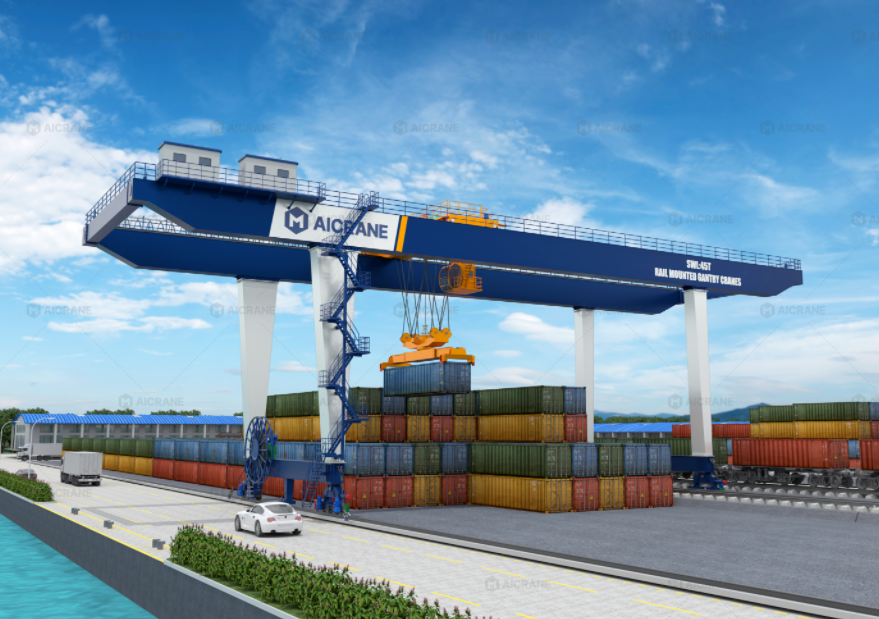
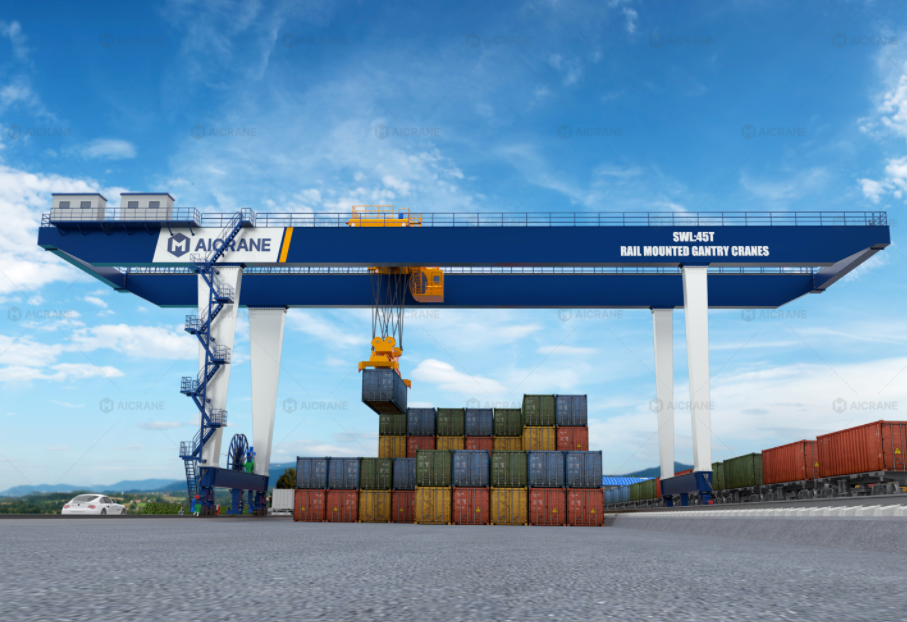
  • Site Requirements and Foundation Design for Rail Gantry Crane Installation

    Installing a rail-mounted gantry crane (RMG) is a complex engineering process that requires careful consideration of the site’s physical conditions and the design of the supporting foundation. The performance, safety, and lifespan of the crane depend heavily on how well these preliminary stages are executed. A well-prepared site and properly designed foundation ensure that the crane operates smoothly, resists environmental loads, and minimizes long-term maintenance issues.

    This article provides a detailed overview of the site requirements and foundation design principles for successful rail gantry crane installation.

    rail gantry crane

    1. Importance of Site Preparation for Rail Gantry Cranes

    Before any construction or installation begins, evaluating and preparing the site is critical. Unlike mobile or rubber-tyred gantry cranes, an RMG crane operates on fixed rails, meaning any irregularity in the site can lead to operational problems, structural stress, or premature wear.

    Proper site preparation ensures:

    • Alignment accuracy between rails for smooth crane travel.

    • Structural stability under heavy dynamic loads.

    • Durability of the foundation against weather and ground movement.

    • Operational efficiency with reduced maintenance over time.

    A well-prepared site ultimately determines the safety and reliability of the entire rail gantry crane system.

    2. Preliminary Site Survey and Soil Investigation

    The first step in the installation process is conducting a comprehensive site survey and geotechnical investigation. The objective is to understand the soil’s bearing capacity and environmental characteristics.

    2.1 Geotechnical Parameters to Assess

    • Soil bearing capacity: Determines whether the ground can support the weight of the crane and its loads.

    • Soil type and density: Clay, sand, or mixed soils behave differently under stress.

    • Groundwater level: High water tables can affect foundation stability and drainage.

    • Subsurface conditions: Rock layers, voids, or buried utilities must be identified.

    2.2 Site Topography and Drainage

    A level and well-drained site is essential. Even small slope variations can lead to misalignment of rails. Proper drainage prevents water accumulation that might weaken the subgrade or cause rail corrosion.

    In coastal or port areas, saltwater exposure must also be considered to protect the foundation and steel components from corrosion.

    rail mounted gantry crane

    3. Space Planning and Layout Design

    RMG cranes require a large, clear, and structurally stable area for installation. The layout must account for crane span, travel distance, and clearance zones.

    3.1 Layout Considerations

    • Crane runway length: Should cover the full operation range plus safety buffers at both ends.

    • Span (distance between rails): Determined by the width of the operational area, such as container yards or beam storage areas.

    • Approach clearances: Provide enough space for workers, vehicles, and maintenance access.

    • Power supply routing: Consider overhead busbars or cable reels and their positioning relative to the rails.

    3.2 Safety and Accessibility

    The design must also comply with safety standards, including emergency pathways, guardrails, and signage. Access platforms for inspection and maintenance should be integrated into the site layout.

    4. Foundation Design Requirements for Rail Gantry Cranes

    The foundation is one of the most critical elements in gantry crane installation. It must support the combined static and dynamic loads transmitted through the rail and crane wheels. Poor foundation design can lead to rail misalignment, structural cracks, or crane instability.

    4.1 Types of Foundations

    1. Reinforced Concrete Beam Foundation – The most common design, where a concrete beam runs continuously along the rail track.

    2. Pile Foundation – Used in soft or reclaimed soils to transfer the load to deeper, stable strata.

    3. Isolated Footing Foundation – Suitable for small and light duty gantry cranes with moderate loads in firm ground conditions.

    4.2 Key Design Factors

    • Load distribution: Must account for wheel loads, impact factors, and live loads during crane operation.

    • Settlement control: Differential settlement between the two rail tracks must be minimized to prevent skewing.

    • Vibration resistance: The foundation should absorb operational vibrations and prevent resonance.

    • Reinforcement details: Adequate steel reinforcement ensures durability and resistance to bending and shear forces.

    4.3 Foundation Depth and Material

    The depth depends on soil bearing capacity and frost line depth (for cold climates). Concrete grade typically ranges between C30–C40, ensuring strength and resistance against heavy loads and weather exposure.

    5. Rail Installation and Alignment

    Once the foundation is cured and stable, rail installation begins. Precision alignment is crucial since even small deviations can cause derailment or uneven wheel loading.

    5.1 Rail Fixing Methods

    • Embedded Rail System: The rail is cast directly into the concrete foundation using anchor bolts or clamps.

    • Bolted Rail System: The rail is fastened onto steel baseplates with shims for fine adjustments.

    • Continuous Grouting: After alignment, the space beneath the rail is grouted to ensure uniform support.

    5.2 Alignment Tolerances

    Typical tolerances are:

    • Vertical level difference: ≤ 10 mm over the entire length.

    • Lateral deviation: ≤ 5 mm between rail centers.

    • Height difference between rails: ≤ 3 mm over 10 m span.

    Maintaining these tolerances ensures smooth crane movement and reduces wear on wheels and rails.

    6. Drainage and Groundwater Control

    An effective drainage system protects both the foundation and electrical components. Standing water can cause corrosion, softening of subgrade soil, or even destabilization of the foundation.

    Recommended measures:

    • Install surface drains along both sides of the rail tracks.

    • Use gravel layers beneath the concrete beams for sub-surface drainage.

    • Apply waterproof coatings to the concrete foundation where groundwater is high.

    • Ensure that all cable ducts and junction boxes are sealed and moisture-proof.

    7. Environmental and Operational Considerations

    Environmental factors influence foundation design and material selection. For example:

    • Coastal environments: Require anti-corrosion coatings, stainless-steel fasteners, and salt-resistant concrete additives.

    • Seismic regions: The foundation must be designed to resist lateral earthquake forces.

    • Cold regions: Incorporate frost-protection layers or deeper foundations.

    • High-temperature zones: Allow for expansion joints to accommodate thermal movement of the rails.

    8. Quality Control and Testing

    Before commissioning, the foundation and rails must undergo strict quality inspections:

    • Dimensional verification of rail spacing, level, and alignment.

    • Load tests to confirm the structural integrity of the foundation.

    • Anchor bolt torque testing to ensure proper tightening.

    • Concrete compressive strength tests to verify curing performance.

    Proper documentation of test results provides assurance that the installation meets both manufacturer and safety standards.

    9. Long-Term Maintenance of Foundations

    Even after installation, the foundation requires periodic inspection to maintain performance. Settlement, cracks, or loosening of rail fasteners should be addressed immediately.

    Maintenance tips:

    • Conduct annual alignment checks using laser surveying tools.

    • Seal any cracks with epoxy grouting.

    • Replace corroded bolts and rail clips as needed.

    • Maintain drainage systems to prevent waterlogging.

    Consistent maintenance ensures the reliability and longevity of the RMG crane system.

    Conclusion

    A rail-mounted gantry crane is only as stable and efficient as the foundation and site it’s installed on. From detailed soil investigation to precise rail alignment, every stage of site preparation and foundation design plays a crucial role in ensuring operational safety and structural longevity.

    Investing in professional engineering design, proper installation, and long-term maintenance not only prevents costly failures but also maximizes the performance and lifespan of your gantry crane. For any rail gantry crane project—whether in a container terminal, manufacturing yard, or precast concrete plant—ensuring a solid foundation is the first step toward a reliable lifting solution.

  • Ensuring RMG Crane Positioning Accuracy in Container Handling

    Rail Mounted Gantry (RMG) cranes play a critical role in modern container terminals, enabling the efficient movement, stacking, and retrieval of containers. The precision with which an RMG crane operates significantly affects operational efficiency, safety, and overall throughput of the terminal. Positioning accuracy in container handling is not merely a matter of convenience; it directly impacts load safety, container integrity, and turnaround times for vessels. This article explores the key factors influencing RMG crane positioning accuracy and strategies to ensure optimal performance.

    rail mounted gantry crane

    Importance of Positioning Accuracy

    Positioning accuracy refers to the ability of the rail mounted gantry crane to move its trolley and hoist to the exact location required for container pickup or placement. Accurate positioning is essential for several reasons:

    1. Operational Efficiency: Precise positioning minimizes the time required to pick up and place containers, reducing idle times and increasing the terminal’s throughput.

    2. Container Safety: Misaligned lifts can damage containers or their contents, resulting in financial losses and potential safety hazards.

    3. Equipment Longevity: Repeated mispositioning can cause undue wear on the crane’s mechanical and electrical systems, increasing maintenance costs.

    4. Automation Compatibility: Automated container handling systems rely on highly accurate RMG crane positioning to function effectively.

    In container yards where space is limited and containers are stacked closely together, even a deviation of a few centimeters can cause operational delays or accidents. Therefore, ensuring precise positioning is a high priority for terminal operators.

    Factors Affecting Positioning Accuracy

    Several factors can influence the positioning accuracy of RMG cranes:

    1. Rail Alignment and Infrastructure

    The rails on which the RMG crane travels must be accurately aligned and leveled. Misaligned or uneven rails can cause the crane to drift, leading to positioning errors. Regular maintenance of the rail infrastructure, including alignment checks and leveling, is essential to ensure accurate movement.

    2. Crane Structural Integrity

    The structural rigidity of the RMG crane affects its ability to maintain precise positioning. Any flexing or deformation in the crane’s girder, legs, or trolley frame can result in misalignment during container handling. High-quality construction, proper material selection, and periodic structural inspections help maintain crane integrity.

    3. Control System Precision

    The accuracy of the RMG crane is heavily dependent on its control systems. Modern RMG cranes utilize programmable logic controllers (PLCs), servo motors, and advanced feedback systems to achieve precise movement. Calibration of sensors, regular software updates, and routine testing of control systems ensure consistent positioning accuracy.

    4. Anti-Sway and Motion Control Technology

    Container handling often involves lifting heavy loads from significant heights. Swaying due to inertia or wind can affect the placement of containers. Advanced RMG cranes incorporate anti-sway mechanisms and motion control algorithms to minimize lateral and longitudinal movement, allowing for accurate container placement even under challenging conditions.

    5. Environmental Conditions

    Environmental factors such as wind, rain, and temperature fluctuations can impact positioning accuracy. For example, strong winds may cause container sway or deflection in crane structures. Implementing environmental sensors and adjusting operational parameters according to conditions can mitigate these effects.

    6. Operator Skill and Training

    While automation is increasingly common, human operators still play a crucial role in positioning accuracy for many RMG cranes. Operators must be trained to recognize subtle deviations in movement and compensate accordingly. Simulation-based training and regular skill assessments help maintain high standards of operational precision.

    RMG crane

    Strategies to Improve RMG Crane Positioning Accuracy

    Ensuring precise container handling requires a combination of technology, infrastructure, and operational best practices. Below are key strategies for improving RMG crane positioning accuracy:

    1. Advanced Positioning Systems

    Modern RMG cranes employ various positioning technologies, including:

    • Laser Positioning Systems: Lasers provide highly accurate distance measurements, ensuring the trolley stops at the correct location.

    • GPS and RTK Systems: Real-time kinematic (RTK) GPS enhances positioning accuracy, particularly in large outdoor container yards.

    • Encoder Feedback Systems: High-resolution encoders track the exact position of crane components, allowing for precise movement control.

    2. Regular Calibration and Maintenance

    Consistent calibration of sensors, encoders, and control systems is crucial. Scheduled maintenance ensures that mechanical components, such as wheels, bearings, and rails, remain within specified tolerances. Proactive maintenance reduces the likelihood of positioning errors caused by wear or misalignment.

    3. Anti-Sway and Motion Compensation

    Incorporating anti-sway devices or motion compensation software reduces lateral and longitudinal movement during lifting and placement. Some advanced systems use predictive algorithms to calculate container trajectory and automatically adjust crane motion to maintain alignment.

    4. Automation and Semi-Automation

    Automated RMG container cranes equipped with integrated Terminal Operating Systems (TOS) significantly improve positioning accuracy. Automation reduces human error, ensures consistent container handling, and allows for high-speed operations while maintaining precision. Semi-automated systems can assist operators by providing positioning guidance and real-time feedback.

    5. Environmental Adaptation

    Monitoring environmental conditions such as wind speed, temperature, and rain helps optimize crane operation. For example, reducing movement speed during high winds or activating sway correction systems ensures containers are placed accurately without risking safety.

    6. Operator Training and Performance Monitoring

    Even with advanced automation, operators remain essential for safety and fine adjustments. Regular training, simulation exercises, and performance monitoring help operators maintain precision in positioning and respond to unexpected situations.

    7. Integration with Yard Management Systems

    RMG cranes function best when fully integrated with yard management systems. Real-time data on container positions, stacking patterns, and operational priorities allow cranes to make precise movements efficiently. Integration ensures that container handling aligns with overall terminal workflow, reducing the likelihood of misplacement.

    Benefits of Accurate RMG Crane Positioning

    By ensuring precise positioning in container handling, terminals can achieve:

    • Higher Throughput: Faster, error-free container handling improves overall terminal efficiency.

    • Reduced Damage and Loss: Accurate placement reduces container and cargo damage, minimizing financial losses.

    • Lower Maintenance Costs: Reduced misalignment and mechanical strain extend the lifespan of crane components.

    • Enhanced Safety: Minimizing misplacement reduces the risk of accidents and injuries.

    • Automation Readiness: Terminals can implement fully automated operations without compromising accuracy.

    Conclusion

    Positioning accuracy is a cornerstone of effective RMG crane operations in container handling. Achieving it requires attention to crane structure, control systems, rail alignment, operator training, and environmental factors. Modern technologies such as laser systems, encoder feedback, anti-sway mechanisms, and automation significantly enhance precision, while regular maintenance ensures sustained performance. By prioritizing positioning accuracy, container terminals can improve operational efficiency, reduce costs, and enhance safety, ultimately supporting the smooth flow of global trade.