The rapid growth of the wind power industry and the increasing scale of heavy equipment manufacturing have created new challenges for material handling and lifting operations. Wind turbine components such as blades, tower sections, nacelles, and generators are larger, heavier, and more complex to handle than ever before. Similarly, heavy equipment used in energy, mining, construction, and infrastructure projects demands reliable and flexible lifting solutions capable of operating in dynamic outdoor environments.
Rubber Tyred Gantry (RTG) cranes have emerged as an effective technology for addressing these challenges. Unlike rail-mounted systems, RTG cranes combine high lifting capacity with mobility, allowing them to operate across wide yards without fixed foundations. This article explores the core technologies behind RTG rubber tyred gantry cranes and explains why they are particularly well suited for wind power and heavy equipment applications.
Material Handling Challenges in Wind Power and Heavy Equipment Industries
Wind power projects involve multiple stages of handling, from manufacturing and storage to transportation and installation preparation. Wind turbine blades can exceed 80 meters in length, tower sections weigh dozens of tons, and nacelles integrate sensitive mechanical and electrical systems. These components require precise, stable, and damage-free lifting.
Heavy equipment manufacturing and assembly present similar challenges. Large structural components, engines, and modular assemblies must be moved between workstations, outdoor storage areas, and logistics zones. Frequent layout changes, varying load sizes, and tight project schedules demand lifting systems that are both powerful and adaptable.
RTG crane technology addresses these challenges by providing high-capacity lifting, wide-area coverage, and flexible mobility, making it ideal for complex and evolving work environments.
Core Design Features of Rubber Tyred Gantry Cranes
High-Capacity Structural Design
RTG cranes used in wind power and heavy equipment applications are typically designed with reinforced box girder or hybrid truss structures. These designs offer high torsional stiffness and load-bearing capacity while maintaining structural stability during long-span operations.
Advanced structural analysis, including finite element modeling, ensures that the crane can safely handle asymmetrical loads and dynamic forces common in wind turbine component lifting. The result is a robust crane structure capable of supporting loads ranging from tens to hundreds of tons.
Wide Span and Clearance Capabilities
Wind turbine components often require large clearance heights and wide spans. RTG cranes can be customized with extended spans and increased lifting heights to accommodate oversized components without the need for multiple lifting systems.
The ability to straddle large loads and transport them across open yards is a key advantage of RTG technology in wind power logistics and heavy equipment assembly.
Mobility and Steering Technology
Rubber Tyre Travel System
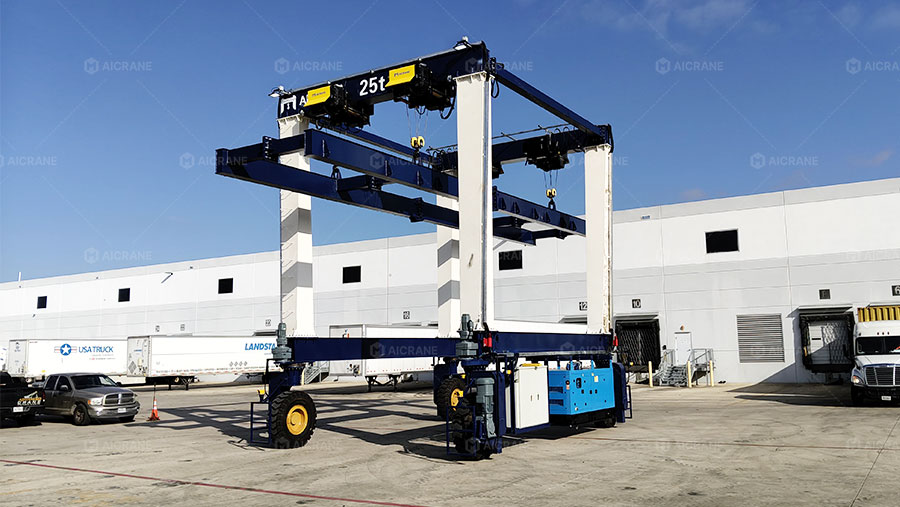
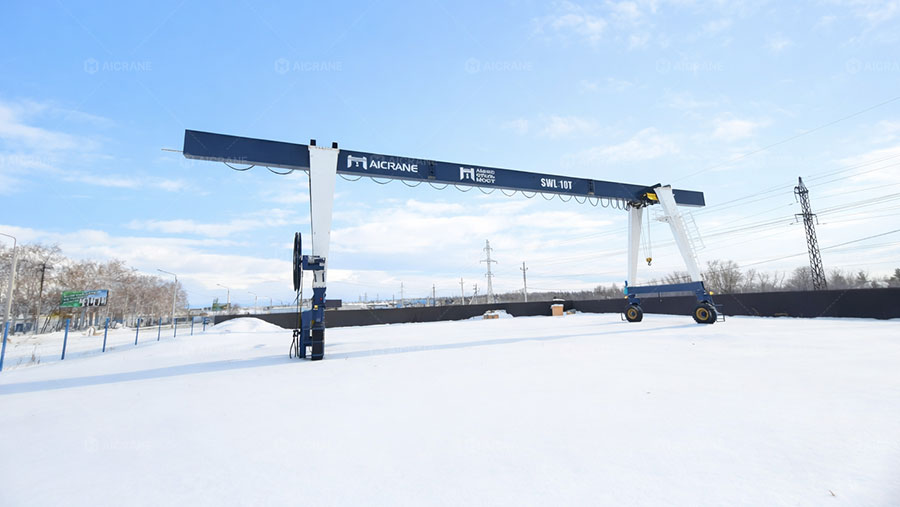
The defining feature of RTG cranes is their rubber tyre travel system, which allows movement without rails or permanent foundations. This mobility is particularly valuable in wind power yards and heavy equipment facilities where layouts may change frequently as projects progress.
RTG cranes distribute load across multiple wheels, reducing ground pressure and allowing operation on reinforced concrete, asphalt, or compacted gravel surfaces.
Advanced Steering Modes
Modern RTG cranes are equipped with multiple steering modes, including straight travel, diagonal movement, and pivot steering. These capabilities enable precise positioning of large components in confined spaces.
For wind turbine blade handling, where alignment accuracy is critical, advanced steering technology ensures smooth and controlled mobile gantry crane movement, reducing the risk of component damage.
Hoisting and Control Technology for Large and Sensitive Loads
Precision Hoisting Systems
RTG cranes for wind power and heavy equipment are equipped with high-performance hoisting mechanisms designed for smooth, controlled lifting. Variable frequency drives (VFDs) allow precise speed regulation, reducing shock loads during start and stop operations.
Multi-hoist configurations can be used for synchronized lifting of long or flexible components, such as wind turbine blades, ensuring even load distribution and structural integrity.
Intelligent Control Systems
Modern RTG cranes integrate PLC-based control systems with advanced human-machine interfaces (HMIs). These systems provide real-time feedback on load weight, hoisting speed, and crane position.
Control algorithms support functions such as load sway suppression, soft start and stop, and automatic positioning, all of which are essential when handling high-value and sensitive equipment.
Safety Technology for Wind Power and Heavy Equipment Handling
Safety is a critical consideration in both wind power and heavy equipment operations, where loads are heavy, large, and often handled outdoors.
RTG cranes are equipped with comprehensive safety systems, including overload protection, emergency braking, and wind speed monitoring. Anti-sway technology minimizes load movement during lifting and travel, enhancing stability and operator confidence.
Collision avoidance systems and zone protection technologies prevent crane movement into restricted areas or potential obstacles, improving overall site safety.
Energy Efficiency and Sustainable Operation
As renewable energy projects emphasize sustainability, the energy efficiency of handling equipment becomes increasingly important. RTG crane technology has evolved to support energy-efficient and environmentally responsible operation.
Electric and hybrid RTG cranes reduce fuel consumption and emissions compared to traditional diesel-powered systems. Regenerative braking technology allows energy generated during lowering or braking to be recovered and reused.
These features align RTG crane operations with the sustainability goals of wind power projects and heavy industry facilities.
Integration with Digital and Smart Yard Systems
IoT-Enabled Monitoring and Data Collection
RTG cranes can be equipped with IoT sensors that monitor operational parameters such as load cycles, motor temperatures, and energy consumption. This data supports real-time monitoring and predictive maintenance strategies.
In wind power logistics yards, IoT-enabled RTG cranes provide visibility into component movement and storage status, improving planning and coordination.
Predictive Maintenance and Asset Management
By analyzing operational data, maintenance teams can identify early signs of wear or misalignment and address issues before failures occur. Predictive maintenance reduces downtime and extends equipment lifespan, which is especially valuable in project-driven wind power operations with tight schedules.
Application Scenarios in Wind Power and Heavy Equipment
RTG cranes are widely used in wind turbine manufacturing plants for handling blades, towers, and nacelles. They support outdoor storage and pre-assembly areas, where mobility and large coverage are essential.
In heavy equipment manufacturing, RTG cranes facilitate the movement of large modules between fabrication, assembly, and testing areas. Their ability to adapt to changing layouts makes them suitable for project-based and custom manufacturing environments.
RTG cranes are also used in logistics hubs for loading and unloading oversized equipment onto transport vehicles, streamlining the supply chain for large-scale projects.
Challenges and Engineering Considerations
While RTG cranes offer significant advantages, successful deployment requires careful consideration of ground conditions, wind loads, and operational requirements. Engineering assessments ensure that tyre selection, wheel load distribution, and braking systems are appropriate for site conditions.
Operator training and maintenance planning are equally important to maximize the benefits of RTG crane technology.
Future Trends in RTG Crane Technology
The future of RTG crane technology for wind power and heavy equipment includes greater automation, enhanced digital integration, and increased use of clean energy. Advances in AI and machine learning will enable smarter control systems and autonomous operation in defined environments.
As wind turbines continue to grow in size and complexity, RTG cranes will evolve to meet higher capacity and precision requirements, reinforcing their role as essential tools in the renewable energy and heavy equipment sectors.
Conclusion
Rubber tyred gantry crane technology offers a powerful and flexible solution for the demanding material handling requirements of wind power and heavy equipment industries. By combining high lifting capacity, mobility, advanced control systems, and intelligent safety features, RTG cranes enable efficient and safe handling of oversized and high-value components.
As these industries continue to expand and modernize, RTG cranes will remain a key enabler of productivity, sustainability, and operational excellence.