Tag: steel structure

  • Designing Steel Structures to Support Double Girder Overhead Crane Loads

    Double girder overhead cranes are widely used in industrial environments where heavy-duty lifting, precise load control, and efficient material handling are essential. These cranes are typically employed in factories, warehouses, shipyards, steel plants, and power generation facilities, with lifting capacities ranging from 10 tons to several hundred tons. While the crane itself is a critical component of any industrial operation, the steel structure that supports it is equally important. Designing a steel structure to safely and efficiently support double girder overhead crane loads is a complex engineering challenge that requires careful planning, precise calculations, and adherence to industry standards.

    1. Understanding Double Girder Overhead Cranes

    A double girder overhead crane consists of two parallel girders that span the width of a building or workshop. The hoist, trolley, and bridge run along these girders, providing high lifting capacity and enhanced stability. Unlike single girder cranes, double girder systems distribute the weight of the load across two girders, reducing stress on individual components. This design allows for heavier loads, higher lifting heights, and greater operational safety. However, the increased weight and dynamic forces necessitate a robust supporting steel structure engineered specifically for these loads.
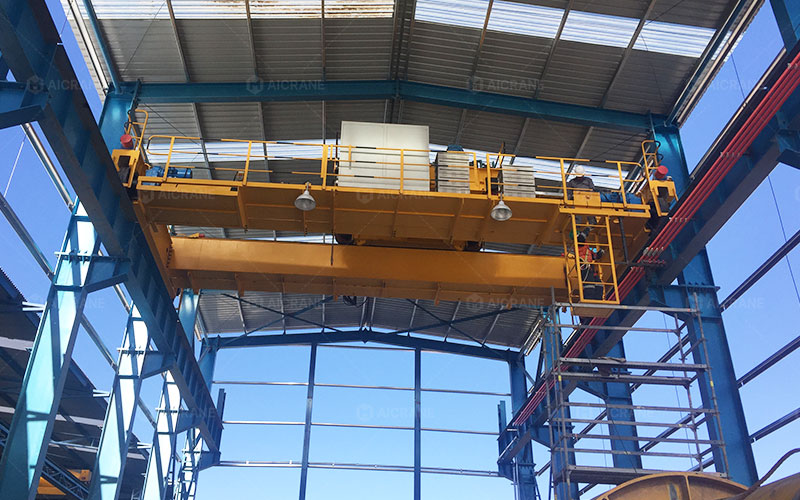
    double girder overhead crane

    2. Key Considerations in Steel Structure Design

    When designing a steel structure to support a double girder overhead crane, engineers must consider several critical factors:

    a. Load Analysis

    Load analysis is the foundation of steel structure design. The structure must safely support the dead weight of the crane itself (girders, trolley, hoist, and bridge) as well as the live load, which is the material being lifted. Additionally, dynamic loads such as acceleration, deceleration, wind forces, and potential seismic activity must be accounted for. For double girder cranes, point loads are concentrated at the wheels of the crane bridge, requiring careful calculation to ensure that columns, beams, and supporting trusses can withstand these forces without excessive deflection.

    b. Span Length

    The span length—the distance between crane-supporting columns—directly affects the design of the steel structure. Longer spans require stronger beams or trusses to prevent sagging and maintain structural stability. Integrated truss systems are often used in wide-span buildings to distribute the crane load efficiently across multiple members.

    c. Building Height and Lifting Clearance

    The steel structure must accommodate the lifting height of the crane, ensuring sufficient headroom for the hoist and the load. Designers must also consider space for maintenance, crane operation, and the installation of safety devices. An adequately high structure ensures that the crane can operate at full lifting capacity without interference.

    d. Column and Beam Design

    Columns and beams form the primary load-bearing elements of the steel structure. The choice of material grade, cross-sectional dimensions, and bracing methods are critical for supporting double girder cranes. Columns must resist vertical loads and lateral forces, while beams (girders, roof trusses) must carry both the crane weight and the transferred load from the crane wheels.

    e. Deflection Control

    Deflection is a key concern in crane-supported steel structures. Excessive deflection can affect crane operation, lead to misalignment, and increase wear on crane components. Engineers typically limit deflection to a fraction of the span length, following standards such as the European FEM or American CMAA guidelines. Adequate bracing, proper member sizing, and material selection all contribute to controlling deflection.

    3. Dynamic Load Considerations

    Double girder overhead cranes impose dynamic forces on the supporting structure due to acceleration, deceleration, and load swinging. These dynamic effects can amplify stresses and lead to fatigue over time. Steel structures must be designed with safety factors to account for these variations:

    1. Impact Factor – Additional load applied to account for the crane’s moving mass and sudden braking.

    2. Vibration and Resonance – The structure must avoid natural frequencies that could resonate with crane movements.

    3. Lateral Forces – Side forces generated during travel or lifting must be transferred safely to the foundation.

    Designing for dynamic loads ensures operational reliability and prolongs the life of both the crane and the steel structure.

    4. Foundation Design

    The steel structure must transfer crane loads safely to the ground through the foundation. Crane foundations are often reinforced with concrete footings, embedded steel plates, and anchor bolts that secure columns. Proper soil analysis is essential to prevent settlement, tilting, or uneven load distribution, which could compromise crane operation. The foundation design must consider:

    • Load intensity from crane wheels.

    • Concentrated point loads at column bases.

    • Potential vibration from crane movements.

    • Soil bearing capacity and local building codes.

    5. Integration with Building Roof and Trusses

    Double girder cranes typically run on rails mounted at the top of columns or along dedicated runway beams. Integrating the crane rails into the steel structure requires precise alignment and level installation. Roof trusses may also need reinforcement to support additional loads if the building is used for overhead cranes in areas where cranes travel near the roofline. In some cases, gantry-like extensions or supplementary beams are designed to ensure full structural integrity.
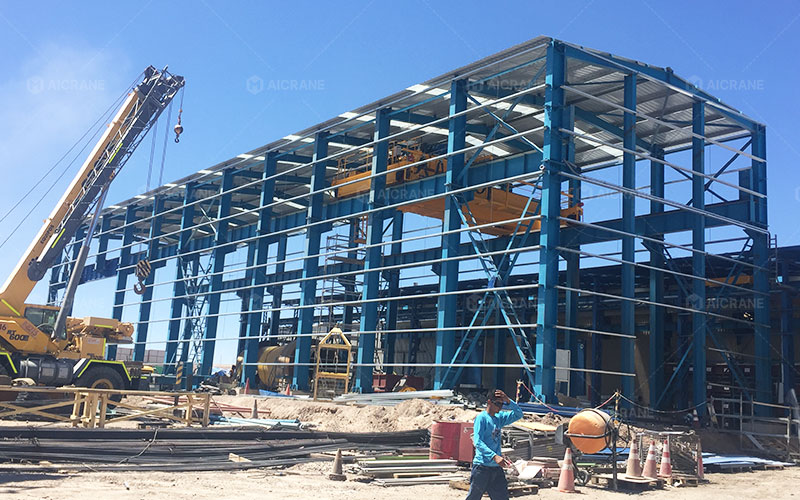
    steel structure

    6. Safety Standards and Regulations

    Designing steel structures to support double girder overhead cranes is not merely a matter of structural calculations—it also involves strict adherence to safety standards. Organizations such as the Crane Manufacturers Association of America (CMAA), Fédération Européenne de la Manutention (FEM), and local building codes provide guidelines on:

    • Load combinations.

    • Structural deflection limits.

    • Safety factors for dynamic loads.

    • Design for seismic and wind resistance.

    Compliance with these standards is essential for legal, operational, and insurance purposes.

    7. Material Selection and Corrosion Protection

    High-strength structural steel is commonly used for crane-supporting buildings due to its load-bearing capabilities and durability. Engineers must select steel grades that offer optimal balance between strength, ductility, and cost. Corrosion protection is also crucial, especially in humid, coastal, or industrial environments. Options include galvanization, powder coating, or applying industrial-grade paints to extend the service life of the steel structure.

    8. Advantages of Purpose-Built Structures

    Designing steel structures specifically for double girder overhead cranes offers several benefits over retrofitting cranes into existing buildings:

    • Optimized Load Distribution – The structure is engineered to handle point loads without overstressing beams or columns.

    • Reduced Maintenance Costs – Proper alignment and structural support minimize wear and tear on crane components.

    • Increased Safety – Custom designs ensure safe operation under full load and dynamic conditions.

    • Operational Efficiency – Adequate span, height, and clearance improve workflow and crane productivity.

    • Future Scalability – Purpose-built structures can accommodate heavier or additional cranes if operational needs grow.

    9. Practical Applications

    Double girder cranes supported by purpose-built steel structures are widely used across industries:

    • Steel Plants – Lifting coils, slabs, and finished metal products.

    • Warehouses and Logistics Centers – Handling large containers and heavy pallets.

    • Construction Equipment Factories – Moving heavy machinery components during assembly.

    • Power Stations – Installing turbines, generators, and other heavy components safely.

    In each scenario, the steel structure is tailored to the crane’s operational requirements, ensuring smooth and safe material handling.

    Conclusion

    Designing steel structures to support double girder overhead crane loads is a highly specialized engineering task. From load analysis and dynamic forces to foundation design, material selection, and safety compliance, every aspect of the structure must be carefully considered. Purpose-built steel structures not only provide the strength and stability required for heavy lifting but also enhance operational efficiency, reduce maintenance costs, and improve safety. Industrial facilities that invest in well-designed steel structures for their double girder cranes benefit from reliable, long-lasting, and adaptable material handling solutions.

    For manufacturers, warehouses, and industrial plants seeking optimal crane performance, the integration of double girder cranes with thoughtfully engineered steel structures is not just an option—it is the foundation of efficient, safe, and future-proof operations.
  • Turnkey Solutions: Steel Structure and Overhead Crane Package Delivery

    In the fast-evolving industrial landscape, efficiency, reliability, and integration are critical factors in facility construction and equipment installation. For industries relying on heavy lifting and material handling – such as manufacturing, logistics, steel fabrication, and warehousing – the combination of steel structures and overhead cranes forms the backbone of their operational capabilities. Delivering these two essential components as a turnkey package offers significant advantages in terms of time savings, cost control, and seamless integration.

    This article explores the concept of turnkey solutions involving steel structures and overhead cranes, explains why such integrated delivery is becoming a preferred approach, outlines the key steps in the process, and highlights best practices for ensuring a successful project outcome.

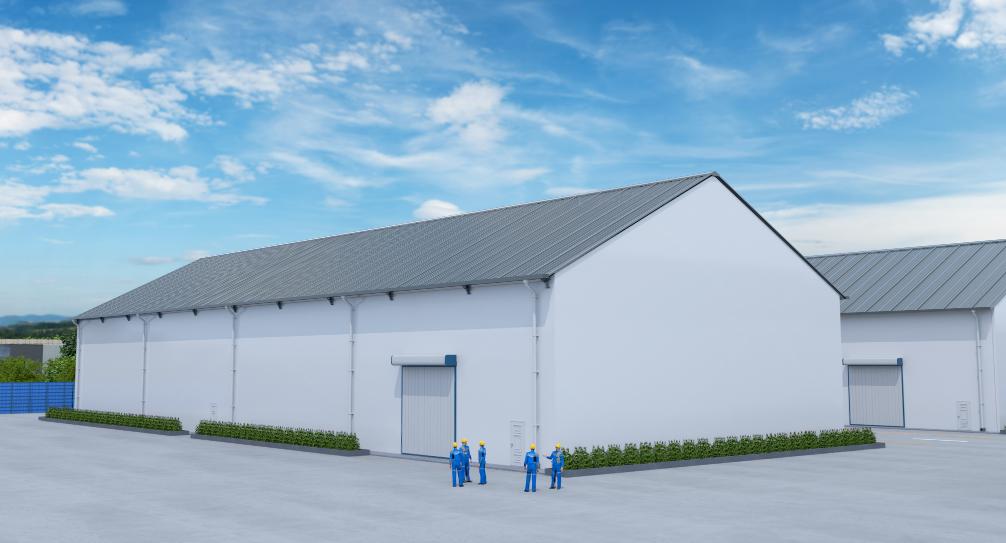
    steel structure

    What is a Turnkey Solution?

    A turnkey solution refers to a comprehensive package where a single supplier or contractor manages the entire process of design, fabrication, supply, installation, and commissioning of a complete system or facility. The client receives a ready-to-use, fully functional product or infrastructure with minimal additional input needed.

    In the context of steel structures combined with overhead cranes, a turnkey package typically includes:

    • Design and engineering of the steel building structure

    • Fabrication and erection of the steel frame

    • Design, manufacture, and supply of the overhead crane system (single girder, double girder, or specialized cranes)

    • Installation of crane runway beams integrated with the steel structure

    • Electrical wiring, control systems, and testing of the crane

    • Final commissioning and handover

    By contracting a single provider for the entire project, clients benefit from streamlined coordination, unified project management, and reduced interface risks between structure and crane suppliers.

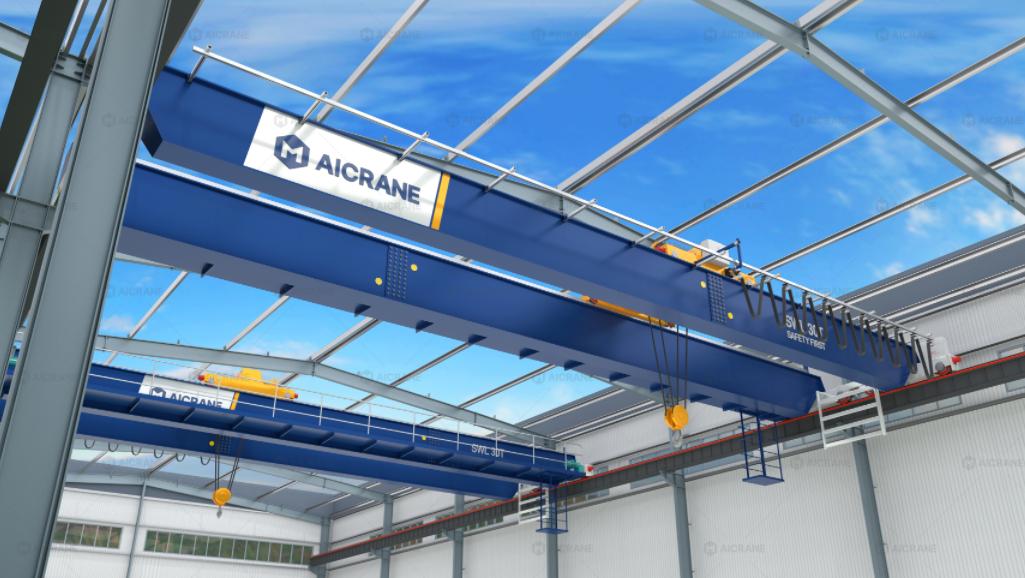
    Overhead Crane in Steel Structure Factory

    Why Choose Turnkey Package Delivery?

    1. Simplified Project Management

    Coordinating separate vendors for steel structure and overhead cranes can be complex and prone to delays or conflicts in schedules and specifications. A turnkey provider acts as the single point of contact, managing every detail from structural design through crane commissioning, ensuring timelines are met and communication flows smoothly.

    2. Design Integration and Compatibility

    Steel structures and overhead cranes must work in perfect harmony to ensure safety, performance, and durability. For example, the crane runway beams need to be precisely designed and fabricated to carry crane loads safely without compromising the structural integrity of the building. With turnkey delivery, structural engineers and crane specialists collaborate early in the design phase, guaranteeing compatibility and optimal performance.

    3. Cost Efficiency

    Bundling steel structure and crane supply into one contract can lead to cost savings by reducing duplicated engineering work, optimizing material usage, and negotiating package discounts. Additionally, better project scheduling prevents costly downtime and delays on site.

    4. Quality Assurance

    A single provider is accountable for the entire scope, which encourages stringent quality control throughout fabrication and installation. This reduces the risk of defects or mismatched components and results in a safer, more reliable facility.

    5. Faster Delivery Time

    Turnkey projects benefit from coordinated workflows and reduced administrative burden, enabling faster completion from contract award to operational readiness. This speed-to-market can be critical in competitive industries where downtime directly impacts revenue.

    The Turnkey Package Delivery Process

    Step 1: Needs Assessment and Feasibility Study

    The turnkey provider begins by engaging with the client to understand operational requirements, budget constraints, site conditions, and timeline expectations. This phase includes preliminary site surveys, load capacity analysis, and reviewing any regulatory compliance needs.

    Step 2: Conceptual and Detailed Design

    Engineers from both steel structure and overhead crane teams collaborate on creating an integrated design. This involves:

    • Steel frame calculations to ensure the building supports all static and dynamic loads, including crane loadings

    • Designing runway beams, columns, and bracing systems capable of safely transferring crane loads to foundations

    • Selecting the appropriate crane type (single/double girder, electric, hydraulic, etc.) based on lifting capacity, span, and duty cycle

    • Preparing structural drawings, crane layout plans, and wiring diagrams

    At this stage, 3D modeling and BIM (Building Information Modeling) tools are often used to visualize and validate the design.

    Step 3: Procurement and Fabrication

    Once designs are approved, material procurement begins. The steel structure components are fabricated in specialized workshops using CNC cutting, welding, and painting processes to ensure precision and durability. Simultaneously, the overhead crane components – including girders, hoists, trolleys, motors, control panels – are manufactured and tested.

    Step 4: Site Preparation and Erection

    Before steel structure erection, the site must be prepared with foundations and concrete footings designed to withstand crane loads. After that:

    • Steel columns and beams are assembled and erected on site according to detailed erection plans

    • Crane runway beams are installed with tight tolerance requirements to ensure smooth crane operation

    • The overhead crane is assembled and installed on the runway beams, including wiring, control systems, and safety devices

    Close collaboration between steel erectors and crane installers is crucial during this phase.

    Step 5: Testing and Commissioning

    Comprehensive testing ensures the crane and structure operate safely and reliably. This includes:

    • Load testing the crane with test weights

    • Verifying alignment and smooth travel of crane hoist and trolley

    • Testing control responsiveness and emergency stops

    • Inspecting steel structure connections for any signs of stress or deformation

    Only after all checks are passed does the turnkey provider hand over the fully operational system to the client.

    Key Considerations for Turnkey Package Delivery

    Regulatory Compliance and Standards

    Steel structures and overhead cranes are subject to strict codes and standards, such as AWS, ISO, FEM, CMAA, and local building regulations. The turnkey provider must ensure all designs, materials, and processes meet or exceed these requirements.

    Customization vs. Standardization

    While standard crane models and steel structures can reduce costs, many clients require customized solutions to fit unique site conditions or operational needs. Turnkey suppliers should offer flexible design options to accommodate various industry demands.

    Future Expansion and Maintenance

    Clients should discuss potential future expansion with the turnkey provider to design structures and cranes that can be upgraded or extended easily. Additionally, clear maintenance and service plans should be included in the turnkey contract.

    Risk Management

    Turnkey contracts often come with fixed pricing and deadlines. Providers must have robust risk management plans to handle unexpected site issues, supply chain disruptions, or design changes without compromising quality or schedule.

    Case Study: A Successful Turnkey Delivery for a Steel Fabrication Plant

    A recent example highlights the benefits of turnkey delivery. A steel fabrication client required a 30-meter span workshop equipped with a double girder overhead crane 20 ton for heavy load handling.

    The turnkey supplier conducted a thorough site survey and designed a steel structure with integrated crane runway beams. Fabrication and installation were coordinated tightly, resulting in:

    • 25% reduction in project duration compared to separate contracts

    • 15% cost savings through material and labor optimization

    • Flawless integration with no post-installation modifications needed

    The client reported immediate operational benefits and praised the single-source responsibility model for simplifying project management.

    Conclusion

    Turnkey solutions for steel structures combined with overhead cranes present a compelling value proposition for industrial clients aiming to enhance operational efficiency and reduce project complexity. From integrated design and quality-controlled fabrication to coordinated installation and commissioning, turnkey delivery offers significant benefits in terms of cost, time, and performance.

    When selecting a turnkey provider, clients should focus on experience, technical expertise, compliance capabilities, and proven track records in handling complex steel and crane projects. A well-executed turnkey package is more than just a building and a crane – it’s a turnkey asset that supports long-term productivity and safety.