Subway and tunnel construction projects are some of the most complex infrastructure undertakings in urban and industrial environments. They involve the coordination of heavy lifting, precision placement of large segments, and continuous material handling in restricted spaces. Gantry cranes have become indispensable in this field due to their adaptability, high load capacity, and ability to work effectively in both temporary and permanent setups. Their uses extend far beyond simply lifting components; they play a central role in ensuring efficiency, safety, and cost-effectiveness throughout the construction lifecycle.
This article explores the main uses of gantry cranes in subway and tunnel projects, highlighting their functions in excavation support, segment handling, material transportation, and specialized applications.
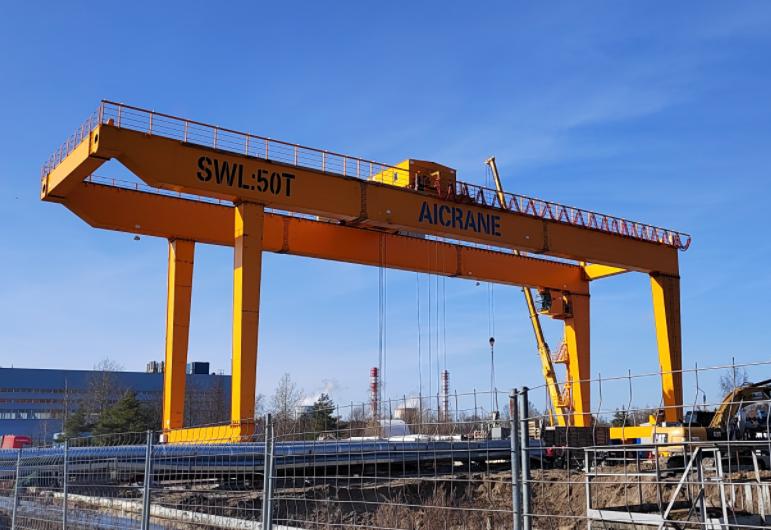
1. Handling and Installing Tunnel Segments
One of the most critical tasks in tunnel construction is the placement of precast concrete segments that form the tunnel lining. These segments are heavy, often weighing several tons, and require precise positioning within tight tolerances. Gantry cranes are well-suited for this purpose due to their ability to:
-
Lift heavy loads: Double girder gantry cranes or heavy-duty models can handle precast concrete segments weighing anywhere from 10 to 50 tons or more.
-
Ensure precise alignment: With advanced control systems, gantry cranes can carefully lower and position each segment to ensure a perfect fit.
-
Adapt to confined spaces: Unlike tower cranes, gantry cranes can operate within restricted tunnel portals or shafts, making them ideal for underground settings.
This application not only speeds up tunnel assembly but also enhances worker safety by reducing manual handling risks.
2. Excavation and Muck Removal
During tunnel boring or excavation, enormous quantities of soil, rock, and debris – often referred to as muck – must be removed efficiently. Gantry cranes are widely used to support this process in several ways:
-
Hoisting muck skips: Large skips or containers filled with excavated material can be hoisted out of shafts using gantry cranes.
-
Continuous cycle operations: Multiple skips can be lifted in rotation, ensuring a continuous flow of muck removal to maintain tunneling progress.
-
Integration with conveyors or trucks: Gantry cranes often transfer excavated material from shaft to trucks or conveyor systems for transportation to disposal sites.
By automating and accelerating muck removal, gantry cranes help maintain tight construction schedules.
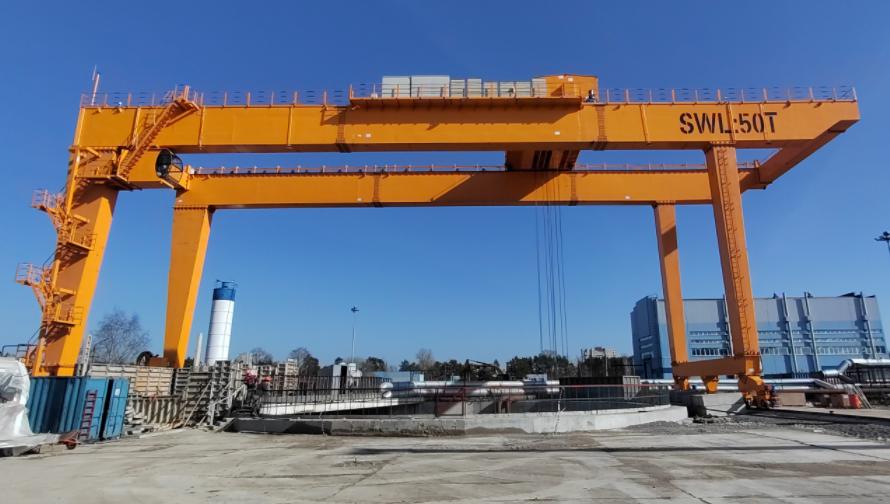
3. Lowering Tunnel Boring Machines (TBMs) and Equipment
Tunnel boring machines and their associated components are among the largest and heaviest pieces of equipment used in construction. A single TBM can weigh hundreds of tons, and its components—such as cutter heads, shields, and drive units—must be lowered into shafts with great care. Gantry cranes are often employed for:
-
Lowering TBM components: Heavy duty gantry cranes with capacities of 200–500 tons can carefully lower TBM parts into construction shafts.
-
Assembly support: Once underground, gantry cranes may assist in aligning and assembling TBM components before operation begins.
-
Lifting auxiliary equipment: Supporting systems like pumps, ventilation fans, and conveyor modules are also lowered by cranes.
Without gantry cranes, handling these massive machines would be both time-consuming and hazardous.
4. Transporting Construction Materials
Subway and tunnel projects require a steady supply of materials such as steel reinforcements, precast slabs, track sections, and piping. Gantry cranes facilitate material logistics by:
-
Loading and unloading trucks: Materials arriving at the site can be swiftly unloaded and staged with gantry cranes.
-
Storing and organizing materials: Gantry cranes are often used in staging yards or precast segment factories near the project site.
-
Supplying work fronts: Cranes can transport heavy loads directly to tunnel portals or shafts, ensuring uninterrupted progress.
Their ability to streamline material handling reduces project delays and enhances productivity.
5. Assembling and Placing Subway Infrastructure
Once the tunnel shell is complete, gantry cranes remain essential during the installation of subway infrastructure, including:
-
Track laying: Rails, sleepers, and fastening systems are heavy and must be laid with accuracy. Gantry cranes simplify this process by lifting and positioning track panels.
-
Electrical and mechanical systems: Large cable reels, ventilation ducts, and transformer units are often installed underground with crane assistance.
-
Station construction: In underground stations, gantry cranes handle escalator components, platform structures, and architectural elements.
This broad functionality makes gantry cranes valuable well into the final stages of construction.
6. Temporary Support and Shaft Construction
Many subway and tunnel projects require vertical access shafts for excavation, ventilation, and worker entry. Gantry cranes are often erected over these shafts to:
-
Hoist reinforcement cages and formwork: Steel reinforcement and concrete formwork for shaft walls are lifted and positioned using gantry cranes.
-
Lower construction crews and equipment: In some cases, cranes can safely lower personnel cages or smaller machines.
-
Provide continuous lifting support: Throughout shaft excavation, cranes remain active in lifting, lowering, and supporting operations.
These temporary but critical roles make gantry cranes an indispensable part of shaft-based construction.
7. Enhancing Safety and Reducing Manual Labor
Safety is paramount in tunnel and subway construction. Heavy lifting in confined spaces presents significant risks, but gantry cranes mitigate these risks by:
-
Reducing manual handling: Workers avoid direct exposure to heavy loads, lowering the risk of injury.
-
Controlled movements: Modern gantry cranes feature variable speed drives, anti-sway technology, and remote controls for precise and safe operation.
-
Emergency response: In emergencies, cranes can quickly lift equipment or debris to aid rescue operations.
By integrating gantry cranes, contractors enhance not only efficiency but also overall site safety.
8. Customization for Tunnel Projects
Tunnel and subway projects often require specialized gantry crane designs. Some common customizations include:
-
Adjustable spans and heights: To fit unique shaft dimensions or underground clearances.
-
Rail-mounted or rubber-tyred options: Depending on whether mobility or stability is prioritized.
-
Special lifting attachments: Tailored spreader beams or clamps for handling tunnel segments and TBM components.
-
Corrosion-resistant materials: Particularly important in underground environments with high humidity and dust.
These adaptations ensure that gantry cranes meet the exact demands of each project.
Conclusion
The role of gantry cranes in subway and tunnel construction cannot be overstated. From lowering massive tunnel boring machines to placing delicate track panels, their versatility and lifting power make them central to project success. They streamline excavation, segment installation, material logistics, and infrastructure assembly while enhancing safety and reducing labor intensity.
As urban centers continue to expand and invest in underground transportation systems, the demand for reliable and adaptable lifting solutions will only grow. Gantry cranes, with their proven performance and customizable designs, will remain at the forefront of subway and tunnel construction for years to come.