Blog

  • Gantry Crane Traveling Mechanism: Rail-Mounted vs Rubber Tyred

    Gantry cranes are essential lifting machines used in a wide range of industries, from shipyards and steel mills to precast concrete plants and logistics terminals. One of the most critical components determining a gantry crane’s operational efficiency is its traveling mechanism, which governs how the crane moves across the workspace. Broadly, gantry cranes can be classified based on their traveling system into rail-mounted gantry (RMG) cranes and rubber tyred gantry (RTG) cranes. While both types serve similar purposes—lifting and moving heavy loads—their traveling mechanisms, operational characteristics, and ideal applications differ significantly. Understanding these differences helps in selecting the right crane type for specific operational needs.

    1. Overview of Gantry Crane Traveling Mechanisms

    The traveling mechanism of a gantry crane consists of the components that allow the crane to move along a predefined path. This movement can be longitudinal along rails, or flexible over a yard using wheels and tires. The traveling system interacts closely with the hoisting and trolley mechanisms to ensure smooth load handling and precise positioning.

    The main objectives of a gantry crane’s traveling mechanism include:

    • Providing stable movement: Ensuring the crane moves smoothly under load without excessive sway or vibration.

    • Facilitating precision positioning: Allowing the operator to place loads accurately within the operational area.

    • Supporting heavy loads: The system must bear the weight of the crane structure and lifted materials.

    • Ensuring safety and reliability: The mechanism should minimize derailment risks, slipping, or tipping.

    2. Rail-Mounted Gantry (RMG) Crane Traveling Mechanism

    Rail-mounted gantry cranes are designed to move along fixed rails installed on the ground. These cranes are widely used in container terminals, steel plants, and industrial facilities where heavy, repetitive, and linear material handling is required.
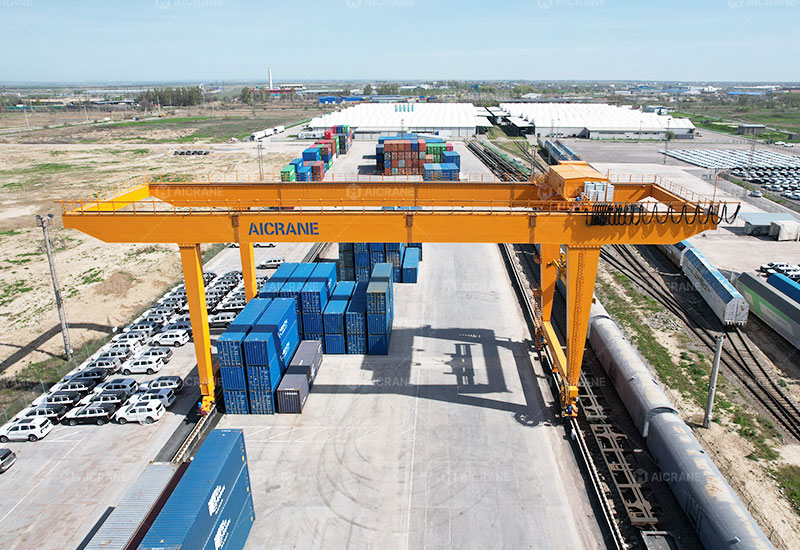
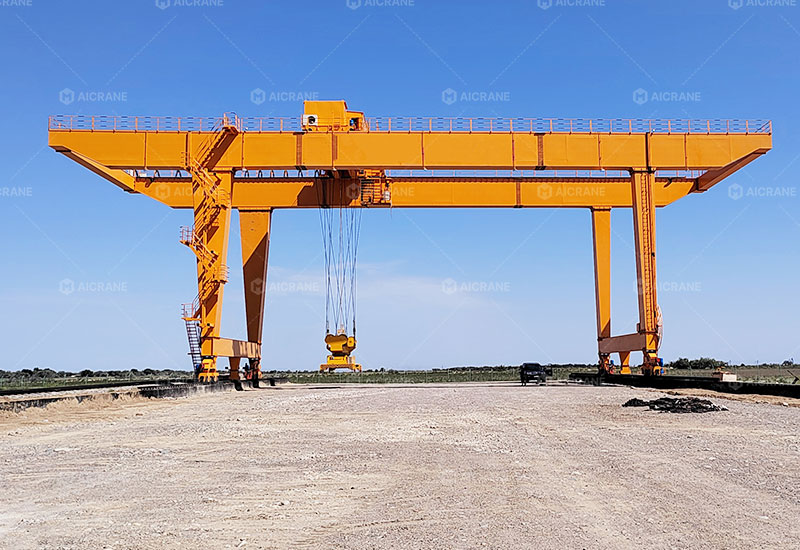
    RMG container crane

    2.1 Structure and Components

    The traveling mechanism of an RMG crane typically consists of:

    • Wheel bogies: Mounted at the base of the crane legs, these wheels run on steel rails and carry the entire load of the crane.

    • Rails: Fixed tracks installed along the crane’s operational path, usually made of high-strength steel to support heavy loads and prevent wear.

    • Drive motors and gearboxes: Powered by electric motors, these components propel the crane along the rails. Gearboxes adjust the torque and speed for smooth movement.

    • Braking system: Ensures the crane can stop precisely and safely under full load conditions. Modern systems often use electro-mechanical brakes or hydraulic brakes.

    • Guidance systems: Maintain alignment on the rails and prevent lateral movement or derailment.

    2.2 Advantages of RMG Traveling Mechanisms

    1. High load capacity: RMG cranes are ideal for extremely heavy loads, with capacities often exceeding 100 tons, as the rails provide stable support.

    2. Precision movement: Rails ensure straight, predictable motion, which is critical when stacking containers, handling steel coils, or positioning precast components.

    3. Durability: Steel rails and robust wheel assemblies withstand harsh operational conditions and high-frequency operations over many years.

    4. Energy efficiency: Continuous rail contact reduces rolling resistance compared to tires, lowering energy consumption during movement.

    2.3 Limitations

    • Fixed travel path: The crane can only move where rails are installed, limiting operational flexibility.

    • High infrastructure cost: Rail installation, maintenance, and leveling require significant upfront investment.

    • Time-consuming relocation: Moving an RMG crane to a new location involves extensive civil works and rail adjustments.

    3. Rubber Tyred Gantry (RTG) Crane Traveling Mechanism

    Rubber tyred gantry cranes, on the other hand, move on large rubber tires rather than fixed rails. These cranes are often found in container yards, bulk material handling areas, and flexible logistics terminals where mobility across large areas is critical.
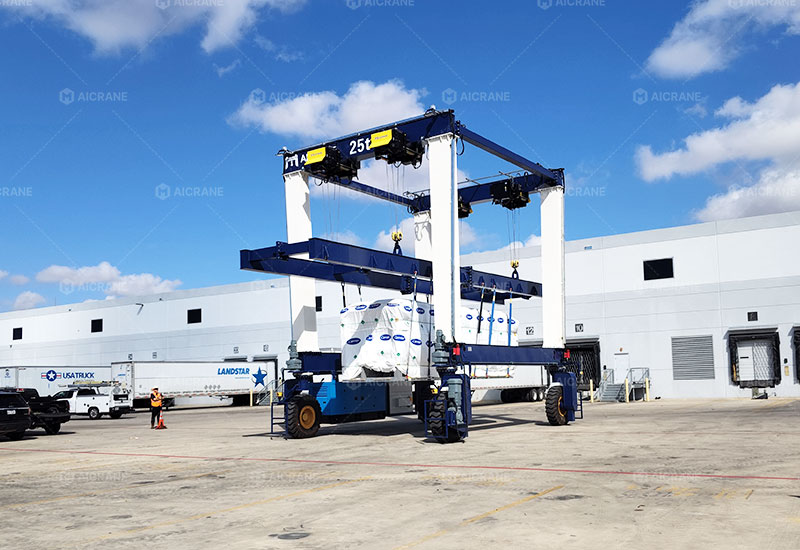
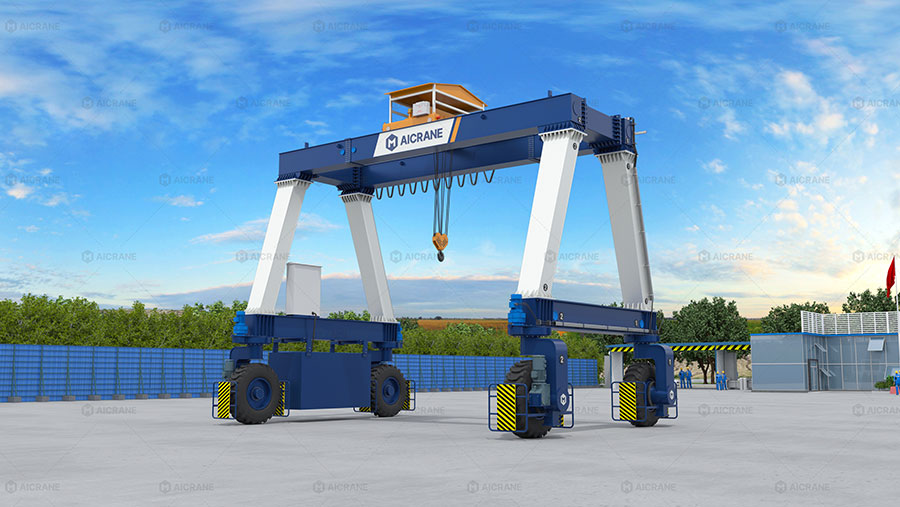
    RTG Crane

    3.1 Structure and Components

    The traveling mechanism of an RTG crane includes:

    • Rubber tires: Mounted on the crane legs, these tires support the crane’s weight and allow it to move over concrete pads or paved surfaces. Tires can be pneumatic or solid, depending on load and terrain requirements.

    • Steering system: Allows maneuvering and alignment of the crane, often with multiple steering modes including crab steering, synchronized turning, and diagonal movement.

    • Drive motors and transmission: Electric or hybrid systems power the wheels. Some modern RTGs feature independent wheel drives for enhanced maneuverability.

    • Stabilizers or leveling system: Ensures safe operation by maintaining crane balance when lifting uneven loads.

    • Guidance and monitoring: GPS, laser guidance, or sensors help operators maintain proper alignment with stacking rows or transport paths.

    3.2 Advantages of RTG Traveling Mechanisms

    1. High mobility: RTG gantry cranes can travel across large areas without fixed rails, making them ideal for expanding or changing yard layouts.

    2. Flexibility: They can access areas where rails cannot be installed, including temporary storage yards or uneven surfaces.

    3. Lower infrastructure cost: There is no need for rail tracks, reducing installation and civil engineering expenses.

    4. Multiple steering modes: Operators can adjust the crane’s movement to navigate tight spaces, avoid obstacles, or optimize stacking patterns.

    3.3 Limitations

    • Lower load capacity compared to RMGs: Rubber tires have limits on weight they can safely bear, especially for extremely heavy loads.

    • Surface dependency: Operation requires smooth, well-maintained concrete pads; rough or uneven surfaces can reduce stability.

    • Higher maintenance: Tires wear faster than steel wheels, and steering systems require frequent checks and adjustments.

    • Energy consumption: Rolling resistance of rubber tires is higher, which can lead to increased energy use for frequent or long-distance travel.

    4. Key Differences Between RMG and RTG Traveling Mechanisms

    Feature Rail-Mounted Gantry (RMG) Rubber Tyred Gantry (RTG)
    Travel path Fixed rails Free on flat surfaces
    Load capacity Very high (up to 1,000+ tons for heavy industrial applications) Moderate to high (usually below 150 tons for standard designs)
    Mobility Limited Flexible and highly maneuverable
    Installation cost High (rails, leveling, foundation) Lower (paved pads suffice)
    Maintenance Lower rolling wear; less frequent inspections Higher tire wear; steering and alignment require regular checks
    Precision Excellent linear accuracy Moderate; relies on guidance systems for positioning
    Energy efficiency Higher due to low rolling resistance Lower due to tire friction
    Ideal applications Container terminals with fixed lanes, steel mills, precast plants Flexible container yards, bulk material handling areas, temporary storage sites

    5. Applications and Considerations

    When selecting between RMG and RTG traveling mechanisms, several operational factors must be considered:

    1. Load requirements: For ultra-heavy lifting and stacking of standardized materials, RMG cranes are preferable. RTG cranes suit medium to heavy loads where operational flexibility is essential.

    2. Operational area: If the crane must cover a large, adjustable yard or travel between multiple storage zones, RTG cranes are ideal. For long, narrow operational lanes, RMG cranes are more efficient.

    3. Infrastructure investment: Rail-mounted systems require more civil engineering upfront, while RTG cranes can operate on existing concrete pads with minimal preparation.

    4. Maintenance capacity: Facilities with robust maintenance teams may manage RTG tire wear and steering upkeep effectively. Otherwise, the low-maintenance nature of RMG cranes can be a decisive factor.

    5. Environmental and surface conditions: RMG cranes tolerate minor ground imperfections if rails are properly leveled. RTG cranes require high-quality surfaces to maintain stability under load.

    6. Future Trends in Gantry Crane Traveling Mechanisms

    Modern gantry crane designs increasingly integrate automation, sensors, and digital monitoring into traveling mechanisms. Both RMG and RTG cranes now feature:

    • Automated movement systems: GPS-guided or PLC-controlled travel for precise load placement.

    • Energy recovery systems: Regenerative braking reduces power consumption.

    • Condition monitoring: Sensors track wheel, motor, and steering wear to predict maintenance needs.

    • Hybrid power options: Especially for RTG cranes, combining diesel and electric drives improves efficiency and reduces emissions.

    The choice between rail-mounted and rubber-tyred systems is also evolving. Some facilities adopt hybrid solutions, using RMG cranes on fixed lanes for heavy loads while RTG cranes handle flexible, temporary storage areas, achieving both precision and adaptability.

    Conclusion

    The traveling mechanism is a cornerstone of gantry crane performance, influencing load capacity, operational flexibility, maintenance requirements, and overall productivity. Rail-mounted gantry (RMG) cranes excel in high-capacity, precise, and linear operations, making them ideal for container terminals, steel mills, and industrial production lines. Rubber tyred gantry (RTG) cranes, with their mobility and flexible steering options, suit dynamic yard environments where layout adjustments or multi-directional access is required.

    Selecting the appropriate traveling mechanism requires a comprehensive understanding of load requirements, operational area, infrastructure investment, and maintenance capabilities. As gantry crane technology continues to evolve, integrating digital monitoring, automation, and hybrid mobility systems will further enhance the efficiency and versatility of both RMG and RTG cranes, ensuring that these essential machines remain at the heart of modern material handling operations.
  • Gantry Crane Rail System: How It Guides Crane Movement

    Gantry cranes are essential equipment in modern industrial operations, widely used in shipping yards, steel plants, warehouses, and construction sites. Their ability to move heavy loads over large distances with precision and efficiency makes them indispensable in material handling. While much attention is often given to the crane’s lifting capacity or hoist mechanism, one of the most critical components for its functionality is the rail system. The rail system not only supports the weight of the crane but also guides its movement, ensuring safe, stable, and accurate operation. This article explores the structure, types, principles, and importance of gantry crane rail systems, providing an in-depth understanding of how they guide crane movement.

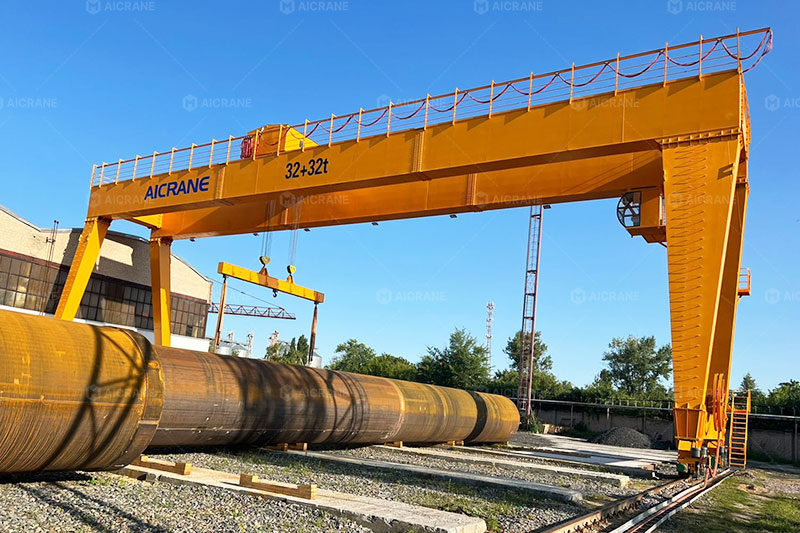
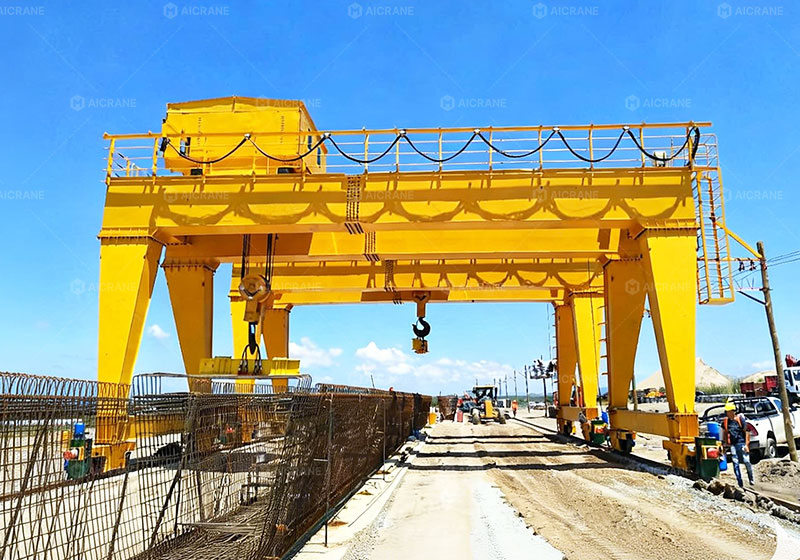
    rail gantry crane

    What Is a Gantry Crane Rail System?

    At its core, a gantry crane rail system consists of tracks installed on the ground or on elevated surfaces along which the crane’s wheels travel. These rails are engineered to withstand the substantial loads of the crane structure and the lifted materials while providing smooth and stable movement. In general, a rail gantry crane has two main rails running parallel to each other. The crane’s wheels, typically flanged steel wheels, run along these rails, enabling longitudinal movement along the span of the rails.

    In some cases, additional rails are used for the trolley system, which moves perpendicular to the main rails, enabling precise positioning of the load in both directions.

    Types of Gantry Crane Rail Systems

    Gantry crane rail systems vary depending on the type of crane, the environment, and the intended application. Broadly, they can be categorized into:

    1. Ground-Level Rails

    Ground-level rails are the most common type, used extensively in outdoor yards, shipyards, and steel plants. These rails are embedded on concrete foundations, providing stability and load distribution. They are usually made from heavy-duty steel sections such as flat-bottom rails (commonly referred to as UIC60 or UIC54 rails) or custom rolled profiles.

    Key features:

    • Embedded in a concrete bed to prevent sinking or misalignment.

    • Designed to support heavy crane loads, often exceeding hundreds of tons.

    • Require precise leveling to ensure smooth crane movement and prevent derailment.

    2. Elevated Rails

    In indoor environments like warehouses or factories, cranes often run on elevated rails mounted on steel beams or reinforced concrete girders. These rails allow the crane to move above ground-level obstacles and save floor space. Elevated rails must be carefully aligned and anchored to support the dynamic loads of the moving crane.

    Key features:

    • Mounted on structural steel or concrete beams.

    • Require robust anchoring and lateral support.

    • Facilitate space optimization in indoor settings.

    3. Rubber-Tyred Gantry (RTG) vs Rail-Mounted Gantry (RMG) Rails

    While traditional gantry cranes run on steel rails, some mobile cranes, such as RTG cranes, use rubber tires and may not require fixed rails. In contrast, rail-mounted gantry (RMG) cranes rely on precise, high-strength rails for stability and accuracy. The choice between RTG and RMG rail systems depends on operational flexibility versus precision and load capacity.

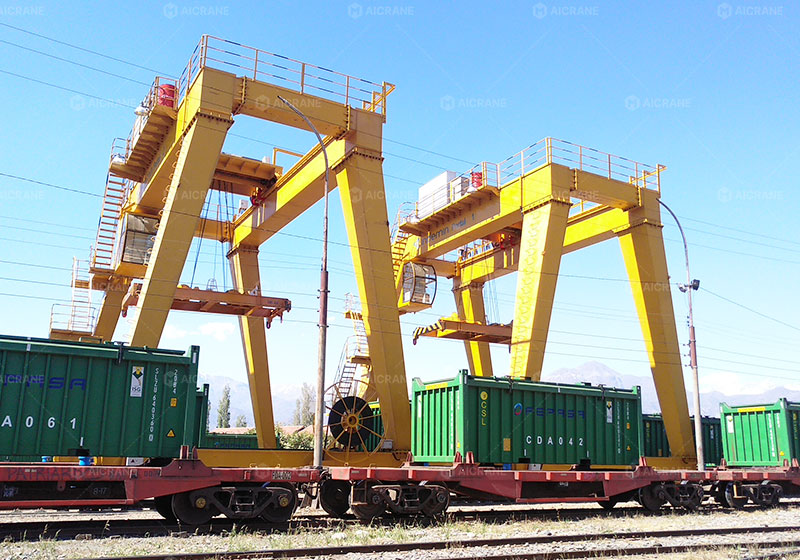
    rail mounted crane

    Components of a Gantry Crane Rail System

    A complete rail system involves more than just steel tracks. The main components include:

    1. Rails

    Rails are the most visible part of the system. They must be straight, level, and free from surface defects. The rail profile is designed to match the crane wheels, ensuring proper load transfer and minimal wear.

    2. Sleepers or Ties

    Sleepers, also known as ties, are the supporting elements placed beneath the rails. They distribute the crane’s weight over a larger area and maintain proper rail spacing. In outdoor applications, concrete sleepers are common, while indoor setups may integrate steel supports.

    3. Fasteners and Anchors

    Rails are secured to the foundation using fasteners such as bolts, clips, or anchors. Proper anchoring ensures that the rails do not shift under load or thermal expansion, maintaining safe operation over time.

    4. Expansion Joints

    Given the length of industrial rail tracks, thermal expansion can cause rails to warp or buckle. Expansion joints are integrated at intervals to allow controlled expansion and contraction, preventing damage and ensuring smooth crane motion.

    5. Wheel-Rail Interface

    The interaction between crane wheels and rails is crucial. Crane wheels are typically made of hardened steel, often flanged to prevent derailment. Lubrication and regular maintenance are required to reduce friction and wear.

    How the Rail System Guides Crane Movement

    The gantry crane rail system guides crane movement in several ways:

    1. Longitudinal Movement

    The primary purpose of the rail system is to guide the crane along a fixed path. The longitudinal rails define the crane’s travel direction and limit lateral deviation. By maintaining strict alignment and levelness, the rails ensure that the crane can move smoothly even under heavy loads, preventing oscillations or tipping.

    2. Stability Under Load

    When a gantry crane lifts a heavy load, it creates dynamic forces that can destabilize the crane. The rail system absorbs and distributes these forces, preventing uneven settling or derailment. Properly designed rails, anchors, and sleepers maintain stability and allow the crane to operate safely at full capacity.

    3. Precision Positioning

    For industrial operations that require exact load placement, the rail system ensures repeatable accuracy. This is particularly important in container yards, steel handling, or assembly lines, where precise alignment with storage racks, vehicles, or machinery is essential. The smoothness of the rails and the quality of wheel-rail contact directly affect positioning precision.

    4. Load Distribution

    Rails help distribute the weight of the crane and its load evenly across the foundation. This prevents localized stress concentrations that could damage the ground or supporting structures. Proper load distribution is also critical for long-term durability and minimal maintenance.

    5. Safety Assurance

    A well-engineered rail system minimizes the risk of crane accidents. By constraining crane movement to a predictable path and absorbing operational stresses, rails reduce the chance of tipping, derailing, or collisions with surrounding structures.

    Design Considerations for Gantry Crane Rail Systems

    Designing an effective rail system requires careful planning:

    1. Load Capacity: Rails must handle both the crane weight and the maximum lifted load. Dynamic forces from acceleration, deceleration, and lateral sway must also be considered.

    2. Foundation Quality: Concrete foundations must be properly cured, level, and reinforced to support heavy loads.

    3. Alignment and Levelness: Any misalignment can lead to wheel stress, increased wear, or derailment. Regular inspection and maintenance are crucial.

    4. Environmental Factors: Rails in outdoor yards must resist corrosion, thermal expansion, and weather-related impacts. Indoor rails must account for vibrations and structural deflection.

    5. Maintenance Access: Rails and fasteners must be accessible for inspection, lubrication, and repairs.

    Maintenance of Gantry Crane Rail Systems

    Proper maintenance ensures that the crane operates safely and efficiently:

    • Rail Alignment Checks: Rails must be checked regularly for straightness and levelness.

    • Fastener Tightening: Bolts, clips, and anchors should be inspected and tightened to prevent shifting.

    • Lubrication: Wheel-rail contact points may require lubrication to reduce wear.

    • Wear Monitoring: Rails and wheels should be monitored for wear or deformation and replaced as needed.

    • Cleaning: Debris on the rail can interfere with crane movement and should be removed regularly.

    Conclusion

    The gantry crane rail system is more than a simple track for wheels—it is a sophisticated engineering solution that guides crane movement, ensures safety, and enables precise material handling. From outdoor steel yards to indoor warehouses, the design, installation, and maintenance of the rail system directly impact crane performance, operational efficiency, and longevity. Understanding the intricacies of rails, anchors, sleepers, and wheel interactions allows operators, engineers, and plant managers to maximize the potential of gantry cranes while minimizing downtime and risks.

    In short, a gantry crane’s effectiveness is inseparable from its rail system. Whether handling containers in a port, steel beams in a factory, or heavy machinery in a shipyard, the rails provide the foundation and guidance that make efficient, safe, and precise crane operation possible. Investing in a well-designed, properly maintained rail system is an investment in the crane’s performance, safety, and long-term operational success.

  • RMG Crane Mechanical Coordination Between Hoisting, Trolley, and Traveling Systems

    Rail Mounted Gantry (RMG) cranes are pivotal in modern material handling operations, particularly in container terminals, logistics hubs, and industrial yards. Their primary advantage lies in their ability to transport heavy loads across wide areas while ensuring precise positioning. However, the effectiveness of an RMG crane depends heavily on the mechanical coordination between its three core systems: the hoisting mechanism, the trolley mechanism, and the traveling system. Understanding how these systems interact is essential for optimizing performance, minimizing wear, and ensuring safety. This article delves into the intricacies of this mechanical coordination, exploring each system and their interdependencies.

    RMG container crane

    1. Overview of RMG Crane Mechanisms

    A rail mounted gantry crane for sale essentially consists of a bridge supported by wheels that travel along rails, a trolley that moves along the bridge, and a hoist that lifts and lowers the load. Each mechanism operates independently yet must work harmoniously to achieve precise load handling. The three primary systems are:

    1. Hoisting System – Responsible for lifting and lowering the load. It usually includes a hoist drum, wire rope, motor, gearbox, and braking system.

    2. Trolley System – Moves the hoist along the bridge, providing lateral positioning of the load. The trolley is equipped with wheels, a drive system, and often a guiding system for smooth motion.

    3. Traveling System – Moves the entire crane along the runway rails, covering the longitudinal direction of the working area. It involves wheel bogies, drive motors, and sometimes steering or guidance mechanisms.

    While these systems are individually critical, the efficiency of an RMG crane hinges on how well they are coordinated.

    2. Hoisting System Dynamics

    The hoisting mechanism is the core lifting component of an RMG crane. It typically employs an electric or hydraulic motor to rotate a drum that winds or unwinds a wire rope, raising or lowering the hook or spreader. Key factors in the hoisting system include:

    • Load Capacity: The crane’s maximum lifting load dictates motor size, gearbox ratio, and rope specifications.

    • Speed Control: Smooth acceleration and deceleration prevent load sway and reduce mechanical stress. Variable frequency drives (VFDs) are commonly used for precise speed regulation.

    • Braking System: Mechanical, hydraulic, or electromagnetic brakes ensure the load remains stable when hoisting stops.

    • Wire Rope Coordination: For twin or multi-rope systems, synchronized rope movement is crucial to maintain balance and prevent torsion.

    The hoist must coordinate with the trolley and traveling systems, particularly when handling dynamic loads. For instance, rapid trolley movement while hoisting can generate swing or impact forces, requiring synchronized control to maintain stability.

    3. Trolley Mechanism Functionality

    The trolley mechanism allows the hoist to move horizontally along the bridge girder, enabling precise positioning over containers or cargo. Its main components include:

    • Trolley Wheels and Rails: Wheels designed for smooth motion along the bridge rails, often with flanges for lateral guidance.

    • Drive System: Electric motors with reduction gears provide controlled acceleration and deceleration.

    • Guidance and Alignment: Sensors or mechanical guides help keep the trolley aligned to avoid derailment or uneven load distribution.

    The trolley’s operation must be coordinated with hoisting because lateral motion of a lifted load can create oscillations. In modern RMG cranes, synchronization is often managed electronically through the crane control system, but mechanical design considerations remain critical:

    • Rigid Frame and Low Flexibility: The trolley frame must resist bending to avoid uneven load distribution across the hoist ropes.

    • Balanced Load Transfer: The trolley’s position affects how forces are transmitted to the bridge and traveling system. Incorrect alignment can lead to uneven rail loading and premature wear.

    RMG crane

    4. Traveling System Mechanics

    The traveling system moves the entire crane along the rails spanning the storage yard or terminal. It is composed of:

    • Bridge Wheels and Bogies: Wheels with appropriate flanges and bogies for weight distribution.

    • Drive Motors and Gearboxes: Ensure smooth acceleration, deceleration, and control at low speeds.

    • Braking Mechanism: Maintains stability during load handling or in emergencies.

    Traveling a crane while the hoist is carrying a load requires careful coordination. High-speed longitudinal travel can induce sway in a lifted load, increasing stress on the hoist ropes and trolley bearings. Therefore, mechanical design often incorporates:

    • Shock Absorbers or Dampers: Minimize impact forces on structural components.

    • Load Distribution Optimization: Ensures bridge wheels carry weight evenly to prevent rail or wheel damage.

    • Rigid Frame Design: The crane structure must resist twisting from uneven load forces during travel.

    5. Coordination Between Systems

    The core challenge in rail mounted container gantry crane design is ensuring seamless mechanical coordination among hoisting, trolley, and traveling systems. Several principles govern this coordination:

    5.1 Load Transfer Path

    Every RMG crane must transfer load efficiently from the hoist to the trolley, then to the bridge, and finally to the traveling wheels. Any misalignment in this load path can lead to:

    • Excessive bending in the bridge girder

    • Premature wear on trolley wheels or hoist ropes

    • Load sway during travel, affecting operational safety

    5.2 Motion Synchronization

    When lifting and moving loads simultaneously, mechanical forces must be harmonized:

    • Hoisting and Trolley Coordination: As the hoist raises a container, the trolley’s acceleration should be gradual to prevent pendulum-like swinging.

    • Trolley and Traveling Coordination: Lateral movements combined with bridge travel must account for inertial forces. For heavy loads, traveling speed may need to be reduced to maintain load stability.

    • Hoist and Traveling Coordination: In some operations, hoisting while traveling can strain ropes and brakes. Advanced cranes use sensors to limit combined motion speeds.

    5.3 Structural Flexibility vs. Rigidity

    The crane’s frame and trolley must strike a balance between rigidity (to prevent deflection) and flexibility (to absorb dynamic forces). Excessive rigidity can transmit shocks directly to mechanical components, while too much flexibility can increase sway and reduce positional accuracy.

    6. Role of Control Systems in Mechanical Coordination

    While the focus here is mechanical, modern RMG cranes integrate sophisticated electronic control systems to complement mechanical design:

    • Interlocks: Prevent simultaneous motions that could destabilize the load.

    • Load Sensors: Detect uneven forces and adjust hoist or trolley speed.

    • Synchronization Algorithms: Ensure multiple motors and drives operate in harmony.

    These systems reduce the dependency on operator skill alone, improving safety and efficiency, while also mitigating mechanical stress.

    7. Maintenance Implications

    Proper mechanical coordination affects maintenance cycles:

    • Misaligned trolley wheels or bridge rails accelerate wear.

    • Uncoordinated motions increase rope fatigue and hoist drum wear.

    • Excessive dynamic forces can compromise structural integrity over time.

    Regular inspection of alignment, wheel bearings, hoist ropes, and brake systems is essential. Preventive maintenance ensures that mechanical coordination remains optimal, extending the crane’s operational lifespan.

    8. Conclusion

    The mechanical coordination between hoisting, trolley, and traveling systems defines the operational efficiency, safety, and reliability of RMG cranes. Each system must work not only independently but also in precise harmony with the others. The hoist provides vertical movement, the trolley facilitates lateral positioning, and the traveling system ensures longitudinal transport—all while transferring loads safely through the crane structure. Attention to load paths, motion synchronization, structural design, and maintenance practices ensures that the crane performs optimally under demanding industrial conditions. Advances in electronic controls further enhance coordination, but the fundamental principles of mechanical integration remain critical. For crane operators, engineers, and designers, understanding this intricate interplay is essential to maximize performance, minimize downtime, and maintain safety in high-demand operations.

  • Designing Steel Structures to Support Double Girder Overhead Crane Loads

    Double girder overhead cranes are widely used in industrial environments where heavy-duty lifting, precise load control, and efficient material handling are essential. These cranes are typically employed in factories, warehouses, shipyards, steel plants, and power generation facilities, with lifting capacities ranging from 10 tons to several hundred tons. While the crane itself is a critical component of any industrial operation, the steel structure that supports it is equally important. Designing a steel structure to safely and efficiently support double girder overhead crane loads is a complex engineering challenge that requires careful planning, precise calculations, and adherence to industry standards.

    1. Understanding Double Girder Overhead Cranes

    A double girder overhead crane consists of two parallel girders that span the width of a building or workshop. The hoist, trolley, and bridge run along these girders, providing high lifting capacity and enhanced stability. Unlike single girder cranes, double girder systems distribute the weight of the load across two girders, reducing stress on individual components. This design allows for heavier loads, higher lifting heights, and greater operational safety. However, the increased weight and dynamic forces necessitate a robust supporting steel structure engineered specifically for these loads.

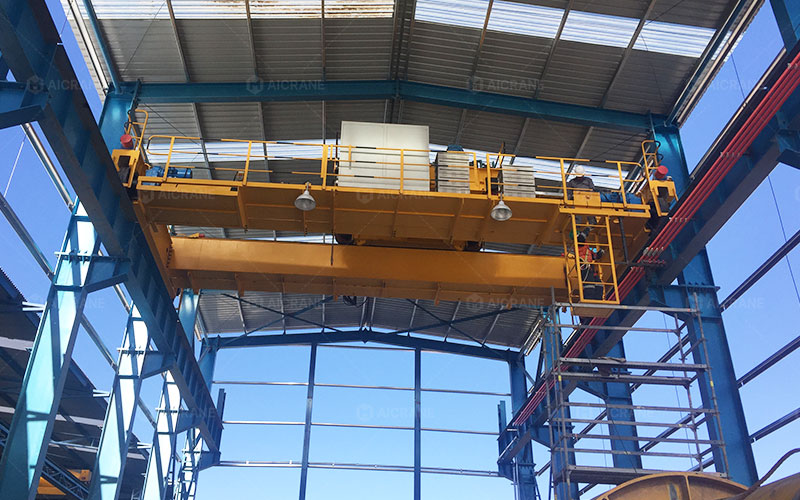
    double girder overhead crane

    2. Key Considerations in Steel Structure Design

    When designing a steel structure to support a double girder overhead crane, engineers must consider several critical factors:

    a. Load Analysis

    Load analysis is the foundation of steel structure design. The structure must safely support the dead weight of the crane itself (girders, trolley, hoist, and bridge) as well as the live load, which is the material being lifted. Additionally, dynamic loads such as acceleration, deceleration, wind forces, and potential seismic activity must be accounted for. For double girder cranes, point loads are concentrated at the wheels of the crane bridge, requiring careful calculation to ensure that columns, beams, and supporting trusses can withstand these forces without excessive deflection.

    b. Span Length

    The span length—the distance between crane-supporting columns—directly affects the design of the steel structure. Longer spans require stronger beams or trusses to prevent sagging and maintain structural stability. Integrated truss systems are often used in wide-span buildings to distribute the crane load efficiently across multiple members.

    c. Building Height and Lifting Clearance

    The steel structure must accommodate the lifting height of the crane, ensuring sufficient headroom for the hoist and the load. Designers must also consider space for maintenance, crane operation, and the installation of safety devices. An adequately high structure ensures that the crane can operate at full lifting capacity without interference.

    d. Column and Beam Design

    Columns and beams form the primary load-bearing elements of the steel structure. The choice of material grade, cross-sectional dimensions, and bracing methods are critical for supporting double girder cranes. Columns must resist vertical loads and lateral forces, while beams (girders, roof trusses) must carry both the crane weight and the transferred load from the crane wheels.

    e. Deflection Control

    Deflection is a key concern in crane-supported steel structures. Excessive deflection can affect crane operation, lead to misalignment, and increase wear on crane components. Engineers typically limit deflection to a fraction of the span length, following standards such as the European FEM or American CMAA guidelines. Adequate bracing, proper member sizing, and material selection all contribute to controlling deflection.

    3. Dynamic Load Considerations

    Double girder overhead cranes impose dynamic forces on the supporting structure due to acceleration, deceleration, and load swinging. These dynamic effects can amplify stresses and lead to fatigue over time. Steel structures must be designed with safety factors to account for these variations:

    1. Impact Factor – Additional load applied to account for the crane’s moving mass and sudden braking.

    2. Vibration and Resonance – The structure must avoid natural frequencies that could resonate with crane movements.

    3. Lateral Forces – Side forces generated during travel or lifting must be transferred safely to the foundation.

    Designing for dynamic loads ensures operational reliability and prolongs the life of both the crane and the steel structure.

    4. Foundation Design

    The steel structure must transfer crane loads safely to the ground through the foundation. Crane foundations are often reinforced with concrete footings, embedded steel plates, and anchor bolts that secure columns. Proper soil analysis is essential to prevent settlement, tilting, or uneven load distribution, which could compromise crane operation. The foundation design must consider:

    • Load intensity from crane wheels.

    • Concentrated point loads at column bases.

    • Potential vibration from crane movements.

    • Soil bearing capacity and local building codes.

    5. Integration with Building Roof and Trusses

    Double girder cranes typically run on rails mounted at the top of columns or along dedicated runway beams. Integrating the crane rails into the steel structure requires precise alignment and level installation. Roof trusses may also need reinforcement to support additional loads if the building is used for overhead cranes in areas where cranes travel near the roofline. In some cases, gantry-like extensions or supplementary beams are designed to ensure full structural integrity.

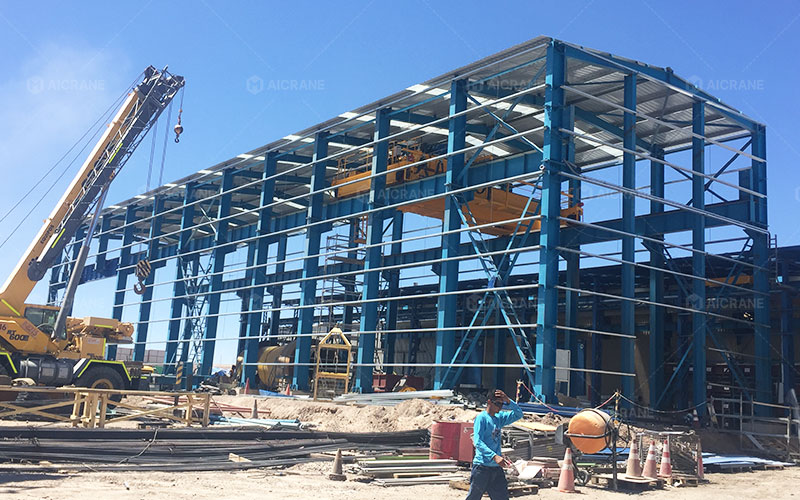
    steel structure

    6. Safety Standards and Regulations

    Designing steel structures to support double girder overhead cranes is not merely a matter of structural calculations—it also involves strict adherence to safety standards. Organizations such as the Crane Manufacturers Association of America (CMAA), Fédération Européenne de la Manutention (FEM), and local building codes provide guidelines on:

    • Load combinations.

    • Structural deflection limits.

    • Safety factors for dynamic loads.

    • Design for seismic and wind resistance.

    Compliance with these standards is essential for legal, operational, and insurance purposes.

    7. Material Selection and Corrosion Protection

    High-strength structural steel is commonly used for crane-supporting buildings due to its load-bearing capabilities and durability. Engineers must select steel grades that offer optimal balance between strength, ductility, and cost. Corrosion protection is also crucial, especially in humid, coastal, or industrial environments. Options include galvanization, powder coating, or applying industrial-grade paints to extend the service life of the steel structure.

    8. Advantages of Purpose-Built Structures

    Designing steel structures specifically for double girder overhead cranes offers several benefits over retrofitting cranes into existing buildings:

    • Optimized Load Distribution – The structure is engineered to handle point loads without overstressing beams or columns.

    • Reduced Maintenance Costs – Proper alignment and structural support minimize wear and tear on crane components.

    • Increased Safety – Custom designs ensure safe operation under full load and dynamic conditions.

    • Operational Efficiency – Adequate span, height, and clearance improve workflow and crane productivity.

    • Future Scalability – Purpose-built structures can accommodate heavier or additional cranes if operational needs grow.

    9. Practical Applications

    Double girder cranes supported by purpose-built steel structures are widely used across industries:

    • Steel Plants – Lifting coils, slabs, and finished metal products.

    • Warehouses and Logistics Centers – Handling large containers and heavy pallets.

    • Construction Equipment Factories – Moving heavy machinery components during assembly.

    • Power Stations – Installing turbines, generators, and other heavy components safely.

    In each scenario, the steel structure is tailored to the crane’s operational requirements, ensuring smooth and safe material handling.

    Conclusion

    Designing steel structures to support double girder overhead crane loads is a highly specialized engineering task. From load analysis and dynamic forces to foundation design, material selection, and safety compliance, every aspect of the structure must be carefully considered. Purpose-built steel structures not only provide the strength and stability required for heavy lifting but also enhance operational efficiency, reduce maintenance costs, and improve safety. Industrial facilities that invest in well-designed steel structures for their double girder cranes benefit from reliable, long-lasting, and adaptable material handling solutions.

    For manufacturers, warehouses, and industrial plants seeking optimal crane performance, the integration of double girder cranes with thoughtfully engineered steel structures is not just an option—it is the foundation of efficient, safe, and future-proof operations.

  • How Hoist Type Determines Gantry Crane Capacity Limits

    When evaluating gantry crane capacity, many buyers focus almost exclusively on the headline number: 20 tons, 50 tons, or even 200 tons. However, experienced crane engineers know that the true lifting capability of a gantry crane is fundamentally governed by the hoist type installed on the structure. The hoist is not merely a lifting accessory—it is the core load-bearing and load-controlling mechanism that defines how much weight a gantry crane can safely, reliably, and efficiently handle.

    This article explores how different hoist types directly determine gantry crane capacity limits, why hoist selection must align with application demands, and how overlooking hoist design can lead to operational bottlenecks, safety risks, or costly upgrades.

    gantry crane capacity

    Understanding the Relationship Between Hoist and Gantry Crane Capacity

    A gantry crane for sale is an integrated system composed of the steel structure, traveling mechanisms, electrical controls, and lifting equipment. Among these components, the hoist is the only element that physically carries the load during lifting.

    Even if the gantry structure is designed for a higher tonnage, the crane’s rated capacity is capped by the hoist’s safe working load (SWL). In practice:

    • The crane capacity cannot exceed the hoist’s rated capacity

    • The hoist dictates lifting speed, duty cycle, and load stability

    • Hoist mechanical design affects dynamic loads transferred to the gantry

    Thus, hoist type is not a secondary choice—it is a primary determinant of the crane’s real-world capacity limit.

    Wire Rope Hoists and Their Capacity Constraints

    Single-Reeving vs. Multi-Reeving Configurations

    Wire rope hoists are the most commonly used lifting devices in gantry cranes. Their capacity depends heavily on the reeving system:

    • Single-reeving hoists are typically limited to light and medium loads

    • Multi-reeving hoists distribute load across multiple rope falls, significantly increasing lifting capacity

    As capacity increases, additional rope falls are required, which directly impacts:

    • Drum size

    • Motor power

    • Hoist weight

    • Lifting speed

    At higher tonnages, hoist size and weight increase rapidly, which in turn imposes higher loads on the gantry structure itself.

    Drum and Rope Design Limits

    Wire rope hoist capacity is constrained by:

    • Rope diameter and construction

    • Drum shell thickness and diameter

    • Groove pressure and rope fatigue limits

    Once these mechanical thresholds are reached, increasing capacity further requires a fundamentally different hoist design, not just stronger steel.

    Electric Chain Hoists: Practical Capacity Boundaries

    Electric chain hoists are widely used on light-duty and portable gantry cranes, but their capacity ceiling is inherently lower than wire rope hoists.

    Why Chain Hoists Have Lower Capacity Limits

    Chain hoists rely on:

    • Load chains rather than wire rope

    • Compact gearboxes

    • Smaller motors

    While this makes them ideal for:

    They are not suitable for high-capacity gantry cranes due to:

    • Chain wear under high loads

    • Reduced lifting height efficiency

    • Lower duty cycle ratings

    In most industrial applications, chain hoists rarely exceed 20 tons, making them unsuitable for heavy-duty gantry crane systems.

    Winch Hoists and Ultra-Heavy Gantry Crane Applications

    For very high capacity gantry cranes – often exceeding 100 tons – standard hoists may no longer be viable. This is where winch-type hoists come into play.

    Characteristics of Winch Hoists

    Winch hoists differ from conventional hoists by:

    • Separating the drum, motor, and braking system

    • Using open or semi-open drum designs

    • Allowing extreme rope diameters and multiple layers

    These features enable:

    • Extremely high lifting capacities

    • Custom reeving arrangements

    • Long lifting heights

    However, winch hoists introduce new challenges:

    • Slower lifting speeds

    • Complex installation

    • Higher demands on gantry structural rigidity

    As a result, winch hoists are typically reserved for heavy engineering, shipbuilding, and precast concrete applications.

    Hoist Duty Class and Its Impact on Capacity Limits

    Capacity is not only about maximum load—it is also about how often and how intensively that load is lifted.

    Duty Classification Matters

    Hoists are designed according to duty classes (such as FEM, ISO, or CMAA), which define:

    • Load spectrum

    • Number of starts per hour

    • Expected service life

    A hoist rated for 50 tons at a light duty class may not be suitable for continuous production lifting, whereas a heavy-duty hoist of the same nominal capacity will be physically larger and more robust.

    In real-world gantry crane design:

    • Higher duty class = lower stress per lift

    • Lower duty class = reduced effective capacity over time

    Selecting the wrong hoist duty rating can artificially limit crane capacity due to accelerated wear and maintenance restrictions.

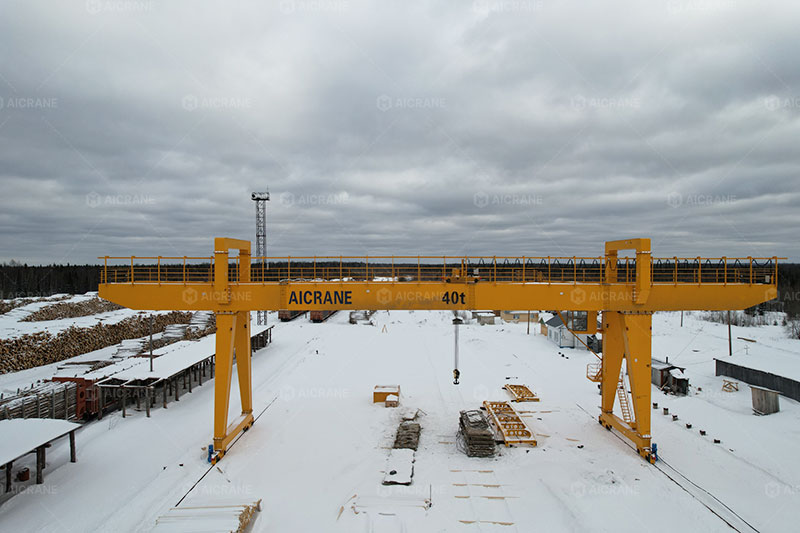
    gantry crane 40 ton capacity

    Dynamic Load Effects Introduced by Hoist Type

    Hoist design also determines how dynamic forces affect the gantry crane capacity.

    Acceleration, Braking, and Sway

    Different hoist types produce different dynamic load factors due to:

    • Lifting acceleration

    • Braking torque

    • Rope elasticity

    High-speed hoists can introduce:

    • Increased impact loads

    • Higher horizontal forces on the gantry

    • Greater fatigue stress on steel structures

    To compensate, designers may:

    • Reduce rated capacity

    • Increase structural safety factors

    • Limit lifting speeds

    Thus, a high-performance hoist can actually reduce usable crane capacity if not properly matched to the gantry design.

    Redundancy and Safety Systems in High-Capacity Hoists

    As capacity increases, safety requirements become more stringent.

    High-capacity hoists often incorporate:

    • Dual braking systems

    • Load limiters

    • Redundant motors or gear stages

    These safety features add weight and complexity, which:

    • Increases trolley loads

    • Raises wheel pressures

    • Influences rail and foundation design

    In many cases, the gantry crane’s rated capacity is adjusted downward to account for the hoist’s additional mass and safety margins.

    Matching Hoist Type to Gantry Crane Application

    Choosing the right hoist is not about maximizing capacity on paper—it is about optimizing usable capacity in real operating conditions.

    Application-Driven Hoist Selection

    • Light workshops: Chain hoists for simplicity and low cost

    • General fabrication: Wire rope hoists with moderate reeving

    • Steel yards and precast plants: Heavy-duty wire rope hoists

    • Shipyards and power projects: Winch hoists for extreme loads

    Each hoist type defines not only how much weight can be lifted, but also:

    • How smoothly the load moves

    • How often lifting can occur

    • How long the system will remain reliable

    Why Hoist Selection Often Limits Future Crane Upgrades

    One common misconception is that gantry crane capacity can be easily increased later. In reality, the hoist is usually the first limiting factor.

    Upgrading capacity often requires:

    • Replacing the hoist entirely

    • Reinforcing the gantry structure

    • Modifying power and control systems

    This makes initial hoist selection critical for future scalability.

    Conclusion: Hoist Type Defines the Real Capacity Ceiling

    While gantry crane capacity is often described as a single number, the truth is far more complex. Hoist type fundamentally determines the upper and practical limits of gantry crane capacity by controlling load distribution, duty cycle, dynamic forces, and long-term reliability.

    Understanding how different hoist types influence capacity allows buyers and engineers to:

    • Avoid over- or under-specifying cranes

    • Improve operational safety

    • Reduce lifecycle costs

    • Ensure capacity aligns with real production demands

    In gantry crane design, the hoist is not just a component—it is the heart of the lifting system, and ultimately, the gatekeeper of capacity itself.

  • How Rubber Tyred Gantry Cranes Perform on Uneven Surfaces

    Rubber tyred gantry (RTG) cranes are widely used in container terminals, logistics yards, precast concrete plants, steel yards, and manufacturing facilities. Unlike rail-mounted gantry cranes that rely on fixed tracks, RTG cranes move on rubber tires, giving them the flexibility to operate across wide working areas without being restricted to rail paths. One of the most critical mobility advantages of RTG cranes is their ability to perform on uneven or imperfect ground conditions. In many facilities, ground surfaces are not uniformly paved, and subtle elevation differences, slopes, or irregular surfaces are unavoidable. Therefore, understanding how RTG cranes maintain balance, mobility, and safety on uneven terrain is essential for selecting the right equipment and optimizing operations.

    This article explains how rubber tyred gantry cranes perform on uneven surfaces by examining their structural design, wheel and suspension systems, steering modes, stability controls, electronic monitoring functions, and operational strategies. It also highlights the applications where uneven-surface capability is particularly valuable.

    1. Structural Stability: A Foundation for Uneven-Surface Operation

    The design of a rubber tire gantry crane for sale begins with a rigid and well-engineered steel structure. The gantry frame must maintain its shape and withstand distortions when one side of the crane experiences different ground elevations.

    Key structural features include:

    1.1 High-strength steel gantry frame

    RTG cranes use box girder or lattice frame structures that provide high stiffness and resistance to twisting. This is especially important on uneven surfaces where one wheel may rise or dip compared to the others. A rigid frame ensures the crane remains aligned and prevents excessive sway that could compromise safety.

    1.2 Wide wheelbase & long wheel spacing

    A wider wheelbase and greater spacing between wheels help distribute loads more evenly. This reduces the effect of local surface depressions and enhances stability when the crane moves across slopes or uneven pavements.

    1.3 Center of gravity optimization

    Designers carefully optimize the RTG crane’s center of gravity, ensuring that it remains stable even when the crane travels while carrying a load. This is crucial because uneven surfaces can cause sudden shifts in load distribution.

    Altogether, the structural foundation allows the crane to maintain verticality and balance despite fluctuations in terrain.

    mobile rubber tyred gantry crane

    2. Advanced Wheel and Suspension Systems

    The mobility of a rubber tyred mobile gantry crane for sale heavily depends on its wheel assemblies. These assemblies are engineered to ensure smooth movement, load equalization, and ground adaptability.

    2.1 Rubber Tires Absorb Shock and Surface Variations

    Rubber tires provide natural flexibility and better shock absorption than steel wheels. They deform slightly to adapt to small bumps, expansion joints, or uneven asphalt. Their elastic material minimizes vibrations, improving ride quality for the crane and reducing structural stress.

    2.2 Equalizer Beams for Load Distribution

    Most RTG cranes are equipped with equalizer beams that distribute weight across multiple tires. This prevents individual wheels from carrying excessive loads when one wheel encounters a dip. By balancing load distribution, equalizer beams significantly improve safety and reduce ground pressure.

    2.3 Independent Suspension Systems

    High-end RTG cranes may use independent suspension systems that allow each wheel to adjust its vertical movement independently. This feature enables the crane to follow uneven ground contours more smoothly.

    2.4 Large-Diameter Wheels

    Larger wheels have better ground clearance and roll more easily over surface irregularities. They help the crane maintain forward momentum even when the terrain features small ridges or surface defects.

    3. Steering Modes Enhance Maneuverability on Uneven Surfaces

    RTG cranes typically offer multiple steering modes, giving operators the ability to choose the most suitable configuration for uneven terrain.

    3.1 All-Wheel Steering

    All-wheel steering ensures that every wheel contributes to directional control. On uneven terrain, this supports smoother transitions and reduces the risk of wheel slip or misalignment.

    3.2 Crab Steering Mode

    Crab steering allows the crane to move diagonally. This is useful when avoiding potholes or poorly paved areas by adjusting the travel path without turning the frame.

    3.3 Pivot Steering

    Pivot or on-the-spot turning enables the crane to rotate within a narrow space. This helps operators reposition the crane quickly even on surfaces where traditional turning may cause the tires to struggle.

    3.4 Coordinated Steering Systems

    Modern RTG cranes use electronic controllers that synchronize wheel steering angles. This system ensures consistent alignment, crucial for preventing torsional stress on uneven surfaces.

    4. Anti-Skid and Traction Control Systems

    Uneven surfaces often come with changing traction conditions. Dust, gravel, moisture, or imperfect pavement can make wheels slip during travel. RTG cranes combat this through several technologies:

    4.1 Wheel Slip Prevention Sensors

    Sensors detect wheel slip in real-time and adjust power distribution to maintain smooth motion. This prevents sudden jolting or skidding that could endanger operators or cargo.

    4.2 Hydraulic or Electric Drive Wheel Control

    In electrically-driven RTG cranes, advanced control systems modulate torque output to each wheel, ensuring stable traction on challenging ground surfaces.

    4.3 Automatic Adjustment of Travel Speed

    Most modern RTG cranes adjust travel speed when uneven surfaces are detected. Reduced speed enhances control and stability, allowing the crane to travel safely over irregular ground.

    mobile rubber tyred gantry crane for sale

    5. Slope Compensation and Real-Time Monitoring

    Uneven surfaces sometimes include slight slopes or grade variations. RTG cranes use electronic systems to maintain stability and safe operations under these conditions.

    5.1 Inclinometers and Stability Sensors

    Sensors continuously measure the crane’s tilt angle. If the angle exceeds safe limits, alarms activate or the crane automatically slows down or stops.

    5.2 Load Sway Control

    On uneven ground, load sway risk increases. Sway control technology stabilizes suspended loads by adjusting trolley speed, hoisting speed, and travel motion patterns.

    5.3 Auto-Tracking and Positioning

    Some advanced models have GPS or laser-guided tracking systems that identify uneven surface areas and guide the crane accordingly. This enhances precision in stacking and container alignment.

    6. Operator Skill and Operational Best Practices

    Even though RTG cranes are designed to handle uneven surfaces, proper operational techniques are essential.

    6.1 Reduce Speed on Rough Terrain

    Operators should always reduce speed when crossing dips or slopes. Slow movement allows the crane to adapt naturally to surface variations.

    6.2 Avoid Moving Heavy Loads Over Severely Uneven Areas

    Even though the crane can perform on uneven surfaces, operators should avoid extreme ground imperfections when heavily loaded.

    6.3 Regular Tire and Suspension Inspections

    Maintenance teams must check tire pressure, tread integrity, and suspension wear to ensure consistent mobility and safety.

    6.4 Ground Condition Evaluation

    Terminals or yards should evaluate and maintain ground surfaces to prevent excessive deterioration. Simple repairs can dramatically improve RTG performance.

    7. Applications Where Uneven-Surface Performance Matters Most

    7.1 Precast Concrete Yards

    Ground surfaces are often temporary or uneven, making RTG mobility essential.

    7.2 Steel Yards

    Long-term outdoor use leads to ground settlement and irregular surfaces.

    7.3 Logistics Yards Without Full Pavement

    Many logistics parks grow quickly and lack fully leveled roads.

    7.4 Container Depots in Developing Regions

    RTG cranes must operate reliably regardless of infrastructure quality.

    Conclusion

    Rubber tyred gantry cranes are designed to perform exceptionally well on uneven surfaces thanks to their robust frame, advanced wheel systems, suspension technology, adaptable steering modes, anti-slip controls, and intelligent monitoring systems. Their ability to maintain stability and mobility on imperfect ground surfaces makes them ideal for diverse industries that require flexibility, reliability, and safe handling of heavy loads.

    With proper equipment selection, operator training, and regular maintenance, RTG cranes can deliver outstanding performance even in challenging terrain conditions—enhancing productivity and ensuring efficient yard operations.

  • Electrical System Safety Requirements for Rubber Tired Gantry Cranes

    Rubber Tired Gantry (RTG) cranes are widely used in container terminals, logistics yards, and industrial facilities due to their flexibility, mobility, and high productivity. As RTG cranes become more technologically advanced—with electric drives, PLC control, smart anti-collision systems, and energy-saving technologies—the electrical system plays an increasingly critical role in safe and reliable crane operation.

    Because RTGs operate outdoors, handle heavy loads, and are frequently exposed to harsh environmental conditions, electrical system safety must be addressed with rigorous standards. Poor electrical design or insufficient protection can lead to operational breakdowns, fire hazards, personnel injury, and costly downtime. This article explains the key electrical system safety requirements for RTG cranes and how they ensure stable performance in demanding container-handling environments.

    rubber tired gantry crane

    1. Overview of Electrical Systems in RTG Cranes

    Modern rubber tired gantry crane for sale typically uses the following electrical configurations:

    • Diesel-electric RTG cranes: Diesel generator powers electric motors and systems.

    • Hybrid RTG cranes: Combine diesel power with energy storage systems such as batteries or ultracapacitors.

    • Full-electric RTG cranes: Powered by cable reel or busbar systems, achieving zero emissions.

    Regardless of the power source, all RTG cranes require highly reliable electrical components, including:

    • Main power distribution system

    • PLC controls and communication networks

    • Variable frequency drives (VFDs) for hoist, trolley, and gantry motors

    • Sensors, limit switches, overload protections

    • Emergency stops and grounding devices

    • Lighting, alarms, and auxiliary electrical devices

    Because all crane motions depend on these systems, ensuring their safety is essential for preventing accidents and ensuring operational continuity.

    2. Electrical Safety Standards and Compliance

    To guarantee safe use, RTG cranes must comply with major international standards such as:

    • IEC standards for electrical equipment

    • ISO 4306/4308 for crane safety

    • EN standards for hoist and lifting machinery

    • NFPA 70 (NEC) for electrical installations

    • IEEE standards for grounding and power systems

    Compliance helps ensure that electrical components can withstand high loads, heavy usage, vibration, and outdoor operation.

    3. Proper Electrical Insulation and Enclosures

    RTG cranes operate in unpredictable environments—rain, humidity, dust, salt air, and heat. Therefore, electrical enclosures must have:

    • Appropriate IP protection rating, usually IP55–IP65, to prevent water and dust penetration

    • High-quality insulation material for all cables, connectors, and terminals

    • Heat-resistant components inside control cabinets

    • Corrosion-resistant housings for marine or coastal areas

    Without these protections, moisture or dust can cause short circuits, motor failures, or unpredictable motion.

    4. Overcurrent, Overvoltage, and Short-Circuit Protection

    Electrical system safety is deeply dependent on reliable protection devices, including:

    Circuit breakers and fuses

    These protect against short circuits, electrical faults, and excessive current draw.

    Surge protection devices (SPDs)

    RTG cranes often operate in open areas and can be exposed to lightning strikes. SPDs protect sensitive electronics and VFDs from sudden voltage spikes.

    Soft starters or VFD protections

    Overvoltage, undervoltage, and overload protections are necessary to prevent damage to motors and drives.

    A failure in any of these protective components can lead to severe system failure or fire hazards.

    rubber tired gantry

    5. Grounding and Earthing Requirements

    Grounding is one of the most important electrical system safety concerns, especially on large steel structures like RTG cranes.

    Key grounding safety measures include:

    • Dedicated crane grounding system with low resistance

    • Earthing of all control panels, motors, and metal structures

    • Protection against static electricity buildup

    • Grounding for lightning protection systems

    Proper grounding ensures that leakage current is safely discharged and reduces electrocution risk for operators and maintenance personnel.

    6. Cable Management and Power Supply Safety

    RTG cranes have many moving parts, such as gantry wheels, trolley mechanisms, and hoist systems. Mismanaged cables can quickly become a safety hazard.

    Cable safety requirements include:

    • High-flexibility, wear-resistant cables for repeated movement

    • Cable trays and conduits to protect wiring from mechanical damage

    • Clear separation between power cables and control cables

    • Anti-abrasion and flame-retardant protection

    • Sufficient cable slack to avoid tension during crane motions

    For electric or hybrid RTG cranes, cable reel systems or busbar systems must be equipped with:

    • Emergency disconnect switches

    • Cable tension monitoring

    • Overwind protection

    • Mechanical guards to prevent crushing

    Proper cable design prevents short circuits, communication failures, and fire hazards.

    7. Motor and Drive Safety Protections

    RTG cranes use large electric motors for hoisting, cross-travel, and gantry travel. Motor safety measures include:

    Thermal overload protection

    Prevents overheating during prolonged operations.

    Brake monitoring sensors

    Ensures hoist motors can safely hold loads.

    Motor temperature sensors

    Detect early signs of motor deterioration.

    Drive system protections (VFD protections):

    • Overcurrent

    • Overvoltage/undervoltage

    • Phase loss and imbalance

    • Ground fault detection

    Drives must also be housed in climate-controlled cabinets to prevent heat buildup.

    8. PLC Control System Safety

    Modern RTG cranes rely on PLC-based automation for safety and motion coordination.

    Safety requirements include:

    • Redundant PLC architecture to prevent system failure

    • Fail-safe programming for emergency conditions

    • Closed-loop monitoring of crane motions

    • Backup communication channels

    Critical controls—hoisting, trolley movement, anti-sway systems—must have reliable feedback from encoders, limit switches, and sensors.

    PLC failures can lead to uncontrolled crane movement, so redundancy and protection are essential.

    9. Emergency Stop and Safety Interlocks

    Emergency systems must be accessible and highly reliable. RTG cranes must include:

    • Multiple emergency stop (E-stop) buttons around the movable gantry crane

    • Safety interlocks for hoist limit switches and travel limits

    • Overload protection devices

    • Anti-collision systems for gantry and trolley travel

    • Automatic power cutoff during critical faults

    These safety mechanisms ensure fast response during unexpected events and prevent severe accidents.

    10. Operator Cabin and Control Station Electrical Safety

    If the RTG crane is equipped with a cabin, the following requirements apply:

    • Insulated flooring to reduce shock risk

    • Flame-retardant wiring

    • Climate control to protect electronics

    • Surge-protected operator consoles

    • Clearly labeled control switches and displays

    • Redundant communication systems

    Wireless remote control RTGs also need secure communication encryption and interference protection.

    11. Regular Maintenance and Inspection

    Electrical safety is not achieved by design alone—it requires consistent maintenance, including:

    • Inspection of cables, connectors, and terminals

    • Thermal imaging to detect hot spots

    • Testing of grounding systems

    • Verification of limit switches and sensors

    • Cleaning of electrical cabinets

    • Replacement of worn-out parts

    A structured preventive maintenance program significantly increases crane safety and lifespan.

    Conclusion

    The electrical system of a Rubber Tired Gantry crane is the backbone of its operation and safety performance. From proper insulation and grounding to PLC redundancy, emergency systems, and cable protection, each component plays a vital role in preventing failures and accidents in demanding port and yard environments.

    By following international safety standards, incorporating robust protective devices, and implementing regular inspection routines, operators and owners can ensure their RTG cranes work efficiently, safely, and reliably for many years.

  • Effects of Overhead Crane Capacity on Steel Structure Factory Design

    The integration of overhead cranes into steel structure factories is not merely a matter of installing heavy lifting equipment; it is a pivotal aspect that directly influences the design, functionality, and safety of the entire facility. Among the various factors that must be considered during the planning stage, the capacity of the overhead crane plays a central role. Overhead cranes are essential for lifting, moving, and positioning heavy materials such as steel beams, plates, and pre-fabricated components, and their specifications dictate many elements of factory layout and structural engineering. This article explores how the capacity of an overhead crane affects the design of a steel structure factory, including considerations for structural integrity, space planning, workflow efficiency, safety, and cost optimization.

    Overhead Cranes in Steel Structure Factory

    1. Understanding Overhead Crane Capacity

    Overhead crane capacity refers to the maximum weight that the crane can safely lift and transport. Capacities vary widely, from light-duty cranes handling 1–10 tons to heavy-duty gantry or bridge cranes capable of lifting 500 tons or more. In a steel structure factory, selecting the correct crane capacity is critical. A crane with insufficient capacity may slow production, cause frequent maintenance issues, or even risk catastrophic failure. Conversely, an over-specified crane may lead to unnecessary structural requirements and higher costs without delivering proportional benefits.

    The crane capacity directly affects design parameters such as building height, column spacing, foundation strength, and crane runway configuration. Therefore, early-stage decisions regarding crane capacity are crucial for creating a factory layout that is safe, efficient, and cost-effective.

    2. Structural Implications of Crane Capacity

    One of the primary ways crane capacity affects factory design is through structural requirements. Higher capacity cranes impose greater loads on the supporting steel structure, which has significant implications for columns, beams, and foundations.

    2.1 Column and Beam Design

    For cranes handling heavy loads, the columns supporting the crane runway must be robust enough to withstand not only the vertical weight of the crane and lifted load but also dynamic forces caused by movement and acceleration. The beam spans that support the crane rails also need to be reinforced to prevent deflection, vibration, or structural fatigue over time. Engineers must account for the maximum lifting load, trolley weight, and potential side loads to ensure that deflection remains within safe limits.

    For example, a factory planning to use a double girder 50 ton overhead crane may require columns spaced at 20–25 meters, reinforced beams with higher moment of inertia, and cross-bracing to resist lateral forces. In contrast, a 10-ton light-duty crane may allow for columns spaced at 30–40 meters and lighter beams, resulting in material cost savings.

    2.2 Foundation Requirements

    Crane capacity also dictates the type and size of foundations. Heavy-duty cranes generate significant vertical and horizontal loads that are transmitted through columns to the ground. Foundations must be designed to prevent settlement, tilting, or cracking, which could compromise crane operation and safety. High-capacity cranes may necessitate deep reinforced concrete footings or a raft foundation, while light-duty cranes might only require shallow isolated footings.

    3. Building Height and Clearance

    Another major design consideration influenced by crane capacity is building height. Higher capacity cranes often require taller hoisting mechanisms to lift large loads. The lifting height, combined with the height of the crane bridge and clearance for operator cabins, influences the overall height of the steel structure. Additionally, overhead clearance is necessary for safe handling and storage of materials.

    For factories that handle long steel beams or large pre-fabricated modules, insufficient vertical clearance can restrict operations, reduce efficiency, and create safety hazards. Designers must carefully calculate the required headroom, which is typically determined by the sum of maximum load height, hook travel, and safety clearance.

    4. Impact on Factory Layout and Workflow

    Crane capacity has a direct influence on factory layout and workflow. Larger cranes can lift heavier loads and span longer distances, enabling more flexible material handling. This flexibility allows for optimized storage layouts, reduced travel times, and improved production efficiency.

    4.1 Column Spacing and Work Zones

    High-capacity cranes generally require more closely spaced columns to support the heavier load, which can affect the layout of workstations, assembly lines, and storage areas. Designers must balance structural requirements with operational needs, ensuring that the placement of columns does not obstruct workflows or limit access to machinery.

    4.2 Multi-Crane Operations

    In many steel structure factories, multiple overhead cranes operate simultaneously to handle large or irregular loads. The capacity of each crane affects the design of crane interference zones, overlapping spans, and synchronized operation protocols. Planning for adequate separation, collision prevention, and coordinated movement is crucial for safe and efficient operations.

    Steel Structure Factory with Overhead Cranes

    5. Safety Considerations

    The capacity of an overhead crane is a critical factor in ensuring workplace safety. Overloading a crane beyond its rated capacity can lead to mechanical failure, structural damage, or accidents involving personnel. Factory designers must incorporate safety margins into structural design, including:

    • Load Distribution: Ensuring that beams, columns, and foundations can handle peak loads without exceeding material stress limits.

    • Dynamic Forces: Accounting for acceleration, deceleration, and load swinging, which can create forces exceeding static weight calculations.

    • Emergency Systems: Designing adequate access and egress for operators, emergency stops, and protective barriers in high-load zones.

    Safety standards and building codes often specify minimum requirements for crane integration, which must be adapted based on crane capacity.

    6. Cost Implications

    Crane capacity influences not only structural design but also overall project cost. Higher-capacity cranes require more robust steel structures, stronger foundations, and larger clearances, all of which increase material and construction expenses. Additionally, operational costs, including energy consumption and maintenance, typically rise with crane capacity.

    Conversely, underestimating crane requirements can result in operational inefficiencies, delays, and retrofitting costs. Therefore, a careful balance between capacity, factory design, and budget is essential. Engineers often perform a cost-benefit analysis to determine the optimal crane capacity, taking into account expected loads, future expansion plans, and operational flexibility.

    7. Integration with Automation and Technology

    Modern steel structure factories increasingly incorporate automated systems, including CNC machinery, automated storage, and robotic material handling. The crane capacity determines the types of automation compatible with the facility. For instance, a high-capacity gantry crane equipped with automation features can handle heavy steel modules with precise positioning, enabling advanced assembly lines and reducing manual labor. Integrating crane capacity into digital factory layouts ensures smooth coordination between automated equipment and human operators.

    8. Conclusion

    The capacity of an overhead crane is a fundamental factor that shapes the design, functionality, safety, and cost of a steel structure factory. From structural requirements and foundation design to building height, column spacing, workflow optimization, and safety protocols, every aspect of factory design is influenced by the crane’s lifting capability. Engineers, architects, and factory planners must collaborate early in the design process to select the appropriate crane capacity, ensuring that the facility can handle present and future production needs efficiently and safely.

    Choosing the correct overhead crane capacity is not simply a matter of lifting capability—it is a strategic decision that affects the structural integrity, operational efficiency, and overall cost-effectiveness of the steel structure factory. By carefully analyzing lifting requirements, load characteristics, and workflow considerations, factory designers can create a facility that maximizes productivity while maintaining the highest standards of safety and reliability.

  • Electrical Safety Inspections for 40 Ton Overhead Cranes

    Overhead cranes are indispensable in industrial settings, warehouses, and manufacturing plants, allowing for the efficient movement of heavy materials. Among these, a 40-ton overhead crane represents a significant lifting capacity, making it a critical piece of equipment that demands stringent safety protocols. One of the most essential aspects of crane safety is the regular inspection of its electrical systems. Electrical safety inspections are not only regulatory requirements but are crucial for preventing accidents, downtime, and costly repairs. This article delves into the importance, procedures, best practices, and considerations for conducting electrical safety inspections for 40-ton overhead cranes.

    40 ton overhead crane

    The Importance of Electrical Safety in Overhead Cranes

    A 40 ton overhead crane operates under substantial mechanical and electrical loads. While mechanical failures can be visually identified, electrical issues are often less apparent yet equally hazardous. Electrical malfunctions can result in severe accidents such as crane collisions, uncontrolled hoist movements, fires, and even electrocution. The risk is amplified in heavy-duty cranes like 40-ton units, which are commonly used in industries such as steel manufacturing, shipbuilding, and construction.

    Conducting regular electrical inspections ensures the integrity of critical systems, including power supply, control circuits, limit switches, motors, and protective devices. Regular inspections also extend the life of electrical components, reduce unexpected downtime, and ensure compliance with safety standards such as OSHA (Occupational Safety and Health Administration) and NFPA (National Fire Protection Association) regulations.

    Key Components Checked During Electrical Inspections

    A thorough electrical inspection of a 40-ton overhead crane typically focuses on the following critical components:

    1. Power Supply Systems

    The crane’s power supply, whether from a bus bar, festoon system, or conductor rail, must be inspected for continuity, insulation integrity, and secure connections. Loose or corroded connections can generate heat, increasing the risk of fire or electrical failure. Inspectors also check the voltage supply to ensure it is consistent with the crane’s operational requirements.

    2. Control Panels and Circuits

    The control panel houses relays, contactors, circuit breakers, and other control elements. Inspectors check for signs of wear, overheating, or damaged insulation. All control circuits, including pendant controls and radio remote systems, are tested for functionality, ensuring that the crane responds correctly to operator commands.

    3. Motors and Drives

    Hoist, trolley, and bridge motors are the heart of an overhead crane. Electrical inspections involve checking motor windings, insulation resistance, and proper grounding. Motor drives, especially variable frequency drives (VFDs), require inspection of connections, cooling systems, and firmware settings to ensure they operate within manufacturer specifications.

    4. Limit Switches and Safety Devices

    Limit switches prevent the crane from exceeding its designed travel or hoisting range. Electrical inspections confirm that these switches function correctly and that all associated wiring is intact. Emergency stop circuits, overload relays, and safety interlocks are also tested to verify that the crane can be safely stopped in emergency situations.

    5. Cables and Wiring

    All power and control cables are inspected for insulation damage, wear, and proper routing. Frayed wires or exposed conductors are serious hazards and must be repaired immediately. Inspectors also verify that cable support systems are secure and that there is no risk of snagging or excessive bending during crane operation.

    6. Grounding and Bonding

    Proper grounding protects both operators and equipment. Electrical inspections verify that all components are correctly grounded, bonding connections are secure, and there is no potential difference between conductive parts. This helps prevent electric shock and ensures reliable operation of protective devices.

    Inspection Procedures

    Electrical safety inspections follow a structured procedure to ensure nothing is overlooked. The following steps are commonly adopted:

    1. Visual Inspection: A preliminary visual check of all electrical components, panels, and wiring is conducted to identify obvious signs of damage or wear.

    2. Functional Testing: Control systems, limit switches, motors, and brakes are tested to ensure proper operation. Operators often simulate normal operating conditions to verify responsiveness and safety features.

    3. Insulation Resistance Testing: Using a megohmmeter, inspectors test insulation resistance for motors, cables, and control circuits. This identifies potential short circuits or degradation that could lead to electrical failure.

    4. Continuity and Polarity Checks: Inspectors verify that all circuits are continuous and correctly wired, ensuring that electrical signals reach their intended destinations without interruption.

    5. Grounding Tests: The effectiveness of grounding systems is measured using specialized testers to confirm a low-resistance path to earth.

    6. Documentation and Reporting: All findings are documented in a detailed report, including recommended corrective actions, maintenance schedules, and safety improvements. Documentation ensures regulatory compliance and provides a reference for future inspections.

    40 ton overhead crane for sale

    Frequency of Electrical Inspections

    The frequency of inspections depends on usage, environmental conditions, and regulatory requirements. A general guideline is:

    • Daily Checks: Operators should perform basic visual checks and functional tests before use. This includes verifying control operation, limit switch functionality, and the condition of cables and connections.

    • Monthly or Quarterly Inspections: More thorough checks of motors, drives, limit switches, and wiring are performed by trained maintenance personnel.

    • Annual Inspections: Comprehensive electrical inspections, including insulation resistance tests, grounding verification, and detailed control panel assessment, should be conducted by certified electricians or crane inspectors.

    • Post-Maintenance Inspections: Any time significant electrical work is performed, a full inspection is required to ensure the crane operates safely and meets design specifications.

    Best Practices for Electrical Safety Inspections

    1. Use Certified Inspectors: Electrical inspections should be performed by trained professionals familiar with crane systems and industrial electrical standards.

    2. Follow Manufacturer Guidelines: Adhering to the overhead crane manufacturer maintenance and inspection manuals ensures the integrity of the equipment and preserves warranty coverage.

    3. Implement a Preventive Maintenance Program: Regular inspections should be part of a broader preventive maintenance strategy to detect potential issues before they escalate.

    4. Maintain Proper Documentation: Accurate records of inspections, repairs, and component replacements improve accountability and facilitate regulatory compliance.

    5. Prioritize Safety Training: Operators and maintenance personnel should be trained to recognize electrical hazards, perform basic inspections, and respond to emergencies.

    Challenges in Electrical Inspections

    Inspecting a 40-ton overhead crane comes with unique challenges:

    • Accessibility: Components such as motors, bus bars, and control panels may be difficult to access, requiring specialized tools or temporary disassembly.

    • Heavy Loads: The sheer lifting capacity of the crane necessitates strict lockout/tagout procedures to prevent accidental movement during inspection.

    • Environmental Factors: Dust, moisture, and temperature extremes can degrade electrical components over time, making environmental considerations critical during inspections.

    • Complexity of Modern Cranes: Many cranes now feature sophisticated control systems, automation, and variable frequency drives, requiring inspectors to have advanced technical knowledge.

    Conclusion

    Electrical safety inspections for 40-ton overhead cranes are essential for safe and efficient operations. By systematically evaluating power supply systems, control circuits, motors, limit switches, cables, and grounding, operators can prevent accidents, reduce downtime, and extend the life of the crane. Implementing structured inspection procedures, adhering to manufacturer guidelines, and maintaining thorough documentation not only ensures regulatory compliance but also fosters a culture of safety within industrial operations.

    For organizations relying on heavy-duty cranes, investing in regular electrical inspections is a proactive step that pays dividends in operational reliability, employee safety, and long-term cost savings. With proper inspection and maintenance, a 40-ton overhead crane can serve as a dependable workhorse, performing heavy lifting safely and efficiently for years to come.

  • The Role of Duty Cycle (A3–A8) in Defining Double Girder Gantry Crane Capacity

    When engineers, buyers, and operations managers evaluate a double girder gantry crane, they often focus immediately on its rated capacity—20 tons, 50 tons, 100 tons, or more. However, lifting capacity alone does not fully define a crane’s performance. One of the most critical yet frequently overlooked factors is the duty cycle, also known as work duty or crane classification, commonly expressed as A3 to A8 under international crane standards such as FEM, ISO, and CMAA equivalents.

    For double girder gantry cranes used in steel yards, precast concrete plants, railway loading yards, shipyards, and fabrication workshops, the duty cycle fundamentally determines how much stress the crane endures and how its capacity performance should be interpreted. In other words: two cranes with the same lifting capacity can perform completely differently depending on their duty cycle.

    This article explains how the duty cycle affects double girder gantry crane capacity, why it matters for structural and mechanical design, and how choosing the right duty classification ensures long-term reliability and safety in demanding industrial environments.

    double girder gantry crane

    Understanding Duty Cycle (A3–A8)

    The duty cycle classification reflects how intensively a crane will be used. It is defined based on:

    • Load spectrum: the percentage of rated load handled during actual operations

    • Number of cycles: how many lifting cycles per hour and per year

    • Operating environment: continuous or intermittent operation

    • Fatigue level: expected stress cycles over the crane’s lifetime

    The general definitions are:

    • A3–A4: Light to Medium Duty
      Suitable for maintenance, light workshops, occasional lifts.

    • A5–A6: Heavy Duty
      Ideal for manufacturing, assembly lines, logistics yards, steel mills, precast plants.

    • A7–A8: Severe Duty / Continuous Production
      Required for shipyards, container terminals, mining operations, and 24/7 industrial use.

    Double girder gantry cranes commonly operate in the A5–A6 range, though heavy container-handling or steel mill cranes may require A7–A8.

    Why Duty Cycle Directly Influences Crane Capacity

    1. Rated Capacity Is Based on Duty Class, Not Just Load Weight

    A gantry crane’s rated capacity (e.g., 30 tons or 50 tons) is tested and certified within the assumptions of its duty class.

    For example, a 50 ton gantry crane rated as A4 is not equivalent to a 50-ton crane rated as A7.

    • The A4 crane assumes occasional heavy lifts and a moderate number of cycles.

    • The A7 crane assumes frequent heavy lifts, near-maximum loading, long operating hours, and continuous stress cycles.

    Thus, duty cycle determines how often and how long the crane can safely perform its rated capacity without excessive wear, overheating, or structural fatigue.

    2. Structural Strength Requirements Vary by Duty Class

    A double girder gantry crane’s structure—including girders, end carriages, legs, rail connections, and supporting steel members—must resist fatigue over thousands or millions of cycles.

    Higher duty class means:

    • Higher stress-cycle resistance

    • Stronger steel sections

    • Larger girder profiles

    • Increased weld thickness and weld length

    • More reinforcement at high-stress areas

    • Enhanced stiffness for reduced deflection under repeated loads

    For example:

    • An A5 crane might have girders sized for moderate cycle fatigue.

    • An A7 crane requires significantly thicker and stronger beams to survive continuous heavy loading.

    Therefore, capacity in real-world use is inseparable from duty class, because heavy-duty cranes maintain their rated capacity through years of operation without premature structural failure.

    3. Mechanical Components Are Sized According to Duty Cycle

    The mechanical parts of a double girder gantry crane face the most intense wear in high-duty applications. Duty cycle significantly impacts the design and capacity rating of:

    Hoist and Trolley Mechanisms

    • Larger motor power for continuous operation

    • Stronger gearbox with higher duty cycle efficiency

    • Heat-resistant brakes and higher braking frequency

    • Reinforced rope drums

    • Higher-grade wire ropes or reeving system

    Travel Motors and Wheels

    • More powerful and thermally efficient motors

    • Hardened wheels for long rolling life under heavy loads

    • Geared couplings designed for more operating hours

    Braking System

    • Higher allowable braking cycles

    • Redundant or dual-disc brakes in A7–A8 cranes

    Thus, the mechanical capacity of the crane to sustain repeated lifting operations is defined by duty class.

    double girder gantry crane for sale

    4. Duty Cycle Defines Heat Limits and Thermal Capacity

    In higher duty applications, motors, brakes, and electrical systems operate more continuously and generate more heat.

    Duty cycle determines:

    • Thermal class of motors

    • Requirement for continuous-duty rating

    • Cooling systems (e.g., fan-cooled motors, larger enclosures)

    • Capacities of electrical inverters and control systems

    Therefore, even if a crane can physically lift 50 tons, it may not do so continuously without overheating unless it is designed for A7–A8 duty.

    5. Fatigue Life of the Crane Depends on Duty Cycle

    Crane fatigue is cumulative. A crane working at high frequency with high load spectrum reaches its fatigue limit faster.

    Duty cycle standards ensure that the crane’s structural and mechanical components are designed for the required fatigue life.

    This means:

    • A3 cranes may be suitable for occasional loading in workshops.

    • A6 cranes can endure years of continuous industrial operations.

    • A8 cranes support the highest cycle requirements, such as container terminals with nonstop shifts.

    Thus, the effective long-term capacity is heavily determined by duty cycle.

    6. Cost, Weight, and Size Are Tied to Duty Class

    Higher duty cranes are significantly more robust, heavier, and more expensive than lower duty cranes of the same nominal capacity.

    For example, comparing two 50-ton double girder gantry cranes:

    • A4 crane: lighter girders, smaller trolley, lower power motors

    • A7 crane: heavier structure, larger wheels, more powerful drives, reinforced hoist frame, thicker flanges

    This means buyers must consider actual operational needs rather than simply choosing by lifting capacity.

    7. Duty Cycle Helps Prevent Undersized Crane Selection

    Selecting a crane based only on lifting capacity can lead to:

    • Frequent breakdowns

    • Overheating

    • Brake wear

    • Structural cracking

    • Shortened lifespan

    Duty cycle ensures the crane is correctly sized for actual usage intensity rather than merely for weight requirements.

    Practical Examples of Duty Cycle Impact on Capacity

    Example 1: Precast Concrete Yard – A6 Required

    A 30-ton gantry crane lifting concrete beams hourly must withstand:

    • High cycle frequency

    • Heavy load spectrum

    • Long operating periods

    Although A5 might seem sufficient, A6 ensures long-term reliability.

    Example 2: Railway Loading Station – A5

    A 20–50 ton double girder gantry crane loading steel coils or containers periodically throughout the day requires:

    • Medium to heavy cycle classification

    • Longer running distances and continuous travel motion

    A5 is often appropriate.

    Example 3: Steel Mill – A7–A8

    Cranes used in high-temperature, 24/7 production must be designed for:

    • Very frequent lifting

    • High fatigue stress

    • Maximum reliability

    Here, duty cycle directly affects safe lifting capacity and lifetime.

    Conclusion: Duty Cycle Is Central to Accurate Crane Capacity Selection

    The duty cycle (A3–A8) is one of the most critical factors determining the real-world capacity, performance, and lifetime of a double girder gantry crane. Even when two cranes share the same rated capacity, their actual ability to perform under continuous industrial conditions can differ dramatically depending on their duty class.

    Understanding duty cycle allows buyers and engineers to:

    • Select the correct crane for actual usage intensity

    • Avoid undersized or overworked equipment

    • Ensure safe lifting under industrial conditions

    • Achieve long-term reliability and reduced maintenance

    • Optimize investment by choosing the most appropriate design

    By evaluating both rated lifting capacity and duty cycle, users can ensure their double girder gantry cranes operate safely, efficiently, and cost-effectively throughout their intended lifespan.